


J&K Sets New Voting Record: Peaceful First Phase Sees 59% Turnout in Historic Assembly Elections
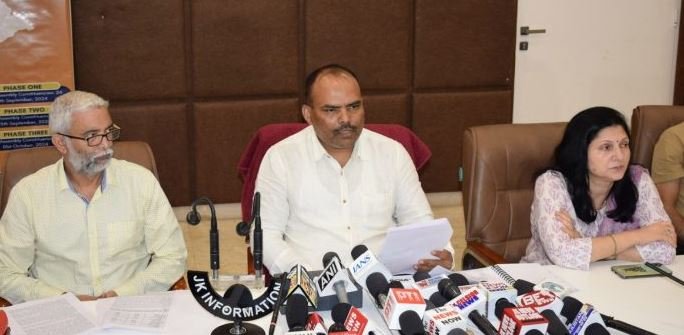
Srinagar/Jammu, Sep 18: Approximately 59% voter turnout was recorded during the first phase of the Jammu and Kashmir Assembly elections, marking a significant milestone as the region’s first assembly elections since the abrogation of Article 370 in 2019. Chief Electoral Officer P K Pole reported that this represents the highest voter participation across the last seven Lok Sabha and assembly elections in the Union Territory. Final figures may see a slight increase after the inclusion of reports from remote areas and postal ballots.
Polling commenced at 7 am and continued throughout the day with a steady voter turnout. Voters from various demographics, including young, elderly, and first-time voters, actively participated, queuing up at polling stations across the Kashmir Valley and Jammu. By 9 am, the turnout had reached 11.11%, rising to 26.72% by 1 pm, and further to 50.65% by 3 pm. By the close of polling at 6 pm, voter turnout was estimated to be around 59%.
This first phase covered 24 constituencies, with 16 from the Kashmir Valley and eight from the Jammu region. Over 2.3 million voters were eligible to cast their ballots, determining the fate of 219 candidates, including 90 independent candidates.
This election is historically significant as the first since Jammu and Kashmir’s reorganization into two union territories—Jammu and Kashmir, and Ladakh—following the revocation of its special status. Security forces were deployed across the region to ensure the peaceful conduct of elections, with only minor incidents reported from Bijbehara and D H Pora involving clashes between political workers.
Political leaders across party lines urged voters to actively participate. Prime Minister Narendra Modi, in a social media post, described the election as a “festival of democracy” and specifically encouraged young and first-time voters to cast their ballots. Union Home Minister Amit Shah also appealed for strong voter participation, emphasizing the importance of electing a government committed to youth development, education, employment, and women’s empowerment, while combating separatism. He urged voters to prioritize voting early in the day, humorously advising them to “vote before breakfast.”
Lt Governor Manoj Sinha, along with Congress leaders Mallikarjun Kharge and Rahul Gandhi, also called for voter participation. Kharge highlighted the significance of this election in the aftermath of the state’s loss of special status, urging voters to protect their rights through democratic participation. Rahul Gandhi, representing the INDIA bloc, framed the election as an opportunity for the people of Jammu and Kashmir to reclaim their rights and build a prosperous future. He further criticized the downgrading of the state’s status as a violation of constitutional rights.
National Conference leader Omar Abdullah emphasized the importance of these elections, noting that they come after a decade and following significant changes to the region, including the bifurcation of Jammu and Kashmir and Ladakh, and the revocation of its statehood. He expressed optimism for the NC-Congress alliance, while acknowledging that the final decision rests with the voters.
The second and third phases of the election are scheduled for September 25 and October 1, respectively, with vote counting set for October 8.

