


J&K to move towards energy independence, 200 free units for consumers on agenda : CM Omar Abdullah
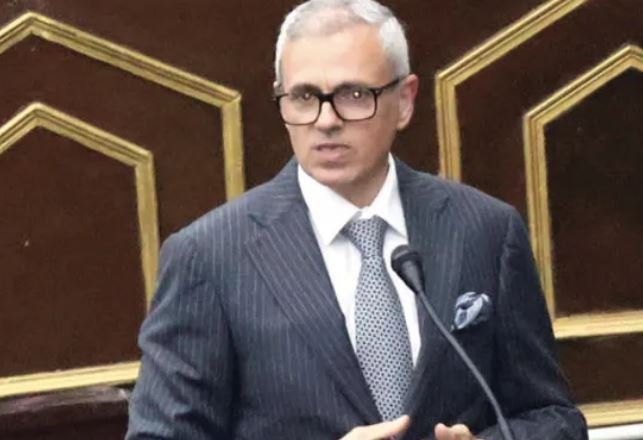
Jammu, 05-03-2025: The Jammu and Kashmir government, under the leadership of Chief Minister Omar Abdullah, has reaffirmed its commitment to ensuring a reliable power supply across the Union Territory and achieving self-sufficiency in power generation by 2027. The Chief Minister, who also holds the Power Portfolio, stated that the government is dedicated to providing 200 units of free electricity to consumers, reinforcing its commitment to improving the quality of life for the people of J&K.
Speaking on the matter, the Chief Minister highlighted that the Jammu and Kashmir Power Development Corporation (JKPDC) is focused on accelerating the development of hydroelectric power projects to achieve self-reliance in energy production. He informed the House that, in collaboration with the National Hydroelectric Power Corporation (NHPC), the J&K State Power Development Corporation (JKSPDC) has entered into joint ventures such as the Chenab Valley Power Projects Limited (CVPPL) and Ratle Hydro Power Corporation Limited (RHPCL) to execute major hydropower projects across the Union Territory.
Key projects currently underway include the 1,000 MW Pakal Dul Hydroelectric Project, 624 MW Kiru Hydroelectric Project, 540 MW Kwar Hydroelectric Project, and 850 MW Ratle Hydroelectric Project, all located along the Chenab River in Kishtwar district. These projects, with a combined generation capacity of 3,014 MW, are expected to be commissioned by 2027. In addition, the government is also implementing two more projects—37.5 MW Parnai Hydroelectric Project in Rajouri and 12 MW Karnah Hydroelectric Project in Kupwara—contributing further to the region’s power generation capacity. The Lower Kalani Hydroelectric Project in Kishtwar, with a capacity of 48 MW, along with the new Ganderbal Hydroelectric Project, has already been tendered, increasing the anticipated capacity addition to 3,063 MW by 2027-28.
Further strengthening the power infrastructure, the Chief Minister announced the development of seven additional projects, including the 390 MW Kirthai-I, 258 MW Dulhasti-II, 800 MW Bursar, 1,856 MW Sawalkote, 240 MW Uri-I Stage II, 89 MW Ujh, and 930 MW Kirthai-II. These projects, once completed, will play a pivotal role in making Jammu and Kashmir self-reliant in power generation. However, the Chief Minister also acknowledged that hydroelectric projects face seasonal fluctuations, particularly during winter months when water flow reduces. To mitigate this challenge, he stressed the importance of a diversified energy portfolio, incorporating thermal and nuclear power alongside hydroelectricity to ensure an uninterrupted power supply.
The government is also prioritizing renewable energy development as a sustainable measure to meet the growing electricity demand while aligning with global climate commitments. In a significant policy move, Jammu and Kashmir, in consultation with the Government of India, has formulated a Resource Adequacy Plan extending till 2035 to secure long-term energy self-reliance.
Responding to a query in the Legislative Assembly regarding the provision of 200 units of free electricity to consumers, the government assured that all necessary steps are being taken to implement the initiative. The specifics of this scheme will be detailed during the upcoming demand for grants for the power sector. The government’s sustained efforts in power sector reforms reflect its commitment to ensuring affordable and uninterrupted electricity for the people of Jammu and Kashmir while working towards a self-sufficient and energy-secure future.

