


Justice Rooted in Compassion
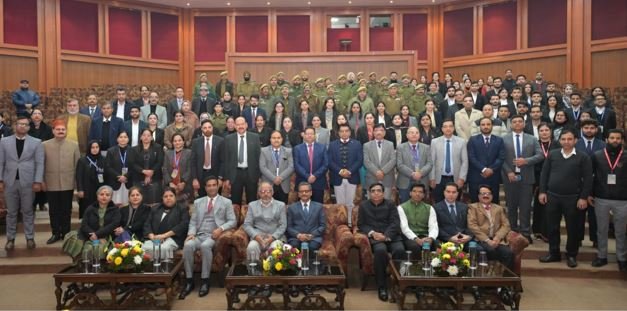
The protection of children from sexual offenses is among the most sensitive and demanding responsibilities entrusted to the justice delivery system. Laws alone cannot guarantee justice unless they are implemented with empathy, competence, and a profound understanding of the trauma endured by child victims. In this context, orientation programmes on the Protection of Children from Sexual Offences Act in Jammu and Kashmir represent an important step towards translating statutory intent into humane and effective judicial practice.
Children who enter the justice system as victims carry invisible wounds that extend far beyond the incident itself. Their interaction with courts, police, and medical professionals can either begin the process of healing or compound their distress. Judicial capacity building under the POCSO framework recognizes this reality by placing the child at the centre of adjudication. Training initiatives that sensitize judges and allied stakeholders to child psychology, trauma response, and ethical handling of evidence acknowledge that justice must be both fair and compassionate. One of the most significant contributions of such programmes is the emphasis on trauma-informed adjudication. Sexual offenses against children are not isolated legal events but experiences that disrupt emotional development, family stability, and social confidence. Judicial officers who understand these dimensions are better equipped to conduct proceedings that minimize re-victimization. Techniques such as in-camera trials, careful questioning, avoidance of unnecessary confrontation with the accused and respectful courtroom environments are not procedural formalities but essential safeguards of a child’s dignity. The focus on balancing speed with fairness is equally vital. While the POCSO Act mandates expeditious trials, training programmes reinforce the principle that haste must never compromise due process or sensitivity. Swift justice that overlooks empathy risks becoming another form of harm. Judicial orientation helps reinforce that child-friendly justice does not mean diluted standards of proof but rather heightened responsibility in applying them. Equally important is the interdisciplinary approach embedded in these training initiatives. By integrating legal instruction with insights from mental health professionals, forensic experts, and child protection practitioners, the programmes encourage a holistic understanding of child sexual abuse cases. This convergence strengthens decision-making at every stage from investigation and evidence evaluation to sentencing and victim compensation. It also improves coordination among institutions that often work in isolation despite serving the same objective. Judicial sensitization programs also reinforce accountability within the justice system. When judges and prosecutors are reminded that children are the most vulnerable participants in legal proceedings, it reshapes institutional attitudes. Courts begin to see themselves not merely as arbiters of guilt but as protectors of child rights. This shift is essential in building public confidence, especially among families who hesitate to report abuse due to fear of social stigma or hostile legal processes. In regions like Jammu and Kashmir, where social complexities and geographic challenges can delay access to justice, such initiatives gain added relevance. Training judicial officers to apply the POCSO Act with cultural sensitivity and awareness of local realities strengthens the reach of the law. It also ensures that child-friendly justice is not confined to urban centers but becomes a consistent standard across districts. However, orientation programmes must not be treated as one-time interventions. Continuous learning, regular refresher courses, and periodic evaluation of judicial practices are necessary to sustain progress. Child protection laws evolve through judicial interpretation, medical science advances, and social realities. Training frameworks must remain dynamic to reflect these shifts.
Ultimately, the success of the POCSO Act depends not only on its provisions but also on the people entrusted to enforce it. Judicial capacity building affirms that protecting children requires more than legal knowledge. It demands empathy, patience, and moral clarity. By investing in such training initiatives, Jammu and Kashmir strengthens its commitment to child-centric justice, ensuring that courts serve not only as forums for verdicts but also as spaces of reassurance, dignity, and healing for the most vulnerable members of society.

