


Kashmiri Separatist Leader Aligns with Mainstream Politics as Talat Majid Joins Apni Party
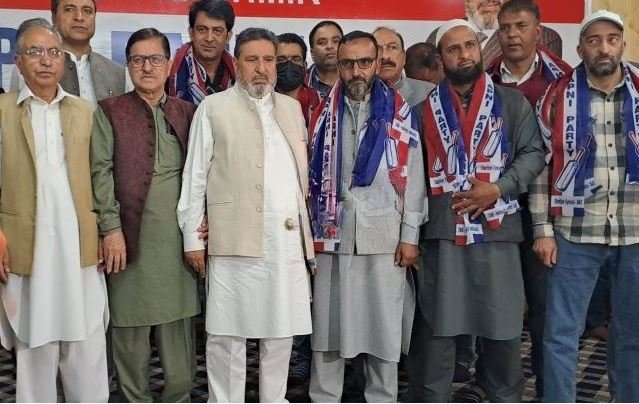
Srinagar, October 12 : In a significant development that dealt yet another blow to separatist movements in the Kashmir Valley, a prominent leader from the banned Jamaat-e-Islami, along with his supporters, made the decision to join the Apni Party. Talat Majid, a former member of Jamaat-e-Islami, which has faced bans and is believed to be connected to extremist organizations, hails from the Pulwama district of South Kashmir. His decision to align with a mainstream political party is a reflection of a realistic approach aimed at fostering positive change in the region.
Talat Majid emphasized that his choice to join the Apni Party was not influenced by external pressure but rather stemmed from his long-standing advocacy for change. He had been advocating for a shift in approach since 2014, initially within the platform of Jamaat-e-Islami. However, as he found no opportunity for such transformation within the organization, he decided to explore alternative avenues. This move reflects a growing trend among individuals in the region who are seeking to engage with mainstream politics and contribute to the development of Jammu and Kashmir.
The Apni Party, founded by Altaf Bukhari, welcomed Talat Majid and his supporters into its fold. Bukhari stressed that the party extends its arms to anyone who denounces terrorism, stands against drug abuse, believes in the Indian constitution, and is committed to the development of the region. He expressed his commitment to expanding the Apni Party’s influence, with the goal of having every resident of Jammu and Kashmir join their ranks.
This development follows a similar trend earlier this year when Syed Muzaffar Rizvi, a former separatist leader who was the general secretary of Itihadul Muslimeen, a Shia separatist group affiliated with the Hurriyat Conference, joined the Apni Party. Altaf Bukhari appointed Rizvi as the Apni Party’s vice-president for the Kashmir region.
Jamaat-e-Islami Jammu and Kashmir, once an integral part of the separatist conglomerate Hurriyat Conference until 2003, has a complicated history. While it presented itself as a socio-religious group, it was widely seen as the ideological source of the banned terror organization Hizbul Mujahideen. The party was outlawed in 2019 under the Unlawful Activities (Prevention) Act (UAPA).
Talat Majid highlighted the detrimental impact of terrorism on Kashmiris, particularly the youth. He stressed the importance of adopting a realistic approach, emphasizing the geopolitical situation and its impact on the region. Majid expressed deep concern over the high number of youth deaths and drug addiction, urging a collective focus on the future of the region’s young population. He made it his mission to protect the youth and prevent any further loss of life in the name of armed struggle. Majid firmly asserted that violence does not serve the interests of Kashmiris, and the brunt of it is borne by the common people. He called for a pragmatic outlook, questioning whose blood the movement requires and emphasizing the need to prioritize the well-being and future of ordinary Kashmiris over extremist ideologies.

