


Komal Secures Bronze at Under 23 World Wrestling Championships in Las Vegas
India's women wrestlers make their mark at the global age group competition as Komal defeats Kazakhstan's Viktoriia Khusainova in the 59kg bronze-medal bout and Amruta Pujari advances to the 72kg final.
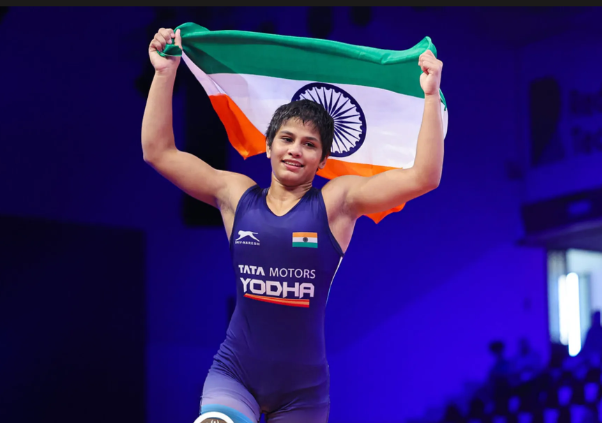
LAS VEGAS, Oct 16: India’s Komal won the bronze medal in the women’s 59kg category at the Under-23 World Wrestling Championships in Las Vegas on Friday, delivering a valuable result for the Indian contingent at the international competition.
Komal secured third place after defeating Kazakhstan’s Viktoriia Khusainova 7-2 in the bronze-medal bout. Her victory followed a competitive run through the earlier rounds, where she overcame opponents from Canada and Moldova to remain in contention for a place on the podium.
In another encouraging development for India, Amruta Pujari advanced to the final of the women’s 72kg category after registering two victories by pinfall. Her progress provided the Indian team with another opportunity to challenge for a medal at the championship. The results highlighted the contribution of India’s women wrestlers at a tournament that brings together emerging athletes from different wrestling nations. The Under-23 competition serves as an important bridge between junior events and senior-level international wrestling, allowing athletes to test their techniques, strength and tactical judgement against experienced age-group opponents.
Komal delivers in the medal bout
Komal’s victory over Khusainova was the decisive moment in her campaign. Competing in the women’s 59kg division, the Indian wrestler produced a controlled performance to win the bronze-medal contest 7-2.
A medal bout places considerable demands on competitors because there is little room for recovery after a defeat. Wrestlers must manage the pressure of a result that determines whether they finish the tournament on the podium, while remaining alert to an opponent’s attempts to gain control.
Komal’s performance enabled her to finish third in the category and secure an international medal for India.
The scoreline reflected her ability to create a winning margin against a Kazakh opponent in a contest where each scoring opportunity mattered. In wrestling, maintaining control of position and reacting quickly to changes in an opponent’s movement can determine the direction of a bout.
The victory also gave Komal a positive conclusion to a demanding tournament. Reaching the medal stage requires athletes to navigate several rounds, manage recovery between contests and adjust their approach to opponents with different strengths.
For the Indian wrestler, the bronze medal represents both a competitive achievement and an opportunity to build confidence ahead of future international assignments.
A competitive route through the earlier rounds
Komal’s path to the podium included two important contests before the bronze-medal match.
She first faced Canada’s Ella Finding in a closely contested bout that ended 1-1. Komal progressed on criteria, a wrestling rule used to determine the winner when competitors finish level on points.
The narrow result underlined the importance of tactical discipline in closely matched contests. When neither wrestler establishes a clear advantage, the outcome can depend on the applicable criteria and the scoring sequence rather than the final points total alone.
Komal then faced Moldova’s Madalina Prisacari and recorded an 8-3 victory. That result placed her in a stronger position to challenge for a medal and demonstrated her ability to produce a more decisive margin after the opening contest.
The two victories required different approaches. Against Finding, Komal had to remain composed in a low-scoring contest where every action carried weight. Her performance against Prisacari required her to convert opportunities into a clearer points advantage.
Those experiences prepared her for the final challenge against Khusainova. The bronze-medal bout demanded another focused effort, and Komal responded by securing a 7-2 victory.
Her campaign demonstrated the value of adaptability in wrestling, where competitors must adjust their strategies according to the opponent, score and stage of the tournament.
Why the Under-23 championship matters
The Under-23 World Wrestling Championships provide an important competitive platform for athletes who are moving towards the senior international level.
At this stage of their careers, wrestlers are expected to combine the technical foundations developed through junior competition with greater physical strength, tactical maturity and the ability to manage pressure.
International tournaments also expose athletes to different styles. Competitors from various countries may approach the same weight category with different combinations of speed, grip control, defensive positioning and attacking technique.
The ability to adapt is therefore essential. A wrestler who relies on a single approach may find it difficult to progress against opponents who can identify and exploit predictable patterns.
For India, performances at the Under-23 level offer an indication of how emerging athletes are developing within the national system. Medals can strengthen confidence, while close defeats and difficult bouts help coaches identify areas that require additional work.
Komal’s bronze-medal finish is significant in this context. It demonstrates that she could negotiate several challenging rounds and deliver when a podium position was at stake.
The result also creates a foundation for future preparation, allowing the coaching team to assess her performance against international opposition and plan the next stage of her development.
Amruta Pujari reaches the 72kg final
India’s campaign received another boost through Amruta Pujari, who advanced to the final of the women’s 72kg category after winning two bouts by pinfall.
A pinfall victory occurs when a wrestler holds an opponent’s shoulders against the mat under the conditions set by the sport’s rules. It provides a direct route to victory and reflects the ability to convert a position into a decisive finish.
Pujari’s two pinfall wins placed her in contention for the title and gave India another strong result in the women’s competition.
Reaching a world championship final is a notable achievement in itself because the route requires wrestlers to maintain consistency across successive rounds. Athletes must balance their physical effort with the need to remain sharp enough to perform in later contests.
Pujari’s progress also underlined the importance of taking opportunities when they arise. A wrestler may control a bout for extended periods, but the ability to turn a favourable position into a decisive scoring action can make the difference between a narrow victory and an emphatic result.
Her appearance in the final offered India a separate opportunity for a medal beyond Komal’s bronze.
The two performances illustrated the range of outcomes possible during a championship. Komal had to fight through earlier rounds before winning the bronze-medal contest, while Pujari’s successful run placed her directly in the title match.
Both results provided encouraging signs for the Indian women’s wrestling contingent.
Wrestling demands physical and tactical preparation
Success in international wrestling depends on more than strength. Athletes must combine explosive movement with balance, endurance and an understanding of how to control an opponent’s position.
In women’s freestyle wrestling, competitors seek opportunities to score through takedowns, exposure and other actions recognised by the rules. The ability to defend against attacks is equally important, particularly when an opponent attempts to turn a small advantage into a larger lead.
Athletes must also manage the physical demands of competing in a specified weight category. Preparation involves training, recovery and maintaining the required weight without compromising performance.
Tournament conditions add another challenge. Wrestlers may have to compete more than once in a day, making recovery and efficient use of energy important factors.
Komal’s progress through the 59kg division required her to respond to different situations, from the narrow decision against Finding to the more decisive victory over Prisacari and the final contest against Khusainova.
These bouts offered different tests of her competitive skills. Her bronze-medal win completed the campaign with a positive result and showed her ability to perform when the final placing was at stake.
For Pujari, reaching the 72kg final through two pinfall victories highlighted her capacity to finish contests decisively. Maintaining that effectiveness against stronger opposition will be an important challenge as her career progresses.
India’s broader wrestling ambitions
India has a long-standing presence in international wrestling, with athletes competing across freestyle and Greco-Roman categories as well as women’s divisions.
Developing the next generation of wrestlers requires a consistent pathway from domestic tournaments and age-group championships to senior international competition. The Under-23 category is an important part of that structure because it gives athletes experience against competitors who are approaching the physical and technical demands of senior wrestling.
Results such as Komal’s bronze and Pujari’s run to the final can encourage emerging wrestlers while helping the national coaching structure evaluate its progress.
However, a single tournament cannot provide a complete assessment of an athlete’s future prospects. Sustained success depends on consistency across competitions, injury prevention, technical development and the ability to adapt to changing international standards.
The experience gained in Las Vegas can help both wrestlers identify strengths and areas for improvement. For Komal, the next steps will include maintaining the defensive discipline and scoring effectiveness that helped her reach the podium. Pujari will seek to build on her successful run and translate it into continued progress at higher levels.
A positive outcome for the Indian contingent
Komal’s bronze-medal victory provided India with a tangible reward from the women’s competition at the Under-23 World Wrestling Championships. Her route to third place featured a narrow win on criteria, a more comfortable points victory and a successful performance in the medal bout.
Pujari’s advancement to the 72kg final added further encouragement for the Indian side and showed that the country’s emerging women wrestlers could challenge for top positions at the global age-group level.
Both achievements are valuable because international competition offers lessons that cannot be fully replicated in domestic training. Athletes must make decisions under pressure, respond to unfamiliar styles and manage the demands of competing against opponents who are equally motivated to win.
For Komal, the bronze medal marks an important milestone. For Pujari, reaching the final represents an opportunity to compete for the championship title.
Their performances give Indian wrestling reasons for optimism while reinforcing the need for continued investment in coaching, athlete development and international exposure.
As the Las Vegas championships continue, the Indian contingent will aim to build on these results and secure further strong finishes. The progress of the women’s team will remain an important part of India’s broader effort to develop competitive wrestlers for future world championships and senior-level events.

