


Kremlin Warns of ‘Dangerous Trend’ After Ukrainian Attacks on Russian Naval and Cargo Vessels
Moscow condemns reported attacks on a naval corvette and cargo ships, signals plans to contact European nations over peace efforts and vows legal action against any confiscation of frozen Russian assets.
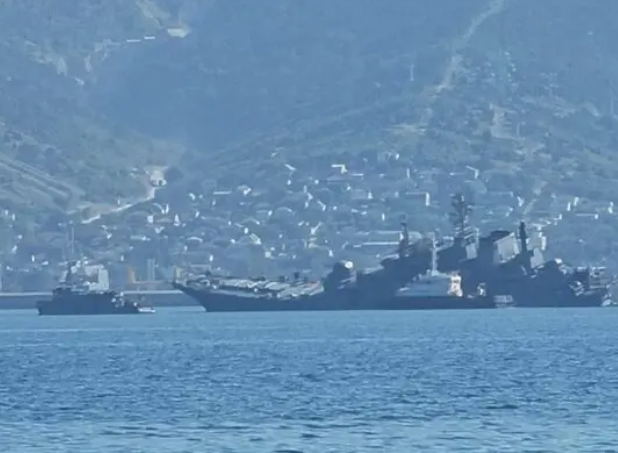
MOSCOW, Nov 23: The Kremlin on Monday expressed serious concern over reported Ukrainian attacks on Russian naval and cargo vessels, describing the incidents as a “very dangerous trend”. Moscow also indicated that it would reach out to European countries to determine their willingness to support diplomatic efforts aimed at resolving the Ukraine conflict.
Kremlin spokesperson Dmitry Peskov said Russia had taken note of Ukrainian President Volodymyr Zelenskyy’s announcement that Ukrainian forces had sunk the Russian corvette Merkury off the Libyan coast.
“The Defense Ministry is dealing with this matter, and information will also be provided through the Defense Ministry if deemed appropriate,” Peskov told reporters during a briefing in Moscow.
He maintained that Russia would continue its military operations in Ukraine in response to attacks against its forces and assets.
“Our military personnel continue to carry out large-scale, comprehensive strikes on military infrastructure in Ukraine on a daily basis. This practice has very painful consequences for the Kyiv regime,” he said.
Peskov added that Moscow would remain committed to its current military strategy, in accordance with recent statements made by Russian President Vladimir Putin.
Earlier, Zelenskyy claimed in a post on social media platform X that Ukrainian naval drones had destroyed the Merkury, targeted a Russian cargo ship and brought down a military helicopter.
The Russian corvette had reportedly sustained damage in an earlier suspected naval drone attack while docked at Benghazi port in eastern Libya.
Local authorities reported that the incident triggered an explosion and fire, causing extensive damage to the vessel and leaving at least 10 Russian and Libyan crew members injured.
According to Libya’s eastern-based administration, the Russian ship had stopped at the port for refuelling and replenishment of supplies while travelling back to Russia. It also confirmed that a joint investigation with Moscow had been initiated. No organisation had claimed responsibility for the incident at the time.
Moscow Seeks Clarity on Europe’s Role in Peace Efforts
Turning to diplomatic developments, Peskov said Russia planned to establish contact with European governments to assess their willingness to participate in efforts to end the war.
Responding to questions about the possibility of another round of negotiations involving representatives of the European Union, he said Moscow wanted to determine whether European countries were genuinely prepared to support a peaceful resolution.
“We intend to initiate communication with the Europeans in order to understand how ready they are to contribute to peace efforts and to what extent their position corresponds to the objective of establishing a track for a peaceful settlement,” he said.
The Kremlin spokesperson also questioned the intentions of the so called “Coalition of the Willing”, seeking clarification on whether its members were interested in ending hostilities or prolonging the conflict.
Peskov’s remarks indicated that Moscow was seeking to assess the position of European governments before determining the scope for further diplomatic engagement.
Russia Says Humanitarian Proposal for Kostiantynivka Remains Open
On the situation in the Ukrainian city of Kostiantynivka, Peskov said Russia’s position regarding a proposed joint humanitarian operation had not changed.
He claimed that Moscow had yet to receive a response from Kyiv, although the proposal remained on the table.
According to the Kremlin spokesperson, statements by Zelenskyy and other Ukrainian officials suggested that the Ukrainian leadership was unwilling to proceed with the proposed arrangement.
Peskov further stated that Russian forces were continuing operations to evacuate civilians from the affected area.
Kremlin Threatens Legal Action Over Frozen Russian Assets
The Kremlin also reiterated its opposition to European countries freezing Russian assets and considering the use of income generated from those funds.
Peskov described both measures as unlawful and warned that Moscow would pursue legal remedies to protect its interests.
“We will use all legal means available to defend our rights,” he said.
He added that Russia was aware of concerns expressed by Euroclear, the financial market infrastructure operator responsible for managing a substantial portion of the frozen Russian assets, regarding the potential legal consequences of confiscating the funds.
Peskov also commended Belgian Prime Minister Bart De Wever for maintaining what he described as a “firm and balanced position” on the matter.
De Wever has cautioned against the legal and financial risks associated with confiscating Russian assets, including potential consequences for those involved in authorising such measures.
“If this ever happens, we will pursue all those involved in accordance with the law,” Peskov said.
UN Raises Alarm Over Attacks in Libya
Meanwhile, the United Nations Support Mission in Libya (UNSMIL) expressed serious concern over the reported attacks at Benghazi port and in waters off Libya’s eastern coastline.
The UN mission called for an immediate, independent and transparent investigation into the incidents, urging all parties to exercise restraint and ensure that Libya does not become entangled in the broader Russia-Ukraine confrontation.
In its statement, UNSMIL stressed that the North African country must not be turned into an arena for external conflicts.
“Libya cannot afford, and must not become a battleground for foreign conflicts,” the mission said.
It also underscored the need to respect Libya’s sovereignty and territorial integrity while safeguarding the lives of its people, as well as critical infrastructure.
The UN’s intervention highlighted growing international concerns over the potential spillover of the Russia-Ukraine conflict beyond its immediate theatre, particularly in strategically important regions such as the Mediterranean.

