


Kwatra: Regulating Foreign Funds Is a Sovereign Decision, US Has Similar Laws
Indian envoy cites foreign funding laws in major democracies, says 2026 Bill seeks greater transparency, asset protection and clearer compliance rules
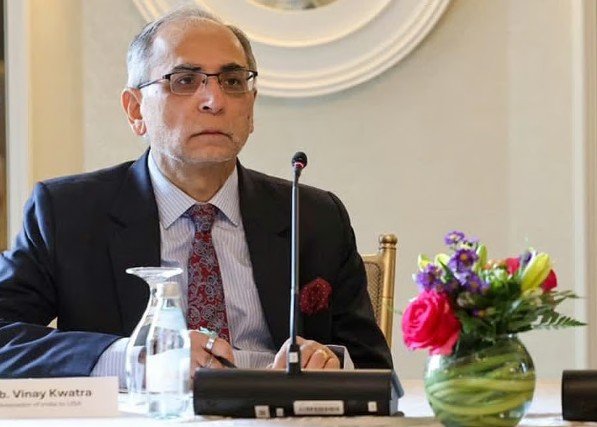
WASHINGTON, Aug 10: India’s Ambassador to the US Vinay Mohan Kwatra has defended the proposed changes to the Foreign Contribution (Regulation) Act (FCRA), saying regulation of overseas financial flows is a sovereign decision linked to transparency, governance and national security.
In a series of posts on X on Sunday, Kwatra said organisations receiving foreign contributions would be required to follow a clearly defined regulatory framework. He maintained that such oversight is not unique to India and pointed to similar measures adopted by several major democracies.
“The US has had FARA (Foreign Agents Registration Act) since 1938 and FATCA (Foreign Account Tax Compliance Act) since 2010. Australia legislated in 2018, Canada in 2024. The UK’s scheme came into force in July 2025. The EU is legislating now,” he said.
Kwatra’s remarks came after a US lawmaker raised concerns over the proposed FCRA amendments, alleging that the legislation could give the Indian government greater control over churches and charitable organisations.
The ambassador rejected such apprehensions, explaining that provisions governing the handling of foreign-funded assets have existed since 2010. According to him, when an organisation’s FCRA registration is cancelled or surrendered, foreign contributions and assets created from those funds already come under the control of a designated government authority.
He said the proposed 2026 legislation would introduce a specific authority to safeguard such assets while also providing a mechanism for organisations to regain them if their registration is restored.
“If the organisation restores its registration, all assets and unused funds are returned in full,” Kwatra said.
He further explained that special safeguards have been proposed for places of worship. If a cancelled association owns property associated with a place of worship, the legislation provides for its transfer to another FCRA registered organisation belonging to the same faith, ensuring that religious activities can continue.
Rejecting claims that the proposed framework would restrict foreign assistance to civil society, Kwatra said thousands of organisations currently receive overseas contributions for activities such as healthcare, education, disaster response, research and humanitarian assistance.
He noted that India has more than three million non-governmental organisations, while only 14,450 currently have FCRA registration. Therefore, he said, most civil society organisations operate outside the scope of the foreign contribution law.
India introduced the FCRA in 1976 and subsequently established a broader regulatory framework through amendments in 2010. Further changes were made in 2016, 2018 and 2020.
Kwatra described the proposed 2026 Bill and accompanying rules as another stage in the evolution of the regulatory system, with an emphasis on greater transparency, stronger governance and clearer compliance requirements.
He also rejected allegations that the proposed provisions were directed at any particular religious or social group. According to him, the law applies equally to organisations irrespective of their religion, community or ideology.
He said organisations engaged in faith-based welfare activities, religious education, upkeep of places of worship and charitable programmes would continue to remain eligible to receive overseas contributions, subject to the applicable legal requirements.
The FCRA Bill, 2026 proposes empowering the government to establish a Designated Authority to manage foreign contributions and assets created from such funds when an organisation’s registration is cancelled, surrendered or lapses because it is not renewed.
The proposed legislation also contains provisions concerning properties used as places of worship. In such cases, the Designated Authority would be required to ensure that the religious character of the property is preserved.
Kwatra said regulation of foreign financial flows in public and political spheres remains an accepted aspect of governance across democracies and is primarily guided by considerations of national security and financial transparency.

