


Laos Appoints Veteran Diplomat with Global Outlook as New Prime Minister
Former foreign minister takes charge as the Southeast Asian nation seeks economic stability, stronger infrastructure and improved management of key resources.
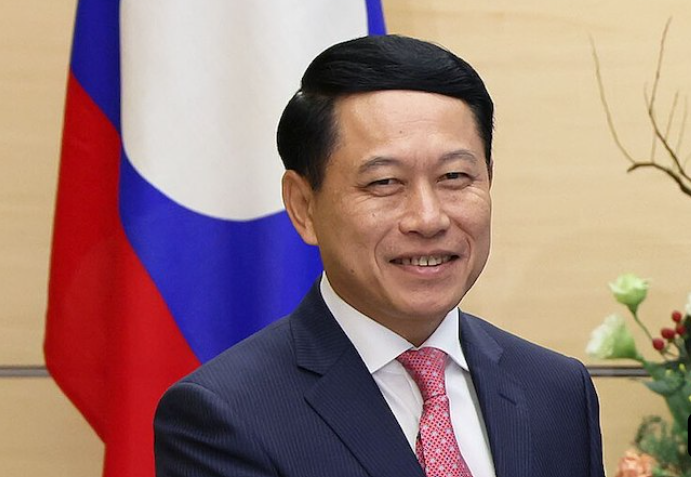
BANGKOK, Oct 6: Laos has elected veteran diplomat Saleumxay Kommasith as its new prime minister, placing an experienced foreign-policy figure at the head of the communist ruled Southeast Asian nation.
The National Assembly chose Saleumxay in a unanimous vote on Monday, with all 158 lawmakers present supporting his appointment, state news agency KPL reported. He succeeds Sonexay Siphandone, who has moved to the post of National Assembly president.
Saleumxay, who will turn 58 on October 31, is a member of the Politburo of the ruling Lao People’s Revolutionary Party. Before becoming prime minister, he held senior government positions, including deputy prime minister and foreign minister.
His professional background has been heavily focused on international affairs. He studied at the Moscow State Institute of International Relations in Russia and later attended Australia’s Monash University. During his diplomatic career, he handled Laos’ relations with Australia, the United States, the Americas and Europe.
He also served with Laos’ mission to the United Nations in New York. His ability to communicate in English, Russian and French has further strengthened his international diplomatic credentials.
Saleumxay’s background distinguishes him from the traditionally low-profile leadership of Laos. The landlocked nation has maintained particularly close political and economic relationships with fellow communist states Vietnam and China, while also relying extensively on neighboring countries for commerce and investment.
Following his election, Saleumxay outlined several immediate priorities before the National Assembly. According to KPL, his administration plans to focus on increasing food production, restoring infrastructure, managing mineral resources, overseeing major investment projects and promoting tourism.
He also identified improved revenue collection and monetary stability as key areas requiring government attention. The priorities come as Laos continues to deal with significant economic pressures.
A 2026 country assessment by Germany’s Bertelsmann Stiftung described the Lao economy as vulnerable, citing heavy borrowing, debt commitments, limited foreign reserves and depreciation of the national currency. The report also said the country’s one-party political system remains firmly in place and has shown little indication of moving toward multiparty reforms.
Laos’ economic position is closely connected to its geography. As a landlocked country, it depends substantially on neighboring states, particularly Vietnam, China and Thailand, for trade, investment and regional connectivity.
China has expanded its influence through major economic and trade partnerships, while Vietnam remains a longstanding political ally. The Vietnamese prime minister is scheduled to visit Laos on Thursday, underscoring the importance of bilateral ties.
Thailand is also an important economic partner. Laos depends on regional markets and cross-border infrastructure to support commerce, while electricity generated from hydropower projects remains one of the country’s major exports.
The country’s present political and economic structure has its roots in the turbulent history of mainland Southeast Asia. During the Vietnam War, Laos became a major theatre of conflict between the royalist government and communist forces. Parts of the Ho Chi Minh Trail also passed through the country, carrying supplies from North Vietnam toward the battlefield in South Vietnam.
The conflict resulted in extensive bombing across Laos, leaving the country with one of the world’s most heavily bombed landscapes relative to its population.
The Pathet Lao eventually defeated the U.S.-backed royalist forces and established communist rule in December 1975. The development followed communist victories in Vietnam and Cambodia earlier that year.
Since then, Laos has retained close political ties with Vietnam while gradually deepening its economic relationship with China. Its dependence on surrounding countries remains significant because of its lack of direct access to the sea.
With Saleumxay now taking the premiership, the new government faces the task of addressing economic vulnerabilities while maintaining Laos’ established regional relationships. His extensive diplomatic experience could also give the government a more internationally oriented approach as it navigates investment, trade and relations with major neighboring powers.

