


Legendary Filmmaker Singeetham Srinivasa Rao Dies at 94
Actors and filmmakers pay tribute to the veteran director remembered for his innovative storytelling and work across five languages.
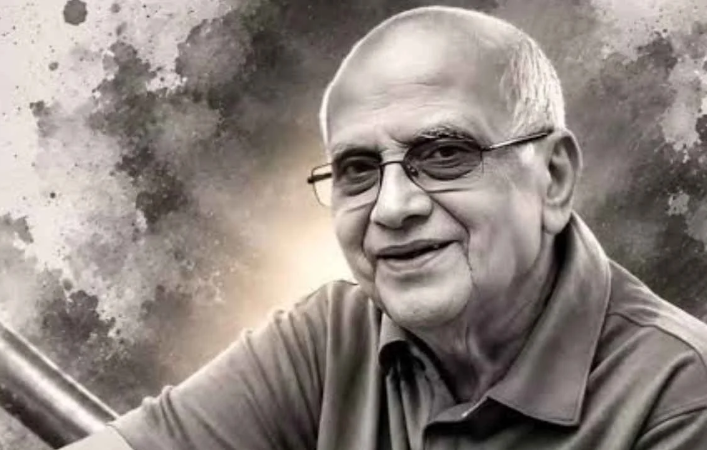
Hyderabad, Oct 4: Veteran filmmaker Singeetham Srinivasa Rao, one of Indian cinema’s most inventive directors, has died at the age of 94, leaving behind a remarkable body of work spanning several decades and multiple Indian languages.
The filmmaker’s death on October 4 prompted tributes from actors, directors and political leaders, who remembered him for his distinctive storytelling, experimentation and contribution to Indian cinema.
Rao worked across Telugu, Tamil, Kannada, Hindi and Malayalam cinema during a career that lasted more than five decades. His ability to move between genres and languages made him an unusual figure in Indian filmmaking, while his willingness to experiment helped him create films that developed a lasting following.
News of his death was reported by several entertainment outlets on Sunday. Hindustan Times described him as a legendary filmmaker and reported that prominent figures from the Telugu film industry, including Kamal Haasan and SS Rajamouli, paid tribute to him.
His career was marked by a broad range of subjects and filmmaking styles. Rather than remaining within one established genre, Rao moved between comedy, drama, fantasy, romance and experimental cinema.
One of the defining features of his work was his willingness to explore ideas that were ahead of their time. He frequently combined popular entertainment with unusual concepts, distinctive visual storytelling and unconventional characters.
His contribution was not restricted to directing alone. Over the years, Rao became associated with a filmmaking philosophy that encouraged experimentation and challenged conventional approaches to commercial cinema.
His passing has therefore been viewed not simply as the loss of a veteran director but as the end of an important chapter in the history of Indian filmmaking.
Rao’s work also had a strong connection with some of the most respected actors in Indian cinema. His collaborations across different industries allowed him to work with performers whose careers and styles varied widely.
The director’s ability to adapt to different languages was particularly notable. Indian cinema has historically operated through several regional industries, each with its own audiences and traditions. Rao successfully navigated those differences and built a career that crossed linguistic boundaries.
His creative partnership with Kamal Haasan is among the associations remembered by cinema followers. Haasan’s tribute following Rao’s death reflected the filmmaker’s importance to generations of artists who worked with him.
SS Rajamouli, another major figure in Indian cinema, was also among those who remembered the veteran director. The tributes highlighted the influence Rao had on filmmakers who came after him.
Beyond individual films, Rao’s career represents a period when directors could experiment with storytelling while working within the framework of mainstream cinema.
His filmography included projects that relied on humour and accessible entertainment, but he also demonstrated an interest in fantasy, technology, mythology and unconventional narratives.
That variety became one of the most recognisable aspects of his filmmaking identity.
Entertainment reports on October 4 also highlighted the breadth of Rao’s career. Indian Express described him as a filmmaker who worked for 54 years across five languages and had developed a distinctive style that resisted repetition.
His longevity in the industry was another remarkable aspect of his career. Working across different generations of Indian cinema, Rao witnessed enormous changes in production methods, technology, audience tastes and distribution.
The transition from traditional studio systems to newer forms of filmmaking did not prevent him from maintaining his creative identity.
For many admirers, Rao represented a kind of cinema in which curiosity was central to the filmmaking process. His projects often carried an element of surprise, and his approach encouraged audiences to look beyond conventional formulas.
His passing comes at a time when Indian cinema is increasingly being discussed as a unified industry despite its regional diversity. Rao’s career offers an early example of how a filmmaker could build a reputation across linguistic boundaries long before the current era of nationwide theatrical releases and streaming platforms.
The tributes following his death have also underlined the influence of his work on younger generations of filmmakers. Directors who came to prominence much later have often spoken about the importance of experimentation and originality in Indian cinema, values that were visible throughout Rao’s career.
His contribution is especially significant because he demonstrated that commercial filmmaking and creative risk-taking did not necessarily have to be opposites.
While some filmmakers built their careers around a particular genre or star, Rao repeatedly changed direction. That willingness to try something different became a defining part of his identity.
The film industry’s response to his death reflects the breadth of the legacy he leaves behind. Actors, filmmakers and public figures from different parts of India have remembered him as an artist who expanded the possibilities of mainstream cinema.
As audiences revisit his films, his work is likely to gain renewed attention among viewers who may have discovered Indian cinema through more recent productions.
Rao’s career remains an example of how regional cinema can influence the wider film landscape. His work connected different industries while preserving the individual character of each filmmaking tradition.
At 94, he leaves behind a legacy built on experimentation, versatility and an enduring commitment to storytelling. For the Indian film fraternity, his death marks the loss of a filmmaker whose career was closely associated with originality and creative independence.
His films, however, remain part of the cinematic record, ensuring that his contribution will continue to be remembered by audiences, actors and filmmakers in the years ahead.

