


Mahaparinirvan Diwas 2025: Tracing the 1938 Origins of ‘Jai Bhim’ as India Pays Tribute to Ambedkar
From a quiet gathering in Makranpur in 1938 to a nationwide symbol of equality, ‘Jai Bhim’ continues to inspire Dalit communities and the nation on Ambedkar’s death anniversary.
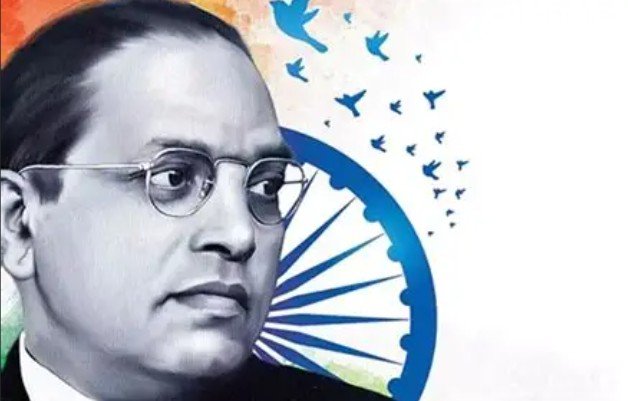
New Delhi, Dec 06 : Long before ‘Jai Bhim’ became a rallying cry of pride and solidarity for Dalit communities across India, the slogan quietly emerged on the banks of a river in rural Marathwada. Its roots trace back to December 30, 1938, in Makranpur village of Kannad tehsil, when Dr. Bhimrao Ramji Ambedkar addressed a historic gathering that sparked a social awakening.
The first-ever Makranpur Parishad, organised by the Scheduled Castes Federation of Marathwada under its president Bhausaheb More, saw Ambedkar urge attendees not to support the princely state of Hyderabad, which governed large parts of central Maharashtra at the time. According to ACP Pravin More, Bhausaheb’s son, the defining moment came when his father told the crowd that communities traditionally greet each other by invoking their deities. As Ambedkar was revered as a guide to progress, they should greet one another with “Jai Bhim.” The resolution was unanimously adopted, marking the birth of the now-iconic slogan.
On Saturday, India marked the 70th Mahaparinirvan Diwas, paying tribute to Dr. Ambedkar’s enduring legacy of equality, justice, and constitutional values. Prime Minister Narendra Modi led the commemoration at Parliament, offering floral tributes and posting on X, praising Ambedkar’s “visionary leadership” and democratic commitment. “May his ideals keep lighting our path as we work towards building a Viksit Bharat,” he wrote.
Other dignitaries, including President Droupadi Murmu, Vice-President CP Radhakrishnan, Lok Sabha Speaker Om Birla, Leader of the Opposition Rahul Gandhi, and Parliamentary Affairs Minister Kiren Rijiju, joined the early morning ceremony. Gandhi described Ambedkar as an “icon” whose legacy strengthens his resolve to defend the Constitution, while Congress president Mallikarjun Kharge urged the nation to uphold the values enshrined in Ambedkar’s Constitution.
The day also became a platform for political commentary. Samajwadi Party chief Akhilesh Yadav warned against undermining the Constitution and cautioned against “one-man rule,” calling the Constitution the “sanjeevani” of democracy. In Tamil Nadu, DMK MP Kanimozhi emphasised resisting communal forces, and Chief Minister MK Stalin highlighted the irony of those who once sought to suppress Ambedkar now publicly praising him.
The Dr Ambedkar Foundation (DAF), under the Ministry of Social Justice and Empowerment, conducted its annual event at Prerna Sthal within the Parliament House campus. Buddhist chants by 25 monks marked the ceremony, which was later opened to the public for floral offerings. Established in 1992, DAF continues to promote Ambedkar’s philosophy across India, reinforcing his vision of social justice and equality.
Dr. Ambedkar, the chief architect of the Indian Constitution, passed away on December 6, 1956. Every year, Mahaparinirvan Diwas commemorates his monumental contribution to India’s democracy and the fight for social justice.

