


Maoism Free Chhattisgarh Emerging as Major Tourism and Investment Hub: Mandaviya
Union Minister says improved security and development have transformed the state's image, with Bastar gaining prominence as a tourism destination and multinational companies showing interest in investment opportunities.
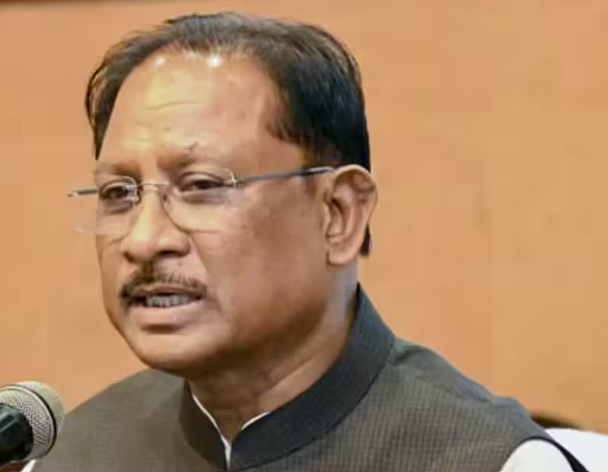
RAIPUR, Nov 1: Chhattisgarh is witnessing a significant transformation, moving beyond its past association with Maoist violence to emerge as a promising destination for tourism, business and investment, Union Minister Mansukh Mandaviya said on Sunday.
Addressing the inaugural ceremony of Rajyotsav 2026, the state’s foundation day celebrations, in Nava Raipur, Mandaviya said the changing situation reflected Chhattisgarh’s growing contribution to India’s broader development goals.
He recalled that the state was once widely associated with Maoist insurgency, which discouraged tourists from visiting several regions. However, improved conditions have helped change that perception, with Chhattisgarh increasingly attracting visitors.
Chief Minister Vishnu Deo Sai attended the event.
Highlighting the developments in Bastar, Mandaviya said the region was gaining recognition through tribal sporting activities and events such as the Bastar Olympics. The growing presence of tourists, he added, reflected the changing atmosphere and expanding opportunities in the area.
The Union Minister also pointed to rising interest from the corporate sector, saying that both domestic and multinational companies were considering Chhattisgarh as a favourable location for business and investment.
He noted that the state was also making progress in sports, with its athletes earning recognition at national and international competitions.
Linking Chhattisgarh’s development with the national vision of Viksit Bharat, Mandaviya recalled Prime Minister Narendra Modi’s announcement of the goal of transforming India into a developed nation by 2047, when the country completes 100 years of Independence.
He said the vision could not be achieved through government efforts alone and required the collective participation of the country’s 140 crore citizens.
“Modi ji did not say that he alone would make India a developed nation. He said that all 140 crore people must collectively resolve to achieve this goal,” Mandaviya said.
He stressed that achieving such an ambitious target required a clearly defined roadmap, measurable objectives and sustained efforts rather than political slogans or speeches.
Referring to the five pledges, or Panch Pran, outlined by the Prime Minister, Mandaviya said these commitments were intended to guide the country towards becoming a developed nation.
He also drew a comparison with former Prime Minister Rajiv Gandhi’s vision of building an India for the 21st Century, observing that translating such aspirations into reality required a concrete implementation strategy.
Recalling the contribution of former Prime Minister Atal Bihari Vajpayee to the creation of Chhattisgarh, Mandaviya said the state was established on November 1, 2000, after being carved out of Madhya Pradesh.
He said Vajpayee’s vision for the state’s progress was gradually taking shape as Chhattisgarh continued to strengthen its development infrastructure.
Mandaviya acknowledged that the state had faced several challenges during its initial years, including poverty, inadequate basic amenities and resource constraints. However, successive governments had contributed to its gradual advancement.
He particularly referred to the 15-year tenure of former Chief Minister Raman Singh, during which the state witnessed development initiatives.
Following the BJP’s return to power in 2023, the formation of a double-engine government had further strengthened the state’s development efforts, he said.
Mandaviya expressed confidence that under Chief Minister Vishnu Deo Sai, Chhattisgarh would continue to expand its economic potential and contribute meaningfully to the national ambition of building a developed India by 2047.

