


Mayawati Demands Sub-Quota for SC, ST, and OBC Women in Proposed Women’s Reservation Bill
BSP chief raises concerns over representation gap, urges structural safeguards in proposed women’s reservation framework
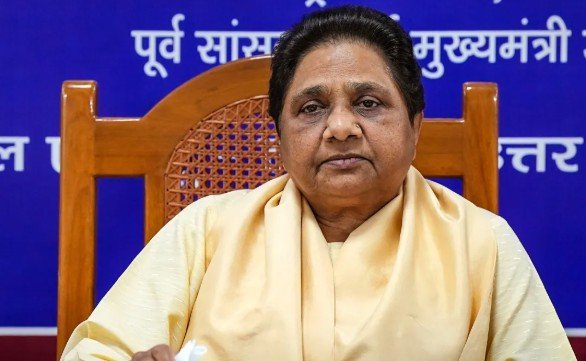
New Delhi, Apr 16 : In a significant intervention in the ongoing debate over women’s political representation, Mayawati has reiterated the demand for a dedicated sub quota for women from Scheduled Castes (SC), Scheduled Tribes (ST), and Other Backward Classes (OBC) within the proposed 33 per cent reservation in legislative bodies.
Addressing select media representatives on Wednesday, the Bahujan Samaj Party supremo welcomed the broader intent behind reserving seats for women in the Lok Sabha and state assemblies. However, she cautioned that without clearly defined provisions for marginalised groups, the policy risks falling short of its objective of equitable representation.
Mayawati emphasised that women from historically disadvantaged communities often face compounded barriers due to caste and socio economic inequalities. In the absence of a structured sub-quota, she warned, the benefits of reservation could be disproportionately captured by women from relatively privileged backgrounds.
The former Uttar Pradesh chief minister also referred to the Centre’s move to convene a special parliamentary session to deliberate on the women’s reservation bill. While acknowledging the importance of the initiative, she questioned whether it adequately addresses the representation needs of SC, ST, and OBC women, urging lawmakers to incorporate safeguards that ensure inclusivity.
Reaffirming her party’s long-standing stance, Mayawati highlighted that the BSP has consistently advocated for 50 per cent reservation for women across all categories, aligned with population proportions. She alleged that mainstream political parties have historically avoided supporting such measures due to political constraints and vested interests.
Positioning the issue beyond electoral calculations, she argued that women’s reservation must be anchored in broader goals of safety, dignity, and social empowerment. Without structural corrections, she noted, deeply rooted social hierarchies could undermine the transformative potential of the policy.
In a pointed critique of the Indian National Congress, Mayawati questioned the timing of its current advocacy for sub-quotas. She alleged that during its earlier tenure in power, the party failed to prioritise such provisions, attributing the omission to entrenched caste biases.
Invoking the legacy of B. R. Ambedkar, she argued that constitutional ideals aimed at ensuring gender and social justice have gradually been diluted. She also referenced Ambedkar’s resignation as Law Minister, linking it to unresolved issues surrounding reservation policies and women’s rights.
Concluding her remarks, Mayawati urged all political stakeholders to treat the matter as a national priority rather than a partisan issue. She called for the swift implementation of a comprehensive and inclusive reservation framework that ensures meaningful participation of women from all sections of society, particularly those who have remained underrepresented for decades.

