


Mehbooba’s divisional status demand part of Dixon Plan, says Farooq Abdullah
‘NC took bullets for India and is ready again,’ asserts Farooq Abdullah
- Farooq rejects fresh division of J&K, hopes Ladakh will return one day
- Calls bifurcation demands foolish, NC chief rules out new districts in J&K
- Dixon Plan will never succeed, State unity non-negotiable: Farooq Abdullah
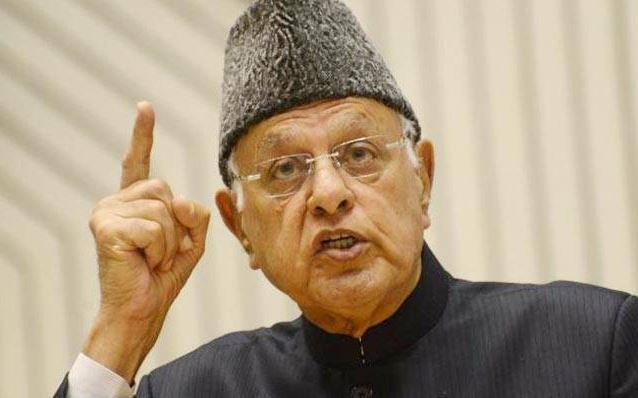
JAMMU, Jan 20: National Conference (NC) president and former Jammu and Kashmir Chief Minister Farooq Abdullah on Monday strongly opposed any fresh administrative or political division of Jammu and Kashmir, asserting that his party has a long history of standing firmly with India and has “faced bullets” for the country, and would do so again if required.
Speaking to reporters on the sidelines of the NC’s two-day convention of block presidents and secretaries here, Abdullah dismissed allegations by BJP leaders that the NC and the PDP thrive on unrest or seek to revive stone-pelting and militancy in the region. He said such accusations were baseless and politically motivated.
“Tell them clearly that those who want disturbance are them, not us. We have taken bullets for staying with India, and we are ready to take them again if needed,” Abdullah said, while laughing off the claims attributed to a senior BJP leader.
Abdullah categorically rejected demands for further bifurcation of Jammu and Kashmir, terming such proposals “foolish and ignorant.” He said the National Conference has never supported the idea of dividing the erstwhile state, including the separation of Ladakh in 2019. Expressing hope for the future, he said Ladakh, now a separate Union Territory, could one day be reunited with Jammu and Kashmir.
“We never wanted Ladakh to be separated. What benefit has Ladakh got? Even the people of Ladakh today say they want to return and do not want Union Territory status. This is the State of Jammu, Kashmir and Ladakh, and Inshallah, one day Ladakh will come back,” Abdullah said.
The NC president also ruled out the creation of new districts within the Union Territory, stating that the existing districts were sufficient and that the real need was for better governance and administrative focus rather than further fragmentation.
Taking a direct swipe at PDP president Mehbooba Mufti, Abdullah said her demand for granting divisional status to the Pir Panjal and Chenab Valley regions was not a new administrative idea but part of the old Dixon Plan. The Dixon Plan, proposed in September 1950 by Sir Owen Dixon, a United Nations representative and former Chief Justice of Australia, envisaged a division of Jammu and Kashmir, largely along the Chenab River, as a possible solution to the dispute between India and Pakistan.
“This Dixon Plan is very old. It talked about dividing the State along the Chenab to create a greater Kashmir. Parmar Sahib opposed it then, and we oppose it now. Many people want to break this State, but they will never succeed,” Abdullah asserted.
He said the demand for new divisions and districts would only weaken the administrative and political unity of the region. According to him, Jammu and Kashmir requires stability and focused development, not repeated restructuring.
Responding to Mehbooba Mufti’s criticism of rising unemployment, Abdullah questioned her own tenure as Chief Minister as well as that of her father, late Mufti Mohammad Sayeed. He said it was easy to criticise others while ignoring one’s own responsibilities in governance.
On national and international issues, Abdullah reacted cautiously to reports of US President Donald Trump inviting Prime Minister Narendra Modi to be part of a proposed “Board of Peace” aimed at promoting stability in Gaza. He said the two leaders share a long-standing relationship, though it has seen ups and downs, and expressed hope that ties would improve.
Addressing the question of dialogue with Pakistan, Abdullah accused sections of the media of suffering from what he termed “Pakistan phobia.” He recalled former Prime Minister Atal Bihari Vajpayee’s remark that neighbours cannot be changed, and argued that dialogue remains an unavoidable reality in international relations. He also questioned the tendency to label Pakistan as uniquely “reckless,” saying recklessness is not limited to any one country.

