


Mission Gyan Bharatam
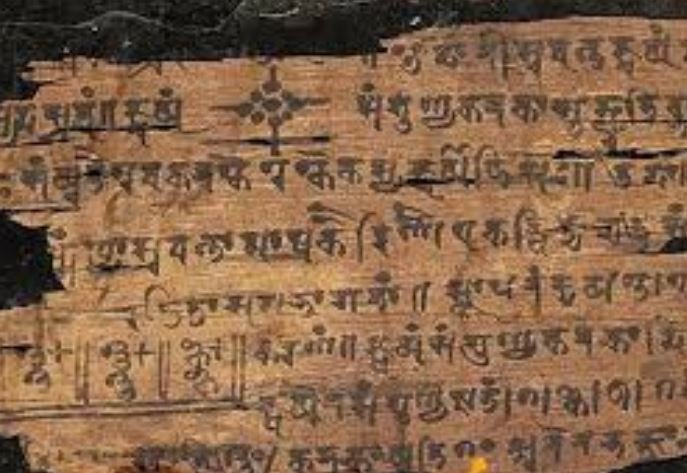
India’s manuscript heritage represents one of the richest and most diverse reservoirs of human knowledge anywhere in the world. Scattered across monasteries, temples, shrines, private homes, libraries, and traditional institutions, these fragile texts contain centuries of accumulated wisdom in philosophy, science, medicine, literature, art, astronomy, and governance. Yet a large portion of this priceless inheritance remains undocumented, vulnerable to decay, and at risk of being lost forever. Mission Gyan Bharatam, the Government of India’s flagship initiative to identify, digitize, and preserve manuscripts, arrives at a moment when safeguarding this civilizational memory has become both an urgent responsibility and a historic opportunity.
The unfolding implementation of Mission Gyan Bharatam in Jammu and Kashmir offers an instructive example of how heritage conservation is gradually being reimagined as a collaborative, people-centered endeavor. The emphasis on public participation marks a decisive departure from earlier approaches that largely confined preservation work to government archives and academic institutions. A significant share of rare manuscripts in the region is known to be privately held or kept in religious and community spaces. Without the willing cooperation of citizens, these materials remain beyond the reach of formal preservation systems. Encouraging individuals and families to come forward as custodians of heritage, therefore, becomes central to the success of the mission. The vision of digitization, deciphering, and democratization under Mission Gyan Bharatam reflects a modern understanding of conservation. Preservation today is no longer limited to physical safeguarding alone. It is about converting fragile handwritten pages into durable digital formats, decoding scripts and languages that are fading from common usage, and making knowledge accessible to scholars, students, and the wider public. In this sense, the mission seeks not merely to save manuscripts but to restore them to active intellectual life. Jammu and Kashmir’s evolving strategy highlights the importance of combining technology with grassroots outreach. The proposed household-level surveys and community mapping exercises recognize that heritage often resides in unexpected places. A manuscript stored in a wooden chest in a remote village may be as significant as one housed in a major archive. By planning door-to-door identification drives and block-level supervision, the administration is signalling that cultural preservation must penetrate beyond institutional walls and into everyday social spaces. Equally important is the role of universities, archives, and specialized centers as knowledge anchors. Cluster centers for digitization, equipped with trained personnel and modern scanning facilities, provide the technical backbone of the mission. Their collaboration with local communities creates a bridge between traditional custodians and contemporary conservation systems. This partnership model ensures that manuscripts are preserved with consent and sensitivity, respecting cultural and religious sentiments while advancing the broader public interest. The larger promise of Mission Gyan Bharatam lies in its effort to transform private collections into public knowledge commons. When manuscripts are digitized and uploaded to a national repository, they cease to be confined to a single location. They become part of a shared intellectual resource that can inspire research, innovation and cross-disciplinary dialogue. Such openness strengthens India’s knowledge ecosystem and reinforces its position as a civilizational contributor to global thought. Yet technology alone cannot guarantee success. Sustained awareness campaigns, trust building, and capacity development are essential. Many manuscript holders may be hesitant to share their collections due to fears of loss, misuse, or lack of recognition. Clear communication about ownership rights, proper attribution, and data security can help overcome these concerns. When people feel respected as partners rather than mere sources, participation naturally increases. In an age driven by rapid technological change, preserving ancient knowledge systems affirms cultural continuity and self-confidence. It reminds younger generations that innovation does not emerge in a vacuum but is nourished by long traditions of inquiry and creativity.
Jammu and Kashmir’s engagement with the mission thus reflects more than an administrative exercise. It represents a quiet but meaningful cultural awakening. By placing citizens at the heart of preservation efforts and aligning institutions with community energies, the Union Territory is contributing to a national movement that seeks to rescue memory from oblivion and transform heritage into a living, accessible resource.

