


Modi’s Europe Outreach Signals a New Era in India’s Global Strategy
Five nation visit focuses on green technology, semiconductors, defence ties, energy security and India-Europe economic integration.
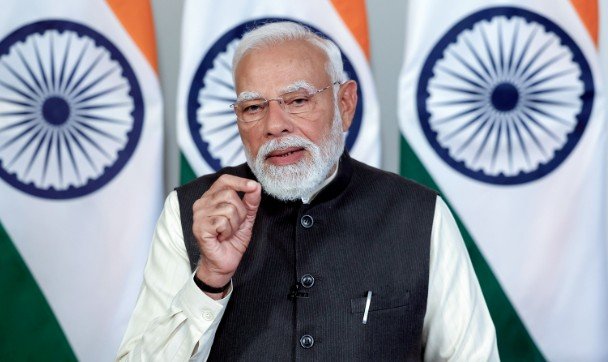
NEW DELHI, May 25: Prime Minister Narendra Modi’s five-nation visit to Europe and the UAE marked a major step in India’s evolving global engagement strategy, with emphasis on technology partnerships, trade expansion, energy cooperation and strategic connectivity.
The May 15-20 tour covered the UAE, Netherlands, Sweden, Norway and Italy, while also bringing together leaders from Finland, Denmark and Iceland during the 3rd India-Nordic Summit in Oslo. Discussions centred on innovation, clean energy, resilient supply chains, advanced manufacturing and regional security cooperation.
India signed 57 agreements and Memorandums of Understanding during the visit. According to the Ministry of External Affairs, business interactions during the tour generated investment commitments estimated at nearly $40 billion across sectors ranging from semiconductors and green technologies to infrastructure and defence manufacturing.
India elevated its relationship with the Netherlands to a Strategic Partnership and upgraded ties with Italy to a Special Strategic Partnership, reflecting growing convergence in economic, technological and geopolitical interests.
In Sweden, Modi participated in a joint business engagement alongside Swedish Prime Minister and European Commission President Ursula von der Leyen, highlighting stronger industrial collaboration and investment opportunities linked to the proposed India-European Union Free Trade Agreement.
One of the major developments during the Netherlands visit was the semiconductor cooperation between Tata Electronics and Dutch technology company ASML. The partnership is expected to support India’s first front-end semiconductor fabrication facility in Gujarat and strengthen New Delhi’s semiconductor ambitions.
The Norway leg of the visit carried strategic significance as it marked the first bilateral trip by an Indian Prime Minister to the country in over four decades. Energy security, Arctic cooperation and sustainable investments figured prominently in talks, particularly as India seeks diversified energy sources amid global geopolitical instability.
Addressing the India-Nordic Summit in Oslo, Modi said trade between India and Nordic countries had expanded nearly fourfold over the last decade, while investments from the region into India had risen significantly. The Trade and Economic Partnership Agreement involving Norway, Iceland, Switzerland and Liechtenstein, operational since October 2025, is expected to facilitate nearly $100 billion in long-term investments.
The summit also produced a roadmap for collaboration in geothermal energy, maritime sustainability, digital innovation, cybersecurity, health technology and Arctic research. India underlined its intent to combine its large-scale industrial and technological capabilities with Nordic expertise to create globally competitive and sustainable solutions.
Discussions during the visit also covered conflicts in West Asia and the Russia-Ukraine war, with European leaders encouraging India to continue supporting diplomatic efforts aimed at de-escalation and dialogue. The need for reforms in global governance institutions, including expansion of the United Nations Security Council, was reiterated in multiple meetings.
In Italy, both sides adopted the India-Italy Joint Strategic Action Plan 2025-29, covering defence cooperation, industrial innovation, energy transition, maritime connectivity and emerging technologies. Italy also reaffirmed support for the India-Middle East-Europe Economic Corridor (IMEC), viewed as a key strategic trade route linking Asia and Europe.
The visit highlighted India’s continued pursuit of strategic autonomy and multi-alignment diplomacy while building trusted partnerships with major European economies in an increasingly uncertain global environment.

