


NDAA Designates India as Key Partner in US Nuclear and Indo-Pacific Strategy
US defence bill mandates deeper nuclear consultations, defence co-production and elevated regional coordination with India to counter China.
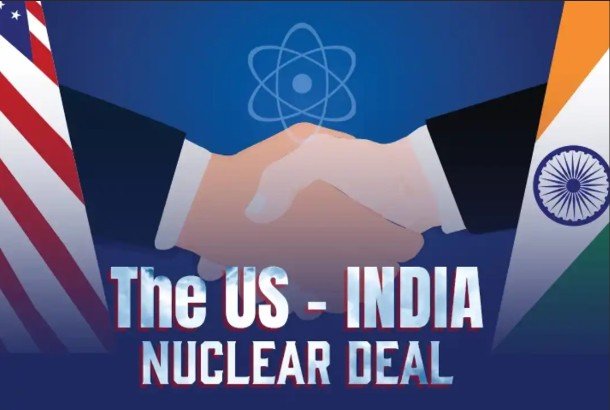
US, Dec 08 : The latest US National Defence Authorisation Act (NDAA) assigns India a central role in Washington’s Indo-Pacific and nuclear strategies, directing sustained consultations on New Delhi’s nuclear liability framework and placing India among a select group of partners shaping a new regional defence industrial ecosystem designed to counter China.
The compromise version of the fiscal 2026 NDAA, released by Congressional leaders on Sunday, embeds India across multiple pillars of US strategic planning from civil nuclear cooperation to maritime security and defence co-production. The bill, which has passed annually for six decades, is expected to move through the House this week.
US mandates joint consultative mechanism on nuclear cooperation
A key India-specific section mandates the creation of a joint consultative mechanism under the US–India Strategic Security Dialogue. This mechanism will meet regularly to review implementation of the 2008 civil nuclear agreement, explore aligning India’s nuclear liability rules with international norms, and shape a diplomatic strategy around these issues.
The Secretary of State must submit annual reports for five years detailing progress an unusually rigorous oversight signal that Washington aims to revive momentum in the long stalled civil nuclear track with India.
India classified as key partner under International Nuclear Energy Act
The NDAA’s International Nuclear Energy Act of 2025 designates India an “ally or partner nation” on par with OECD members for global civil nuclear cooperation. The bill also directs the administration to implement a 10-year plan to expand US nuclear exports and assess competition with Russia and China across the supply chain.
India among core partners in new Indo-Pacific industrial resilience network
At the heart of the Indo-Pacific provisions, India is listed alongside Australia, Japan, South Korea, the Philippines and New Zealand as a priority partner in the new Partnership for Indo-Pacific Industrial Resilience. The initiative seeks to strengthen defence industrial base cooperation, expand co-development and co-production, enhance supply chain security and drive innovation.
Under this programme, the US Defence Secretary is authorised to form working groups, provide technical support, and collaborate with industry and academia. Reporting requirements extend through 2031, highlighting the long-term strategic commitment.
Mandate to deepen Quad engagement and maritime security cooperation
The NDAA also calls for broadening US engagement with India, including through the Quad, to advance a free and open Indo-Pacific. It urges greater collaboration through joint military exercises, defence trade, humanitarian assistance and enhanced maritime security cooperation.
The bill reiterates Congress’s expectation that the Pentagon expand its regional posture and multilateral coordination to strengthen deterrence against China.
New Ambassador at Large for the Indian Ocean Region
In a significant structural move, the legislation authorises a new Ambassador-at-Large for the Indian Ocean Region. The position will coordinate US diplomacy across Indian Ocean states, identify areas of strategic priority, and strengthen efforts to counter China’s influence in the region.
Strategic message: India as a co-architect, not just partner
Together, these provisions signal that India is evolving from a strategic partner to a co-architect of Washington’s Indo-Pacific and nuclear strategy. They also revive long dormant civil nuclear cooperation by pressing for alignment on liability norms critical for any large US reactor project in India.
India–US defence ties have expanded steadily through foundational agreements, intelligence sharing, joint exercises and emerging co-production initiatives. With China’s assertiveness reshaping regional geopolitics, the Indo-Pacific has become the primary arena where New Delhi and Washington’s strategic interests converge.

