


Oil Prices Slip on Fed Policy Signals, Rumours of Hormuz Deal
Brent and WTI post weekly losses as traders assess US monetary policy, recovering Gulf shipments and diplomatic efforts to reopen the Strait of Hormuz.
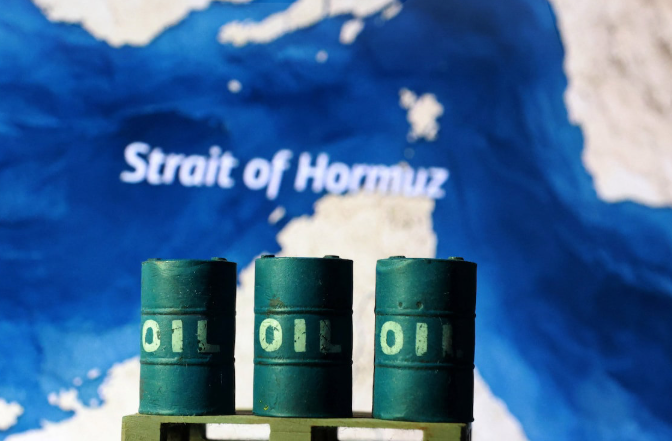
US, Aug 29 : Oil prices ended lower on Friday and recorded their third straight weekly decline as traders weighed signals from the US Federal Reserve on inflation and speculation that diplomatic efforts could restore normal shipping through the Strait of Hormuz.
Brent crude futures settled at $89.31 a barrel, falling 39 cents, or 0.43%, while West Texas Intermediate (WTI) crude finished at $83.40, down 13 cents, or 0.16%.
For the week, Brent declined more than 5%, while WTI lost over 4%, reflecting uncertainty surrounding global energy supplies and demand.
Market sentiment weakened after new Federal Reserve Chairman Kevin Warsh indicated that interest rates could be raised later this year to contain inflation. Higher borrowing costs can weigh on economic activity and fuel concerns about future oil consumption.
Phil Flynn, senior analyst at Price Futures Group, said the oil market was also being influenced by developments affecting refined-product supplies. He noted that continued Ukrainian attacks on Russian refineries were supporting product markets, while speculation over a possible agreement to reopen the Strait of Hormuz was putting downward pressure on crude prices.
The US-Israeli war with Iran entered its sixth month on Friday, keeping the strategically important waterway at the centre of energy-market concerns.
The Strait of Hormuz has traditionally carried around one-fifth of global oil production, making any disruption to shipping through the route a major risk for international crude supplies.
Oil flows through the waterway have shown signs of recovery but remain inconsistent. Rystad analyst Janiv Shah said increased shipments through the Iran-Oman corridor and US claims concerning mine-clearance operations had contributed to the improvement.
Shah said the weekly decline in crude prices was partly linked to the additional volumes managing to leave the Gulf and the gradual recovery in maritime traffic. Increased availability could enable Asian refiners to secure more supplies and process them.
Earlier this week, Washington announced what it described as its toughest sanctions against Iran. Tehran rejected the measures as an inhumane and hostile action, arguing that the sanctions had lost their effectiveness.
Meanwhile, diplomatic efforts to restore regular navigation through the Strait of Hormuz have intensified. Iran has agreed to prepare a list of conditions for returning to normal maritime traffic following discussions involving a Qatari mediator, who urged Tehran to respect freedom of navigation.
Shipping Activity Remains Uneven
The recovery in tanker traffic through the Strait of Hormuz remains fragile.
Preliminary shipping data showed that seven commodity vessels passed through the waterway on Thursday, compared with 17 the previous day and below the 10-day average of 15.
Traffic through the Bab el-Mandeb, another important maritime chokepoint, stood at 17 commodity vessels, including six entering and 11 leaving the waterway.
Goldman Sachs estimated that total Gulf exports had recently reached between 15 million and 16 million barrels per day. Although that remained 7 million to 8 million bpd below pre-war levels, exports were still 5 million to 6 million bpd higher than the lowest levels recorded in March.
PVM Oil Futures analyst John Evans said the conflict had created uncertainty around several factors affecting the energy market, including OPEC membership, Chinese oil demand and the possibility of resolving refinery disruptions in different parts of the world.
US Explores Venezuela Oil Arrangement
Another development attracting traders’ attention was the Trump administration’s efforts to negotiate a long-term arrangement giving the United States access to part of Venezuela’s crude reserves.
People familiar with the discussions said the proposed agreement could eventually reduce the cost of US oil imports.
Venezuela is also reportedly considering withdrawing from OPEC, adding another potential source of uncertainty for the producer group and the wider oil market.
Geopolitical tensions elsewhere also remained elevated. Moscow warned that it could target British military facilities inside and outside Ukraine in response to Ukrainian attacks on Russian territory involving British-supplied long-range cruise missiles.
US President Donald Trump said Russian President Vladimir Putin would not attack a NATO member and played down reports that CIA Director John Ratcliffe had cautioned Russian officials about such a possibility.
Separately, Ukraine’s military reported striking a Russian oil refinery in the Yaroslavl region overnight, highlighting the continuing risks to energy infrastructure and refined product supplies.
With monetary policy, Middle East diplomacy, shipping flows and geopolitical risks all influencing the market, crude prices are likely to remain sensitive to developments surrounding the Strait of Hormuz and the global economic outlook.

