


Oil Prices Soar Past $100 as US Moves to Block Strait of Hormuz, Asian Markets Slide
Energy supply fears intensify after Donald Trump announces naval action; Asian equities slide amid rising volatility
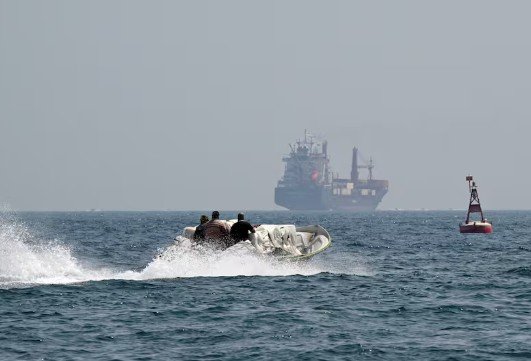
US, Apr 13 : Global oil markets witnessed a sharp rally on Monday after the United States unveiled plans to block maritime traffic linked to Iran through the strategically vital Strait of Hormuz. The move has heightened fears of supply disruptions across international energy corridors.
Benchmark U.S. crude surged 8.7% to settle at $104.95 per barrel, while Brent crude oil climbed 7.4% to $102.23. The spike reflects growing anxiety among traders over constrained oil flows from the Gulf region.
The blockade announcement followed stalled ceasefire negotiations between Washington and Iran, with President Donald Trump confirming that restrictions on vessels entering or leaving Iranian ports had come into force. The escalation marks a significant turning point in ongoing geopolitical tensions affecting global energy markets.
Oil prices had already been trending upward since late February due to delays in shipping through the Hormuz corridor. Brent crude, which hovered near $70 per barrel earlier this year, has now surged to levels exceeding $119 at its peak, underlining the scale of market disruption.
Meanwhile, equity markets across Asia reacted negatively to the uncertainty. Japan’s Nikkei 225 declined 1%, while Australia’s S&P/ASX 200 slipped 0.5%. Losses were also recorded in South Korea’s Kospi and Hong Kong’s Hang Seng Index, reflecting broader investor caution.
Market analysts warned that volatility is likely to persist as geopolitical risks continue to weigh on investor sentiment. Concerns over energy security and inflationary pressures are expected to remain central to global economic outlooks in the coming weeks.
On Wall Street, trading ended on a mixed note last week. The S&P 500 edged down 0.1%, and the Dow Jones Industrial Average dropped 0.6%, while the Nasdaq Composite posted a modest gain of 0.4%.
In the bond market, yields on the 10 year U.S. Treasury rose to 4.32%, indicating shifting investor expectations amid escalating tensions. Currency markets also reflected the uncertainty, with the U.S. dollar strengthening against the Japanese yen, while the euro weakened slightly.
The unfolding situation around the Strait of Hormuz continues to be closely monitored, as any prolonged disruption could significantly impact global oil supply chains and economic stability.

