


Parliamentary Panel to Examine NEET-UG Reforms, Coaching Centre Regulations
The proposed parliamentary review will examine examination transparency, student protection, NEET-UG administration and the regulation of private coaching institutions.
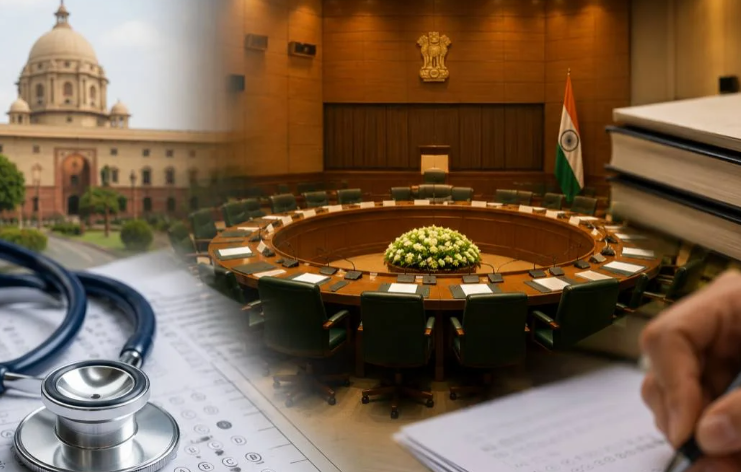
India, Oct 30 : A parliamentary panel is set to examine reforms in the country’s examination system, including the National Eligibility cum Entrance Test for undergraduate medical admissions (NEET-UG), the functioning of coaching centres and the broader framework governing competitive examinations.
The proposed review comes amid continuing concerns over examination integrity, student pressure, the growing influence of private coaching institutions and the need to make high-stakes entrance tests more transparent and accountable.
The panel’s examination of these issues is expected to bring renewed attention to the challenges faced by students preparing for competitive examinations, particularly those seeking admission to medical and other professional courses.
The review is also significant because entrance examinations have become an important gateway to higher education in India. For lakhs of students, performance in a single examination can determine access to institutions and courses that shape their future careers.
As competition intensifies, questions surrounding examination security, fairness, evaluation procedures and the role of coaching institutions have become increasingly important for policymakers.
NEET-UG and the demand for examination reforms
NEET-UG is one of India’s most prominent national-level entrance examinations, serving as the principal admission test for undergraduate medical education.
The examination attracts a large number of candidates every year, making its administration a major responsibility for the authorities concerned.
Any disruption, irregularity or uncertainty surrounding the examination can have serious consequences for students who spend considerable time and resources preparing for it.
The parliamentary review is expected to consider whether existing arrangements adequately address the concerns associated with conducting large-scale examinations.
Important areas requiring attention include the security of question papers, the reliability of examination centres, the transparency of evaluation and the effectiveness of mechanisms for addressing complaints.
The issue of examination integrity has implications beyond medical admissions. National-level recruitment and entrance tests also affect students and job aspirants across different sectors.
A transparent examination system is essential to maintaining public confidence and ensuring that candidates are assessed on merit rather than being disadvantaged by administrative failures or irregular practices.
Coaching centres under scrutiny
The functioning of private coaching centres is another major issue identified for examination by the parliamentary panel.
Over the years, coaching institutions have become an influential part of India’s competitive examination ecosystem. Thousands of students enrol in specialised programmes to prepare for medical, engineering and government recruitment examinations.
While coaching institutions provide structured preparation, study materials and practice examinations, concerns have also emerged regarding high fees, misleading advertisements, excessive academic pressure and the lack of adequate safeguards for students.
For many families, preparing a child for a competitive examination involves substantial financial investment. Students from economically weaker backgrounds may struggle to afford expensive coaching programmes, creating concerns about unequal access to educational opportunities.
The growing dependence on coaching has also raised questions about the relationship between formal schooling and private examination preparation.
In some cases, students devote a significant portion of their time to coaching classes, leaving limited opportunities for independent study, extracurricular activities and personal development.
The parliamentary examination of coaching centre regulations could therefore provide an opportunity to assess whether existing guidelines are sufficient to protect students and ensure responsible institutional practices.
Student welfare and mental health
The pressure associated with competitive examinations has become a major concern for parents, teachers and education experts.
Students preparing for highly competitive tests often face intense expectations from families, educational institutions and society. The fear of failure, uncertainty over admissions and repeated attempts can contribute to stress and emotional difficulties.
The concentration of academic opportunities around a limited number of entrance examinations can further increase the pressure.
A comprehensive examination reform framework needs to consider student welfare alongside administrative and technical improvements.
This includes ensuring that students have access to counselling, reliable academic guidance and support systems that encourage healthy preparation practices.
Coaching institutions also have an important responsibility to create supportive learning environments and avoid practices that place unrealistic expectations on young learners.
Regulations governing coaching centres could be more effective if they address not only institutional registration and financial transparency but also student safety, grievance redressal and access to appropriate support services.
Need for greater transparency and accountability
The credibility of a national examination depends on the confidence students and parents place in the institutions conducting it.
Clear communication about examination schedules, eligibility requirements, answer keys, results and grievance procedures is essential to preventing confusion and unnecessary anxiety.
The parliamentary review is an opportunity to examine whether the existing system provides adequate transparency at every stage.
Authorities may need to assess the effectiveness of monitoring arrangements, the handling of examination-related complaints and the procedures followed when irregularities are reported.
The use of secure digital systems could also be considered as part of a wider effort to improve examination management.
However, technology alone cannot resolve every challenge. Effective implementation requires trained personnel, proper infrastructure, independent oversight and clearly defined accountability.
Examination authorities must also ensure that technological arrangements do not create additional difficulties for candidates from areas with limited internet access or inadequate facilities.
Balancing competition with equal opportunity
One of the central challenges facing India’s education system is the need to balance competitive selection with equal access to opportunities.
Entrance examinations are designed to provide a common assessment framework for candidates from different educational backgrounds. However, differences in school infrastructure, teaching quality, language access and financial resources can affect students’ preparation.
Candidates from rural areas and economically disadvantaged families may not have the same access to specialised coaching, experienced teachers or advanced study materials as their urban counterparts.
The regulation of coaching institutions and improvement of public education facilities could help address some of these disparities.
Strengthening school-level teaching, providing affordable preparation resources and improving access to academic guidance are important steps towards making competitive examinations more inclusive.
The government and educational institutions also need to ensure that students are not forced to depend entirely on expensive private coaching to compete for professional courses.
A broader review of India’s examination system
The parliamentary panel’s proposed review of NEET-UG and coaching centre regulations forms part of a wider debate about the future of assessment in India.
The education system is gradually moving towards approaches that place greater emphasis on conceptual understanding, critical thinking and practical application of knowledge.
However, the continued importance of high-stakes examinations means that reforms must address both the quality of assessment and the experience of candidates.
A reliable examination framework should provide equal treatment, minimise opportunities for malpractice and ensure that students have access to clear information and effective grievance mechanisms.
The review could also encourage a closer examination of the responsibilities shared by examination authorities, educational institutions, coaching providers and regulatory bodies.
For students and parents, the central expectation is that entrance examinations should remain fair, transparent and predictable.
The panel’s deliberations will be important in determining how policymakers approach these concerns and what measures may be considered to improve the examination environment.
Ultimately, the credibility of India’s higher education admission system depends not only on the difficulty of its entrance tests but also on the fairness of the process through which students are selected.

