


Passport Alone Does Not Establish Citizenship, Government Reiterates
Centre Clarifies Legal Position Amid Political Debate, Says Citizenship Determined Only Under Statutory Framework and Judicial Interpretation
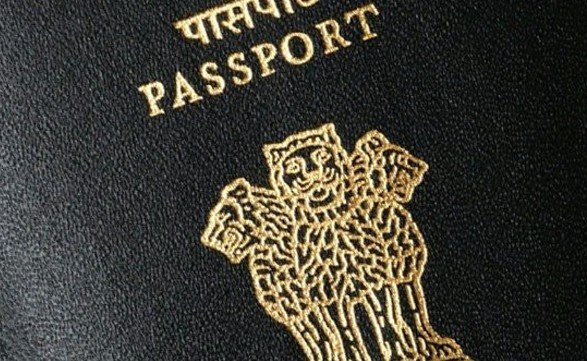
New Delhi, June 25: The Union Government on Thursday clarified that an Indian passport has never been treated as conclusive evidence of citizenship, stressing that there has been no recent policy change or modification in the established legal position over the past 12 years.
Officials referred to provisions under Section 20 of the Passports Act, 1967, which empowers the government to issue travel documents even to individuals who may not be citizens of India under specific circumstances, if deemed necessary in public interest. This provision, the government noted, underscores that possession of a passport alone cannot be equated with citizenship status.
The clarification comes amid ongoing public discussion triggered by remarks from the Ministry of External Affairs (MEA), which stated that a passport functions primarily as a travel document rather than definitive proof of nationality. The statement led to political reactions and renewed debate over documentation used to establish citizenship in India.
The government also cited judicial precedent, including a 2013 ruling by the Bombay High Court, which held that a passport cannot be considered conclusive proof of citizenship. According to legal interpretation, citizenship is determined under the Citizenship Act, 1955, and must be supported by a range of documentary evidence rather than a single identity record.
Political reactions followed the clarification. Senior leaders from the opposition questioned the implications of the statement, raising concerns over how citizenship verification is carried out and what documents are ultimately considered valid proof in administrative processes.
In response, representatives from the ruling party argued that the government’s position was not new, but a reiteration of settled legal principles. They stated that courts across India have consistently upheld that citizenship is established through multiple forms of evidence, including birth records, parental citizenship documentation, educational certificates, and government-issued identity papers, rather than reliance on any single document such as a passport.
Officials further explained that while a passport remains an important identity and international travel document, it does not independently determine citizenship. Instead, it is issued within the broader framework of constitutional and statutory provisions governing nationality in India.
The issue gained further attention after a political exchange on social media, where differing interpretations of the MEA statement highlighted contrasting views on documentation and electoral processes. One side raised concerns over voter eligibility and verification mechanisms, while the other emphasized that the legal framework governing citizenship has long been established and consistently interpreted by courts.
India recently marked Passport Seva Divas, commemorating the enactment of the Passports Act, 1967, with official events organised by the Ministry of External Affairs. The occasion also included discussions on the functioning of passport services and administrative reforms in consular systems across the country.

