


PDP Flags SASCI Loan Risks, Demands House Panel To Study Financial Impact In J&K
Assembly Witnesses Concerns Over SASCI Loans, Call For Detailed Financial Scrutiny
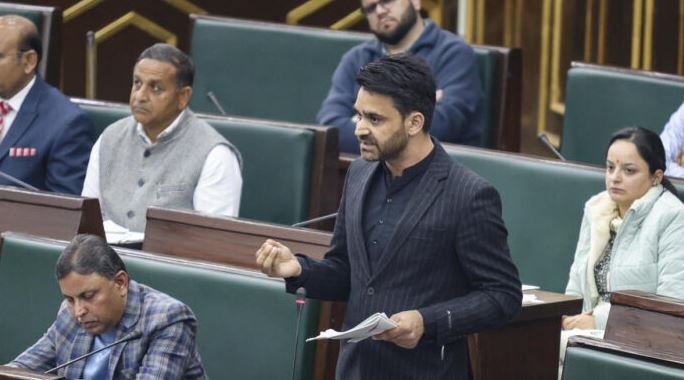
JAMMU, Feb 9: The Special Assistance to States for Capital Investment (SASCI) scheme came under political scrutiny in the Jammu and Kashmir Legislative Assembly after Peoples Democratic Party MLA Wahid-ur-Rehman Para raised concerns regarding its financial structure and long term implications for the Union Territory’s fiscal stability.
Raising the issue during Assembly proceedings, the legislator sought the formation of a House committee to conduct a detailed review of the scheme, particularly focusing on the loan component and its potential impact on Jammu and Kashmir’s future financial health. He argued that any borrowing linked to large scale capital investment must be carefully evaluated to ensure that it remains fiscally sustainable and does not create long term financial pressure on public resources.
Speaking to reporters outside the Assembly, Para maintained that his demand was aimed at ensuring institutional scrutiny and accountability. He suggested that a House committee, headed by a senior legislator, could objectively examine whether the SASCI loan structure was financially safe and beneficial for Jammu and Kashmir in the long run.
The MLA also questioned the rationale behind raising additional loans when, according to him, certain funds allocated under various schemes remained unutilised. He referred to disaster relief and other development funds and argued that efficient utilisation of existing resources should be prioritised before seeking additional borrowing from market linked sources.
Para further alleged that the SASCI scheme operates through loans raised from the market by the Central Government, rather than direct grants, and expressed concern about the possible fiscal burden such borrowing could place on the Union Territory in future years. He questioned whether adequate consultation had taken place with elected representatives before adopting the scheme framework.
Highlighting budget expenditure patterns, the legislator claimed that a major portion of public spending continues to be directed towards committed liabilities such as salaries and pensions, while capital expenditure remains relatively limited. He argued that if development spending utilisation remains low, additional borrowing may need to be carefully justified through transparent planning and measurable economic returns.
The MLA also voiced apprehensions regarding the potential long term impact of debt funded infrastructure development, alleging that excessive borrowing could eventually lead to policy pressures relating to asset management or monetisation of public resources. He claimed that public concerns existed regarding protection of natural and institutional assets in the Union Territory.
While raising these issues, the legislator reiterated that his demand was centred on ensuring financial prudence and legislative oversight in major economic decisions. He emphasised the need for wider policy discussions involving elected representatives to build public confidence in major financial schemes.
The debate around the SASCI scheme reflects broader discussions currently taking place across several states and Union Territories regarding balancing development financing with long term fiscal sustainability. As infrastructure expansion remains a key priority for economic growth, governments are increasingly exploring blended financing models that combine grants, loans and institutional support.
The government has not yet issued a detailed response to the specific demand for a House committee, but officials have earlier maintained that capital investment schemes are aimed at accelerating infrastructure development, improving public services and generating long term economic returns.

