


PM Modi Hails UNESCO Recognition of Sarnath as Global Tribute to India’s Civilisational Heritage
Prime Minister says global recognition of the sacred Buddhist site reflects India's rich cultural legacy and will inspire visitors worldwide to embrace Lord Buddha's message of peace and compassion.
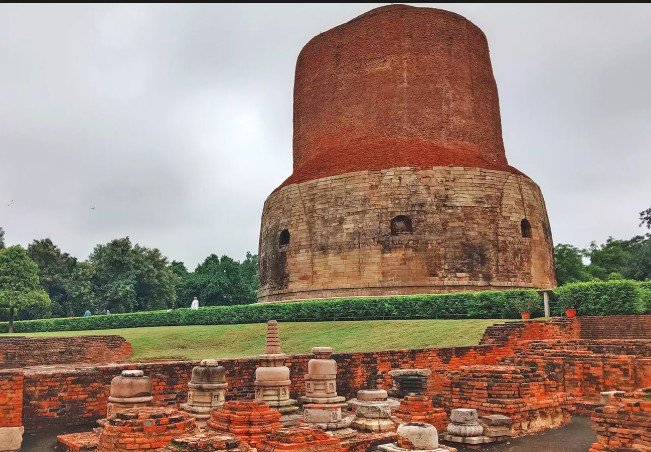
NEW DELHI, July 25: Prime Minister Narendra Modi on Saturday described the inscription of Sarnath on the UNESCO World Heritage List as a historic achievement that honours India’s ancient civilisation and spiritual traditions. Calling it a “proud moment for every Indian,” the Prime Minister said the recognition would further strengthen the global significance of one of Buddhism’s holiest pilgrimage destinations.
In a message shared on social media platform X, Modi congratulated the nation on the international recognition and said the honour reflects the enduring relevance of India’s cultural values. He expressed confidence that the UNESCO inscription would encourage travellers, scholars and devotees from around the world to explore Sarnath and gain a deeper understanding of Lord Buddha’s teachings.
The Prime Minister stated that Sarnath occupies a unique place in human history because it was here that Lord Buddha delivered his first discourse after attaining enlightenment. He noted that the values of compassion, wisdom, harmony and peaceful coexistence associated with Buddha continue to inspire millions across continents even today.
According to Modi, the inclusion of Sarnath among UNESCO’s globally protected heritage sites is not only an acknowledgement of India’s remarkable historical legacy but also a tribute to the country’s long-standing spiritual traditions. He said the recognition highlights India’s contribution to the world’s cultural and philosophical heritage while preserving an invaluable chapter of Buddhist history for future generations.
The Prime Minister added that international recognition would increase awareness about Sarnath’s historical importance and help attract more visitors interested in spirituality, archaeology and heritage tourism. He said the development would strengthen India’s position as one of the world’s leading destinations for Buddhist pilgrimage and cultural exploration.
Located just a few kilometres from Varanasi in Uttar Pradesh, Sarnath is revered as the place where Lord Buddha delivered the Dhammacakkappavattana Sutta, also known as the First Sermon, to his five earliest disciples after attaining enlightenment at Bodh Gaya. This event marked the beginning of the spread of Buddhism across Asia and eventually the world.
The archaeological complex at Sarnath preserves several monuments of exceptional historical value. Among its most prominent landmarks is the Dhamek Stupa, built to commemorate Buddha’s first sermon. The site also contains the remains of ancient monasteries, temples and meditation halls that once formed a thriving centre of Buddhist learning.
Another major attraction is the remains of the Ashokan Pillar, erected by Emperor Ashoka during the third century BCE. The pillar originally featured the Lion Capital, which later became the National Emblem of India, symbolising the country’s historical connection with the principles of justice, peace and righteousness.
The Sarnath Archaeological Museum, located within the heritage complex, houses an extensive collection of Buddhist sculptures, inscriptions and relics recovered during archaeological excavations. These artefacts provide valuable insight into the evolution of Buddhist art, architecture and religious traditions over several centuries.
Experts believe the UNESCO inscription will significantly boost conservation initiatives at the historic site by attracting greater international collaboration, funding and technical expertise. Heritage authorities are expected to strengthen preservation measures to safeguard the monuments from environmental degradation while improving visitor facilities and sustainable tourism management.
The recognition is also likely to benefit Uttar Pradesh’s tourism sector by increasing international arrivals and creating new opportunities for local businesses connected to hospitality, transport, handicrafts and cultural services. Officials expect Sarnath to witness a rise in both domestic and foreign visitors seeking to explore India’s Buddhist heritage.
India is home to several UNESCO World Heritage Sites that reflect the country’s extraordinary cultural diversity and historical richness. The addition of Sarnath further enhances the nation’s global heritage profile and reinforces its role as the birthplace of one of the world’s major religions.
With UNESCO’s recognition, Sarnath is expected to receive renewed global attention as a symbol of peace, compassion and spiritual enlightenment. The honour not only celebrates the site’s archaeological significance but also reaffirms the universal relevance of Lord Buddha’s teachings in promoting harmony, tolerance and human values across the world.

