


Portugal edge Croatia 2-1 as Ramos, Ronaldo strike in World Cup 2026 clash
Cristiano Ronaldo becomes the oldest player to score in a FIFA World Cup knockout match, while Goncalo Ramos strikes deep in stoppage time to seal Portugal’s dramatic win over Croatia in Toronto.
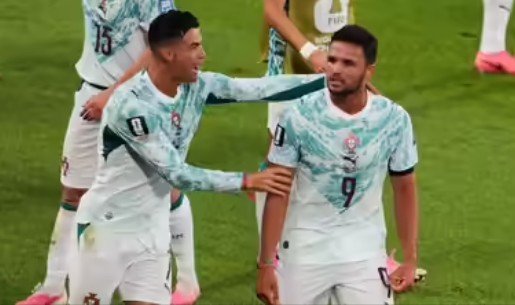
India, July 03 : Portugal kept their FIFA World Cup 2026 dream alive with a dramatic 2-1 victory over Croatia in a pulsating Round of 32 clash in Toronto on Thursday, as Cristiano Ronaldo and Goncalo Ramos delivered the goals that sent Roberto Martinez’s side into the last 16, where a heavyweight showdown with Spain now awaits.
In a contest packed with tension, controversy and late drama, Portugal had to come from behind after Ivan Perisic gave Croatia the lead in the second half. Ronaldo restored parity from the penalty spot before substitute Goncalo Ramos headed home in stoppage time to complete the turnaround. Croatia thought they had snatched a last-gasp equaliser at the death, only for the goal to be ruled out for offside following a VAR review, leaving Portugal celebrating one of their most hard-fought victories of the tournament.
The result not only propelled Portugal into the next round but also added another historic chapter to Ronaldo’s glittering international career. At 41, the veteran forward became the oldest player to score in the knockout stage of a World Cup, and significantly, it was the first knockout-stage World Cup goal of his career.
The evening at Toronto Stadium carried the feel of a major occasion long before kick-off. The stands were packed, the atmosphere was intense and the stakes were immense, with a place in the last 16 on the line. Portugal entered the game with plenty of attacking talent and the weight of expectation on their shoulders, but Croatia’s proven tournament pedigree ensured this was never going to be straightforward. The 2018 runners-up and 2022 third-place finishers once again showed why they remain one of the most resilient sides on the global stage.
Portugal dominated possession in the opening half, dictating the tempo and moving the ball confidently through midfield, but they struggled to turn their territorial superiority into clear-cut chances. Croatia, compact and disciplined out of possession, were content to absorb pressure and wait for opportunities to strike on the break.
Cristiano Ronaldo, as expected, was the central figure from the start. Every touch from the Portuguese captain drew a strong reaction from the crowd, particularly from the Croatia supporters, who booed him loudly whenever he got on the ball. Despite that hostile backdrop, Ronaldo remained heavily involved in Portugal’s attacking moves.
Portugal’s first notable opening came when Pedro Neto whipped in an inviting cross early in the game, but Ronaldo could not make the decisive contact. Soon after, Joao Cancelo delivered a dangerous ball into the area that created uncertainty in the Croatian defence, yet neither Ronaldo nor Bruno Fernandes could take advantage. It was an early sign of Portugal’s problem: they were getting into promising positions but lacked the final touch.
Bruno Fernandes, Bernardo Silva and Vitinha tried to pull Croatia out of shape with neat passing combinations around the edge of the box, but Zlatko Dalic’s men remained composed. Croatia defended with discipline, crowding the danger areas and limiting the spaces Portugal usually exploit so well. The midfield battle was intense, and while Portugal had more of the ball, Croatia ensured they were rarely comfortable.
The weather added another layer to the spectacle. Toronto had been gripped by sweltering heat for much of the day, but a breeze off Lake Ontario offered some relief by kick-off. Even so, the conditions were testing, and the pace of the game fluctuated as both teams tried to manage their energy while remaining alert to moments of danger.
For all Portugal’s control, Croatia carried a threat whenever they moved forward with purpose. Luka Modric, still orchestrating play with trademark intelligence, linked effectively with Mateo Kovacic and Ivan Perisic, helping Croatia transition quickly from defence to attack. Their movement hinted that if Portugal were not careful, they could be punished.
The game burst into life after the restart. Croatia returned for the second half with far greater urgency and immediately put Portugal under pressure. They began to win second balls, carry more intent in midfield and attack the spaces behind Portugal’s defence with sharper movement.
A warning arrived when Mateo Kovacic latched onto a loose ball and surged through the Portuguese backline. He managed to get a shot away, but the effort hit the side netting. Portugal had escaped, but only briefly. Croatia’s confidence was growing, and it soon translated into the opening goal.
In the 53rd minute, Croatia struck through Ivan Perisic. The experienced winger controlled a pass from Josip Stanisic and finished calmly at the far post, capping a flowing move that exposed Portugal’s defensive vulnerability. It was a clinical finish and a deserved reward for Croatia’s bright start to the second half. The goal shifted the pressure squarely onto Portugal, who suddenly faced the prospect of an early exit.
Croatia’s lead injected even more intensity into the match. Portugal were forced to chase the game, and that urgency opened up spaces at both ends. The contest became stretched, transforming into a frantic back-and-forth battle with momentum swinging rapidly from one side to the other.
Croatia nearly doubled their advantage when Nikola Vlasic poked the ball into the net, only for the effort to be ruled out for offside. Portugal survived that scare and responded almost immediately with one of their best moments of the night. Rafael Leao, who had provided directness and energy from the flank, unleashed a powerful strike from outside the box that crashed against the crossbar. It was a huge let-off for Croatia and a sign that Portugal were beginning to find their edge.
As the game opened up, Ronaldo looked increasingly determined to leave his mark. The Portugal captain thought he had equalised when he cleverly lifted the ball over goalkeeper Dominik Livakovic and into the net, only for the flag to deny him because of an offside infringement. For a moment, the stadium held its breath, but the disappointment did not last long.
Portugal’s equaliser arrived in the 68th minute and came from the penalty spot. Renato Veiga was brought down inside the area by Nikola Vlasic, giving the referee little choice but to point to the spot. With the pressure immense and the Croatian crowd trying to unsettle him, Ronaldo stepped up and calmly fired the penalty straight down the middle of the goal.
It was a massive moment in the match and in Ronaldo’s own World Cup journey. He celebrated with visible emotion, aware that he had delivered Portugal a lifeline and carved out another record in the process. At 41, he became the oldest player to score in a World Cup knockout fixture, underlining once again his ability to produce on the biggest stages even in the twilight of his extraordinary career.
The goal transformed the mood of the game. Portugal, suddenly rejuvenated, began to attack with fresh belief. Croatia, who had looked in control after taking the lead, were forced back as Portugal pushed for a winner. Roberto Martinez urged his players forward, sensing that the momentum had shifted.
Rafael Leao continued to stretch the Croatian defence with his pace and direct running, while Bruno Fernandes tried to dictate the attacking rhythm from deeper areas. Croatia, however, remained dangerous on the counter, and Portugal could not afford to lose concentration. Every turnover threatened another Croatian surge.
In the 81st minute, Martinez made a major call by taking Ronaldo off. The veteran had delivered his moment from the spot, but with extra time looming and the game demanding fresh legs, the Portugal coach turned to his bench. Ronaldo’s reaction from the sidelines became one of the defining images of the closing stages, as he watched anxiously with the fate of his side hanging in the balance.
Portugal kept pressing and finally found their breakthrough deep into stoppage time. In the fourth minute of added time, Goncalo Ramos rose above the Croatian defence to meet a delivery into the box and power a header past Livakovic. The goal sparked wild celebrations among Portugal’s players and supporters, who believed the dramatic winner had sealed passage to the next round.
But the drama was still not over.
Croatia launched one final push in search of an equaliser, throwing bodies forward in a desperate bid to keep their World Cup alive. In the dying seconds, the ball ended up in Portugal’s net, seemingly rescuing Croatia at the last possible moment. Ronaldo, watching from the bench, looked devastated as the Croatian players celebrated.
Yet the final twist was still to come. The goal was checked by VAR, and after review, it was ruled out for offside. The decision preserved Portugal’s 2-1 lead and crushed Croatia’s hopes in the cruelest possible fashion. The ruling also sparked ugly scenes in the stands, with debris thrown onto the pitch by furious supporters behind the goal.
When the final whistle finally arrived, Portugal’s players collapsed in relief and celebration. They had survived a fierce challenge from one of international football’s most stubborn tournament teams and emerged with a place in the last 16. It was not a perfect performance, and for long spells they looked vulnerable, but they found the character and quality to turn the game around when it mattered most.
For Croatia, the defeat marked a painful end to another World Cup campaign. Dalic’s side once again showed courage, tactical intelligence and the capacity to trouble elite opposition, but they were undone by fine margins. Perisic’s goal had put them in a commanding position, and they had chances to extend their advantage, yet Portugal’s response proved decisive. The disallowed late equaliser will sting for a long time, especially given how close Croatia came to forcing extra time.
Portugal, meanwhile, can now look ahead to a blockbuster last-16 meeting with Spain. That clash promises to be one of the standout fixtures of the knockout phase, pitting two technically gifted European heavyweights against each other in a rivalry loaded with history and quality. Portugal will draw confidence from the way they fought back against Croatia, but they will also know they must sharpen their overall display if they are to overcome a Spanish side that has looked increasingly dangerous in the tournament.
Roberto Martinez will take heart from the impact of his attacking options and the resilience shown by his team under pressure. Ronaldo’s leadership and composure, Ramos’s decisive contribution from the bench, and Leao’s constant threat offered encouraging signs. Yet defensive lapses and periods of uncertainty against Croatia exposed areas that Spain will undoubtedly seek to exploit.
Still, the night belonged to Portugal’s match-winners. Ronaldo produced the historic penalty that changed the direction of the game, and Ramos delivered the dramatic late header that settled it. Together, they carried Portugal into the next round and ensured that the 2026 World Cup journey continues.
In tournament football, knockout matches are often remembered less for style and more for decisive moments, emotional swings and players who seize the spotlight when everything is on the line. Portugal’s victory over Croatia had all of those elements. It featured a comeback, a record-breaking goal, a stoppage-time winner and a final VAR twist that left one side ecstatic and the other heartbroken.
For Ronaldo, it was another reminder that even at 41 he remains capable of shaping the biggest matches. For Ramos, it was a timely contribution that could prove hugely important as Portugal move deeper into the competition. And for Portugal as a whole, it was a statement of resilience — imperfect, dramatic, but ultimately enough to keep their World Cup hopes burning.
The Selecao now march into the last 16 with momentum, belief and one of football’s great names still at the centre of the story. After a chaotic and unforgettable night in Toronto, Portugal’s World Cup campaign remains alive, and a titanic showdown with Spain now awaits.

