


Radhakrishnan: Tribal Communities Key Partners in Building India’s Future
Vice-President says development must preserve indigenous identity, traditions and knowledge while embracing modern opportunities
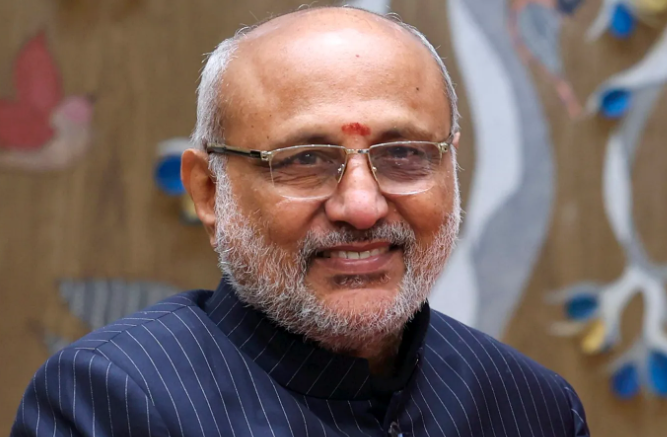
ITANAGAR, Sep 9: Vice-President C P Radhakrishnan on Wednesday said tribal communities are not only custodians of India’s rich heritage but also vital partners in shaping the country’s future, emphasising that development should progress without compromising indigenous culture, traditions and identity.
Radhakrishnan made the remarks while addressing a community gathering at Nyedar Namlo, a sacred place of worship and community centre associated with the indigenous Donyi-Polo faith of the Nyishi community and other indigenous groups in Itanagar.
During his visit, the Vice-President offered prayers at the Nyedar Namlo prayer hall and was briefed on the beliefs and prayer practices of the Nyishi indigenous faith. He was also apprised of the Yerko indigenous Gurukul system, efforts to preserve traditional knowledge and medicinal practices, and initiatives aimed at promoting the mother tongue.
Radhakrishnan described his visit to Nyedar Namlo as a blessing and said the place represented a harmonious relationship between tradition and contemporary thought.
He said Arunachal Pradesh exemplifies India’s unity in diversity, where centuries-old traditions coexist with modern aspirations. He also praised the people of the State for serving as sentinels of the country’s territorial integrity.
Highlighting the principles reflected in the Donyi-Polo tradition, the Vice-President said its emphasis on nature, truth, harmony and community continues to hold significance in today’s rapidly changing world.
He stressed that protecting indigenous heritage should not be viewed as opposition to development or change.
“Preservation of indigenous culture is not about resisting change. It is about ensuring that change does not come at the cost of identity,” he said.
Radhakrishnan appreciated the efforts of the Nyishi Nyidung Mung-jwng Rallung in documenting and researching the community’s heritage. He said its work involving traditional festivals, cultural programmes, customary laws and social values was helping safeguard the community’s cultural legacy for future generations.
The Vice-President also highlighted the Yerko Gurukul system, describing it as an important model for bringing contemporary education together with indigenous knowledge.
He said such an educational approach could help children take advantage of modern opportunities while remaining connected to their cultural roots and traditions.
Referring to Prime Minister Narendra Modi’s vision of “Vikas bhi, Virasat bhi”, Radhakrishnan said tribal communities have a significant role to play in India’s journey towards becoming a developed nation.
He said the recognition of Janjatiya Gaurav Diwas had helped bring greater national attention to the contributions and heritage of tribal communities across the country.
The Vice-President also connected the preservation of indigenous traditions with the principles of Vocal for Local and Ek Bharat, Shreshtha Bharat.
Calling upon young people to embrace modern science, technology and global skills, he urged them to remain equally connected to their mother tongue, cultural heritage and traditional values.
“India must be modern in its aspirations but deeply rooted in its civilisational and cultural values,” he said.
Radhakrishnan expressed hope that Nyedar Namlo would continue to serve as a source of inspiration for peace, harmony, respect for nature, social unity and a strong sense of community.
Governor Lt Gen (Retd) K T Parnaik, Chief Minister Pema Khandu, Deputy Chief Minister Chowna Mein, MP Tai Tagak, Home and Indigenous Affairs Minister Mama Natung and Chief Secretary Manish Kumar Gupta were among those present at the gathering.

