


Rahul Gandhi Calls for Rebuilding India’s Education System to Ensure Student Safety
Speaking at the 'Chhatron ki Goonj' rally in Dehradun, the Congress leader urged comprehensive education reforms, stronger safeguards against paper leaks, and a student-centric examination system to restore public trust.
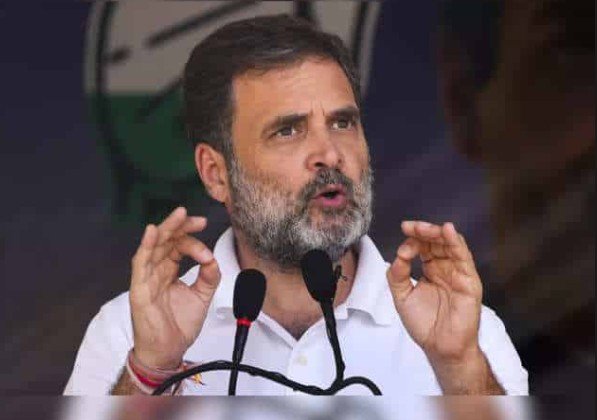
NEW DELHI, July 18: Congress leader and Leader of the Opposition in the Lok Sabha, Rahul Gandhi, on Saturday called for a complete restructuring of India’s education system, asserting that students deserve an environment built on safety, fairness and opportunity rather than stress and uncertainty. Addressing concerns over recurring examination paper leaks, Gandhi said the country’s existing educational framework has failed millions of students and requires far-reaching reforms to restore confidence among families.
His remarks came a day after he participated in the ‘Chhatron ki Goonj’ rally in Dehradun, where students, parents and education activists gathered to highlight concerns surrounding examination irregularities and the growing pressure faced by young aspirants.
Emotional Appeal Over Student Loss
Sharing a video from the rally on social media platform X, Rahul Gandhi referred to the emotional testimony of Rajesh Kumar, father of Riya Kumari, a NEET-UG aspirant who died by suicide following the cancellation of the medical entrance examination amid allegations of a paper leak.
Gandhi described the father’s grief as deeply moving, saying it reflected the pain experienced by countless families whose dreams had been shattered by repeated failures in the examination system.
He stressed that behind every affected student is a family that has invested years of hard work, financial resources and emotional support with the hope of securing a brighter future for their children.
According to Gandhi, these sacrifices should result in educational opportunities rather than disappointment and trauma.
Call for a New Educational Framework
The Congress leader argued that incremental changes would not be enough to address the structural weaknesses affecting India’s education sector.
Instead, he advocated rebuilding the system from the ground up with student welfare at its core.
He said educational institutions should become spaces where children feel secure, motivated and encouraged to learn instead of living under constant pressure created by uncertain examination processes.
A transparent and accountable system, he added, would restore faith among students while ensuring that parents receive the rewards of their years of dedication rather than heartbreak.
Demand for Political Consensus
During his address in Dehradun, Gandhi appealed for all political parties to rise above partisan interests and work collectively toward meaningful education reforms.
He maintained that educational institutions should remain free from political influence and function solely in the interest of students and academic excellence.
Calling the issue of examination integrity a national concern, Gandhi said the fight against paper leaks should unite governments, opposition parties, educational experts and civil society.
He argued that protecting the credibility of public examinations is a shared responsibility that extends beyond political competition.
Allegations of Systemic Failures
Gandhi alleged that examination paper leaks have become widespread because weaknesses exist across multiple levels of the education ecosystem.
He claimed that the problem is not limited to isolated individuals but involves several interconnected stages of the examination process.
According to him, vulnerabilities may arise during question paper preparation, translation, printing, transportation, storage and distribution, making comprehensive reforms essential.
He also criticized the functioning of institutions responsible for conducting competitive examinations, arguing that stronger accountability mechanisms are necessary to prevent future irregularities.
Millions of Students Affected
Highlighting the broader impact of examination controversies, Gandhi claimed that crores of students preparing for competitive examinations have faced uncertainty due to repeated instances of paper leaks and administrative failures.
He noted that many candidates spend years preparing for highly competitive entrance examinations, often making significant financial and personal sacrifices.
When examinations are cancelled or questioned because of security breaches, students experience not only academic setbacks but also emotional distress and financial hardship.
He said repeated disruptions weaken confidence in public institutions and create anxiety among young people striving to build successful careers.
Need for Stronger Accountability
The Congress leader expressed concern over what he described as inadequate action against those responsible for examination irregularities.
He argued that stronger investigations, timely prosecution and stricter punishment for offenders are essential to deter future misconduct.
According to Gandhi, accountability must extend to every stage of the examination process so that individuals involved in malpractice cannot escape responsibility.
He emphasized that restoring trust requires both preventive measures and effective enforcement of existing laws.
Modernising the Examination System
Gandhi also advocated modernising India’s testing framework by adopting technology-driven solutions already used in several international examinations.
He argued that the country’s existing assessment model reflects outdated practices that no longer meet the requirements of modern education.
Instead of relying on rigid examination structures, he suggested building a more flexible, student-focused evaluation system capable of assessing knowledge fairly and securely.
Such reforms, he said, would improve transparency while reducing opportunities for organised examination fraud.
Technology Can Improve Examination Security
One of Gandhi’s key proposals involved creating a secure digital question bank supported by advanced technology.
He suggested that examination authorities could generate question papers through randomised selection methods, making it significantly more difficult for confidential material to be leaked before examinations.
He pointed to internationally recognised computer-based examinations that use similar systems to enhance fairness and maintain examination integrity.
According to Gandhi, adopting such technological safeguards would strengthen public confidence and reduce the possibility of organised malpractice.
Student-Centric Education
The Congress leader argued that educational reforms should place students at the centre of policy decisions rather than treating examinations as administrative exercises.
He maintained that assessment systems should encourage learning, creativity and critical thinking instead of placing excessive emphasis on high-pressure testing.
Flexible evaluation methods, improved counselling services and greater institutional transparency would contribute to a healthier educational environment, he said.
By reducing unnecessary stress, schools and universities could help students focus more effectively on academic development and personal growth.
Public Debate on Examination Reforms
The recent controversies surrounding competitive examinations have intensified discussions across the country regarding the need for stronger examination governance.
Parents, educators and policy experts have increasingly called for improvements in digital security, examination management and institutional accountability.
Education specialists have suggested that advanced encryption, artificial intelligence-based monitoring and improved logistics could significantly strengthen examination systems.
The debate has also highlighted the importance of safeguarding merit while ensuring equal opportunities for students from diverse backgrounds.
Education Beyond Examinations
Gandhi said education should not be measured solely through competitive examinations but should also prepare students with practical knowledge, creativity and confidence for future challenges.
He argued that reforms must focus on building an ecosystem where learning receives greater emphasis than memorisation and high-stakes testing.
According to him, a modern education system should encourage innovation, problem-solving abilities and ethical values alongside academic achievement.
Such an approach would better equip young people for rapidly changing social and economic conditions.
Restoring Confidence in Public Institutions
The Congress leader concluded that rebuilding trust in India’s education system requires sustained commitment from policymakers, administrators and educational institutions.
Transparent examination procedures, stronger security mechanisms, technological innovation and student-focused policies, he said, would together create a more reliable system capable of protecting the aspirations of millions of young Indians.
He expressed hope that meaningful reforms would ensure future generations pursue education with confidence rather than fear, allowing talent and hard work to determine success instead of administrative failures.
As debate over examination reforms continues nationwide, Gandhi’s proposals have added momentum to broader discussions on improving transparency, strengthening institutional accountability and creating a safer, more equitable educational environment for students across the country.

