


Rajnath Singh Urges Stronger Indian Maritime Leadership Amid West Asia Crisis
Defence Minister says disruptions in the Persian Gulf could affect global energy supplies, trade and economic stability.
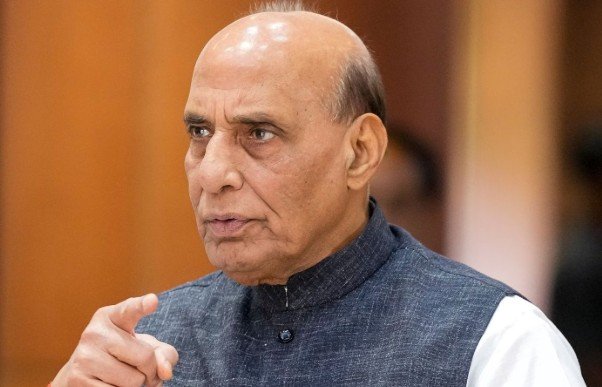
Kolkata, Mar 6: Defence Minister Rajnath Singh on Friday said the shifting geopolitical landscape has once again placed the world’s oceans at the centre of global power dynamics, stressing that India must step forward with confidence and capability to provide maritime leadership.
Addressing an event in Kolkata, Singh referred to the escalating conflict in West Asia and said the rapidly evolving situation could have serious implications for global energy security and economic stability.
He described the developments in the region as “highly unusual” and said it remains difficult to predict how the situation may unfold in the coming days.
“The Strait of Hormuz and the wider Persian Gulf region are critical for the world’s energy security. Any disturbance in this area directly affects the supply of oil and gas,” Singh said.
The defence minister warned that the tensions were already triggering disruptions beyond the energy sector, affecting supply chains and international trade. According to him, such instability ultimately places pressure on the global economy.
Highlighting the strategic significance of maritime domains, Singh said the current crisis has reinforced the importance of oceans in shaping geopolitical influence.
“In an era of changing geopolitics, oceans have again emerged as the centre of the global power balance. As a major maritime nation, India must demonstrate leadership with clarity, capability and vision,” he said.
Singh did not comment on reports that the United States had sunk an Iranian warship near Sri Lanka earlier this week. The vessel, identified as the Iranian frigate IRIS Dena, was returning from the Milan multilateral naval exercise hosted by India when the incident reportedly occurred, leading to the deaths of dozens of Iranian sailors.
The confrontation between Washington and Tehran has intensified since February 28, when the United States launched military strikes on Iran. The offensive triggered retaliatory attacks by Iran targeting Israel and several American military bases across the Gulf region, including in the United Arab Emirates, Bahrain, Kuwait, Jordan and Saudi Arabia.
Over the past few days, the conflict has broadened with multiple rounds of attacks and counter-attacks, raising concerns about wider instability in West Asia and its potential ripple effects on global energy markets and trade routes.

