


Ramayana crosses Rs 200 crore in India, sets new Diwali box-office record
Ranbir Kapoor and Yash-starrer collects an estimated Rs 223 crore domestically in four days, with the festive holiday providing a major boost to its theatrical performance.
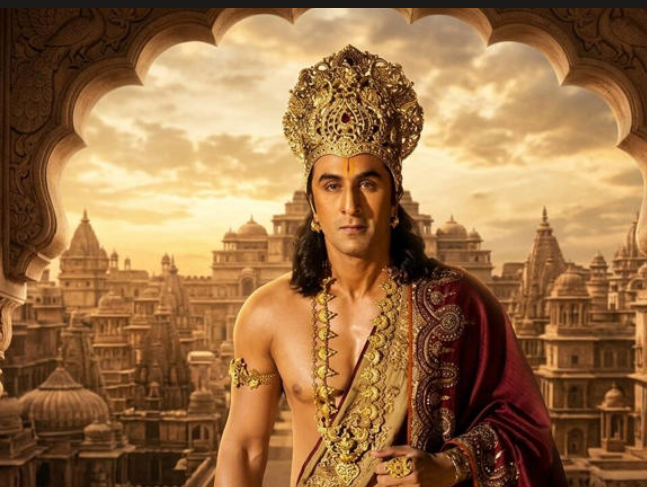
MUMBAI, Nov 9: The much anticipated mythological epic Ramayana, featuring Ranbir Kapoor, Yash and Sai Pallavi in leading roles, has crossed the Rs 200 crore mark at the Indian box office within four days of its theatrical release, establishing a major milestone during the Diwali festive weekend.
Directed by Nitesh Tiwari, the film witnessed a substantial improvement in its earnings on Sunday, November 8, as audiences turned out in large numbers to watch the big budget production during the festival. According to trade estimates reported on Sunday evening, the movie had collected approximately Rs 223 crore net in India by 7 pm, strengthening its position among the biggest Bollywood releases of the year.
The film opened in cinemas on November 5 and generated considerable attention even before its release because of its scale, casting and ambitious presentation of one of India’s most celebrated epics. Its opening-day collection stood at approximately Rs 64.85 crore net in the domestic market, making it one of the strongest Bollywood openings of the year.
However, the initial momentum experienced some fluctuations over the following days. On Friday, the film earned around Rs 48 crore, before witnessing a significant improvement on Saturday, when collections approached Rs 70 crore. The three-day domestic total consequently reached approximately Rs 183 crore.
Sunday’s performance proved particularly important for the production, as the film managed to attract substantial audiences despite the festival celebrations affecting cinema-going patterns in certain regions.
The latest figures indicated that the festive holiday had helped the movie recover momentum after a relatively moderate second-day performance. Its four-day earnings also placed it ahead of several major previous releases in terms of their initial domestic collections.
One of the significant achievements for the production was its performance on Diwali itself. The film entered the festival period with expectations of recording strong business, although its opening weekend had initially raised questions about whether it could fully capitalise on its enormous production budget.
The Sunday figures provided a positive indication for the makers, with the film approaching a new benchmark for Diwali-day collections. It was also tracking to surpass the previous festival-day record held by Salman Khan’s Tiger 3, which had collected approximately Rs 44.50 crore net on Diwali in 2023.
The performance has brought renewed attention to the commercial potential of large-scale mythological productions in the Indian film industry. Such projects generally require extensive investment in visual effects, production design, costumes, technology and large-scale promotional campaigns.
In the case of Ramayana, the makers have attempted to present the ancient Indian epic through a cinematic format designed to appeal to audiences across different age groups and language markets.
Ranbir Kapoor plays Lord Rama, while Sai Pallavi portrays Sita. Kannada superstar Yash appears as Ravana, one of the central characters in the story. Ravie Dubey plays Lakshman, adding another prominent face to the principal cast.
The casting has been among the major talking points surrounding the project, particularly because it brings together performers associated with different regional film industries.
The film’s performance has also highlighted the importance of its Hindi-language version in generating domestic revenue. According to the available box-office estimates, the Hindi release accounted for the largest share of the collections, while the Kannada version recorded a comparatively slower beginning.
The Telugu-language version also registered a positive contribution, whereas the Tamil and Malayalam editions had comparatively modest initial performances.
The difference between the language versions has become an important factor in assessing the film’s overall commercial prospects. Although the production has been designed for a nationwide audience, the response across markets has not been uniform.
Yash’s presence as Ravana had generated considerable anticipation among fans, especially in southern India, where the actor enjoys a substantial following. Nevertheless, the early figures suggested that the Kannada version had not yet achieved the same momentum as the Hindi release.
Despite these regional variations, the overall domestic collection has remained strong enough to place the production among the leading theatrical performers of the festive season.
The film’s international performance has also contributed to the growing attention surrounding the project. Earlier estimates published during its first three days indicated worldwide collections of more than Rs 384 crore, reflecting considerable interest among overseas audiences as well.
The production is backed by Namit Malhotra’s Prime Focus Studios in collaboration with DNEG and Yash’s Monster Mind Creations. The involvement of major production and visual-effects companies has been central to the film’s positioning as one of the most ambitious Indian cinematic projects.
The story is planned as a two-part cinematic presentation, allowing the makers to explore the epic narrative across an extended format. The first instalment has begun its theatrical journey, while the second part is scheduled for release during Diwali 2028.
The decision to divide the narrative into two films has generated expectations about how the characters and central conflicts will develop in the subsequent instalment. It also provides the production team with an opportunity to build a larger cinematic universe around the traditional story.
The initial box-office performance has placed considerable attention on the film’s ability to maintain audience interest beyond its opening weekend. For a production of this scale, sustained collections over several weeks will be an important measure of its commercial success.
The coming days are expected to provide a clearer picture of its performance in different language markets, particularly as the impact of the festive holiday begins to settle.
Trade observers will also monitor whether the film can maintain its strong domestic momentum during regular working days, when cinema attendance generally depends more heavily on audience reviews and word-of-mouth recommendations.
Apart from its commercial prospects, the film has attracted discussion because of the challenge of adapting a culturally significant epic for contemporary cinema audiences. The Ramayana has been retold through literature, television, theatre, animation and films over several generations.
Bringing the story to the big screen on such an extensive scale requires balancing traditional expectations with modern cinematic techniques. The makers have attempted to combine established characters and familiar narrative elements with a large production design and contemporary visual presentation.
The performances of the leading actors, particularly their interpretations of Rama, Sita and Ravana, are likely to remain central to discussions surrounding the film.
The production’s early commercial performance has therefore emerged as an important development for the Hindi film industry during the festive season. Its ability to attract audiences across different markets could also influence future investment decisions involving large-scale Indian productions.
For now, the Rs 200-crore domestic milestone has provided the makers with a strong reason for optimism, although the film’s longer theatrical run will ultimately determine the extent of its success.

