


Ranbir Kapoor’s Ramayana Releases Worldwide, Bringing India’s Epic to the Big Screen
Nitesh Tiwari's mythological epic, featuring Ranbir Kapoor as Lord Rama, Sai Pallavi as Sita and Yash as Ravana, opens worldwide across multiple languages with an ambitious two part cinematic vision.
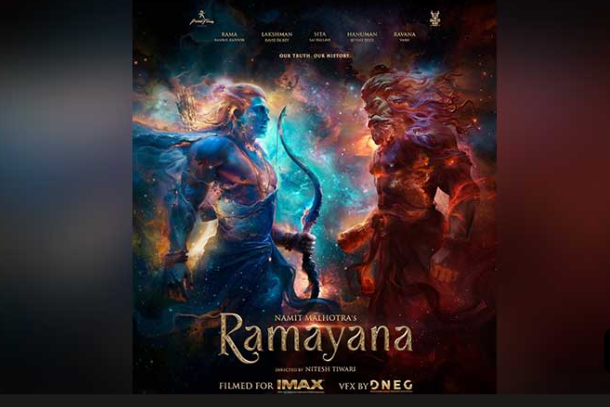
Mumbai, November 5: One of the most anticipated Indian film projects of the year, Ramayana: Part One, starring Ranbir Kapoor, Sai Pallavi and Yash, arrived in cinemas worldwide on Thursday, marking a major moment for Indian mythological storytelling and large-scale filmmaking.
Directed by Nitesh Tiwari, the film presents a cinematic adaptation of the ancient Indian epic, bringing together a prominent cast, international technical expertise and an ambitious visual production. The release has attracted considerable attention from moviegoers, industry professionals and audiences interested in seeing how one of India’s most familiar stories has been interpreted for contemporary cinema.
Ranbir Kapoor plays Lord Rama, Sai Pallavi portrays Goddess Sita, while Kannada superstar Yash appears as Ravana. The film also features Ravie Dubey as Lakshman and Sunny Deol as Hanuman. Veteran actor Arun Govil plays King Dasharatha, while Lara Dutta, Indira Krishna, Sonal Jha and Sheeba Chaddha appear in important supporting roles.
The theatrical release follows an extensive promotional campaign and special screenings attended by members of the entertainment industry. A star-studded premiere was held in Mumbai ahead of the nationwide release, bringing together several prominent Bollywood personalities.
A Star-Studded Premiere Ahead of Theatrical Release
The Mumbai screening on November 3 brought together several celebrities who attended the special presentation ahead of the film’s public release.
Ranbir Kapoor was joined by members of the cast and film fraternity, including Alia Bhatt, Sunny Deol, Neetu Kapoor and Vivek Oberoi. The gathering generated considerable interest on social media, with photographs and videos from the event circulating widely.
The premiere provided an opportunity for invited guests to experience the film before its theatrical debut. Several personalities subsequently shared their reactions, adding to the excitement surrounding the project.
Singer and music composer Badshah also praised the production after attending a special screening. He expressed appreciation for the visual presentation, music and performances, particularly highlighting the sequence involving Jatayu.
The attention surrounding the premiere reflects the scale of expectations attached to the film. Its combination of established Bollywood performers, popular regional cinema stars and an internationally recognised technical team has made it one of the most closely watched Indian releases of the year.
Ranbir Kapoor Takes on the Role of Lord Rama
For Ranbir Kapoor, playing Lord Rama represents a significant addition to his film career. The actor is taking on a character that holds an important place in Indian cultural and religious traditions.
The portrayal requires a balance between the character’s strength, dignity, compassion and commitment to righteousness. Rama’s journey in the epic includes exile, personal sacrifice, the search for Sita and the eventual confrontation with Ravana.
The casting has attracted attention because of the character’s importance to audiences across different generations. Ranbir’s performance will be assessed not only as an acting role but also in the context of the expectations associated with portraying such a widely revered figure.
Sai Pallavi’s portrayal of Sita is another important element of the film. Her character forms the emotional centre of several major developments in the epic, particularly the events surrounding her exile and abduction.
Yash, meanwhile, takes on the role of Ravana, one of the most complex antagonists in Indian mythology. His character is central to the conflict that drives the narrative.
The film also brings together actors from different industries, giving the adaptation a broad national appeal.
International Technical Collaboration and Visual Effects
A major feature of the production is its emphasis on visual effects and large-scale cinematic presentation.
The film brings together Prime Focus Studios, DNEG and Yash’s Monster Mind Creations. DNEG, an internationally recognised visual effects company, is associated with the project’s technical execution.
The production has also attracted attention because of its musical collaboration between A R Rahman and Hans Zimmer. Their involvement brings together two composers with distinctive musical backgrounds and international recognition.
The combination of Indian musical traditions and international orchestral influences is expected to play an important role in establishing the atmosphere of the epic.
The film’s technical presentation is particularly significant because the story includes large-scale settings, battles, mythological characters and locations that require extensive visual construction.
The makers have sought to present the narrative through a cinematic format that combines traditional storytelling with contemporary filmmaking technology.
The involvement of experienced production and visual effects teams also reflects the growing ambition of Indian cinema to undertake projects designed for international theatrical audiences.
Release Across Multiple Languages
Ramayana: Part One has been released in Hindi, Tamil, Telugu, Kannada and Malayalam, allowing the film to reach audiences across India’s major linguistic markets.
The worldwide distribution strategy also includes an English-language version for overseas audiences.
The film’s release across different languages is important because the Ramayana is familiar to audiences throughout the country, although its cultural interpretations and storytelling traditions vary across regions.
A multilingual release gives viewers an opportunity to experience the adaptation in their preferred language while allowing the production to reach a wider theatrical market.
The film is also being presented in premium theatrical formats, including IMAX, providing audiences with additional viewing options.
Sony Pictures is handling international distribution outside India, while the domestic distribution arrangements include Dharma Productions in the Hindi-speaking market.
A Two-Part Cinematic Adaptation
The makers have planned the project as a two-part cinematic adaptation rather than attempting to cover the entire epic in a single film.
The first instalment focuses on establishing the principal characters and the central narrative of the Ramayana. The second part is scheduled for release during Diwali 2027.
This structure gives the filmmakers more room to develop the characters, relationships and major events of the story.
The Ramayana contains several interconnected episodes, including Rama’s upbringing, his marriage to Sita, exile, the events in the forest, Sita’s abduction and the eventual battle against Ravana.
Dividing the story into two instalments allows the production to explore these developments across a longer cinematic narrative.
The approach also creates an opportunity to give greater attention to supporting characters whose roles are important to the overall storyline.
Advance Bookings and Opening-Day Expectations
The film entered theatres after attracting strong interest during its advance-booking period.
Industry reports published ahead of the release highlighted substantial ticket demand in domestic and overseas markets. The scale of the advance bookings placed the film among the most closely watched theatrical launches of the year.
Cinépolis India also reported selling more than one lakh tickets ahead of the opening, with over 1,600 shows planned for the first day across its network.
However, industry observers have cautioned against judging the film’s overall performance entirely through its opening-day collections.
The release coincides with the festive period, when family gatherings and religious celebrations can influence cinema attendance patterns. The timing may affect show-wise collections even when audience interest remains strong.
The film’s longer-term performance will depend on audience response, reviews, repeat viewership and its ability to attract moviegoers across different regions.
Audience Expectations and the Challenge of Adapting a Familiar Epic
Adapting the Ramayana for the big screen presents a different challenge from creating an entirely fictional story.
The characters and major events are already familiar to a large section of the audience. Viewers therefore approach the film with established expectations about the narrative, its values and the personalities involved.
The filmmakers must balance cinematic interpretation with the cultural significance of the source material.
Visual spectacle alone may not determine the film’s reception. Performances, storytelling, music, emotional depth and the treatment of important characters will also influence how audiences respond.
The production’s scale has attracted considerable attention, but its lasting impact will depend on whether the adaptation connects with viewers beyond its technical presentation.
With its prominent cast, international collaboration and ambitious two-part format, Ramayana: Part One represents a significant theatrical undertaking for the Indian film industry.
As the film begins its worldwide theatrical journey, audience reactions and box-office performance will provide a clearer picture of whether the production succeeds in translating one of India’s best-known epics into a major contemporary cinematic experience.

