


Rotten Meat Row Erupts in J&K Assembly Lawmakers Demand Crackdown as Govt Flags Staff Crunch
Lawmakers demand strict enforcement as government cites manpower shortage and outlines legal limits on arrests
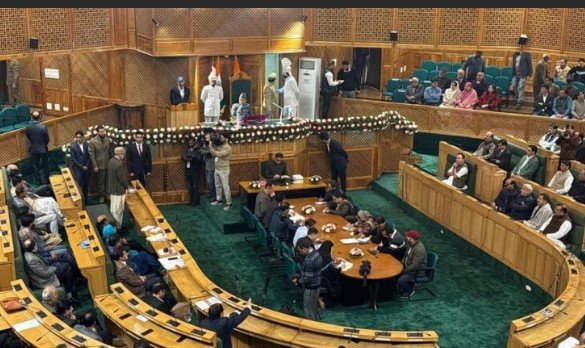
Jammu, Feb 13: Allegations surrounding the sale of rotten and unsafe meat sparked intense debate in the Jammu and Kashmir Legislative Assembly on Friday, with legislators pressing for tougher enforcement and stronger safeguards to protect public health.
The issue was raised through multiple questions submitted by MLAs Mubarak Gul, Mir Saifullah, Pirzada Farooq Ahmad Shah, and Hasnain Masoodi, who voiced concern over food adulteration and the circulation of contaminated meat products.
Members warned that unsafe food could aggravate serious health conditions and contribute to the spread of diseases. Gul urged authorities to identify those involved in the illegal trade and consider attaching their properties to deter future violations. Shah described the situation as more dangerous than narcotics and called for a dedicated enforcement unit at Lakhanpur, along with the establishment of slaughterhouses across municipal bodies.
Responding to the discussion, Health Minister Sakina Itoo acknowledged a shortage of staff within the department and confirmed that recruitment is underway to fill vacant positions. She stressed that while the matter is critical, Food Safety Officers do not have the authority to make arrests under the Food Safety and Standards Act, 2006. Instead, they can inspect premises, collect samples, suspend licences, and initiate prosecutions, while arrest powers remain with the police under criminal law.
Speaker Abdul Rahim Rather questioned whether legislative amendments should be introduced to strengthen enforcement. Supporting the suggestion, Tanvir Sadiq proposed forming a dedicated task force, noting that policing functions fall outside the Assembly’s direct control.
Official data presented to the House revealed that authorities seized and destroyed 12,183.5 kilograms of rotten meat and chicken worth ₹29.19 lakh during the 2025–26 financial year up to December. A total of 1,676 inspections were conducted, and 144 samples were collected, with 18 found to be below prescribed quality standards.
Significant quantities were confiscated across several districts, with Srinagar and Jammu accounting for the largest share. Additionally, inspections uncovered irregularities in dairy products: out of 173 paneer samples collected, 47 were deemed sub-standard and one unsafe. Over 7,600 kilograms of paneer valued at ₹16.32 lakh were seized or destroyed.
The government also informed legislators that two NABL-accredited food testing laboratories are operational in Jammu and Srinagar, supported by 12 mobile testing units. However, both facilities face acute staffing gaps, with 11 of the 19 sanctioned posts vacant at each laboratory. Authorities plan to refer these vacancies to the recruitment board after finalising service rules, while temporary personnel are being engaged through funding from the Food Safety and Standards Authority of India.
Reiterating the statutory nature of food safety enforcement, the government noted that the law emphasises inspection, sampling, adjudication, and prosecution rather than routine registration of FIRs. The issue remained a central concern in the House, with members across party lines calling for decisive measures to prevent the sale of unsafe food and safeguard public health.

