


Russia’s Wartime Parliamentary Election Set to Reinforce Kremlin’s Grip on Power
The September 18–20 election comes amid economic pressure, tighter restrictions on dissent and the continued dominance of President Vladimir Putin’s United Russia party.
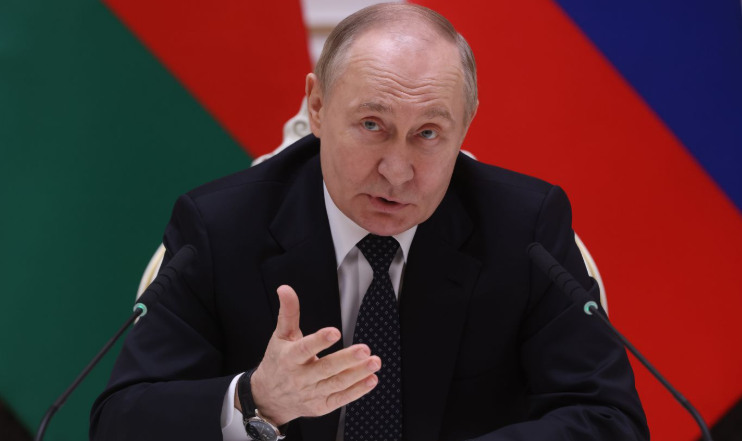
Moscow, Sept 17: Russia is set to begin a three-day parliamentary election on Friday, with voters choosing members of the 450-seat State Duma amid the continuing war in Ukraine and growing economic pressures at home.
The September 18–20 vote is the first parliamentary election since Russia launched its full scale invasion of Ukraine in February 2022. Alongside the federal contest, voters in several regions will also participate in gubernatorial and regional legislative elections.
President Vladimir Putin has urged citizens to participate, presenting the vote as a demonstration of national unity and support for the country during wartime. In a televised address, he linked participation in the election with support for Russian soldiers and the country’s sovereignty.
The ruling United Russia party is widely expected to retain its dominant position in the State Duma. The party won more than two-thirds of the chamber’s seats in the 2021 election and continues to control the largest bloc in parliament.
Other established parties, including the Communist Party, the Liberal Democratic Party, A Just Russia and New People, are also contesting the election. These parties have generally supported the government’s major policies, including its position on the war in Ukraine.
Opposition Faces Restrictions
The election is taking place under tight political controls. Yabloko, the country’s main registered party openly opposed to the war, was removed from the national party list ballot after a Supreme Court ruling in August. Some of its individual candidates, however, continue to contest single-member constituencies.
Several prominent anti-war figures have also faced legal action or left the country. The restrictions have significantly narrowed the space for political forces campaigning against the government’s approach to the Ukraine conflict.
The Kremlin has defended wartime restrictions as necessary for national security and stability, while critics and opposition figures have argued that they have reduced political competition.
War and Economic Pressure Shape Campaign
The election comes as Russia faces continuing economic challenges linked to the prolonged conflict and Western sanctions. Ukrainian drone attacks on Russian oil facilities and logistical infrastructure have also disrupted parts of the domestic economy and contributed to concerns over fuel supplies.
Public anxiety has increased in some parts of the country as the effects of the war have become more visible. At the same time, the government has continued to rely heavily on military spending and measures aimed at supporting the war effort.
Concerns have also emerged over the possibility of another large scale military mobilisation after the election. Putin has rejected such claims, while Ukrainian officials have repeatedly alleged that Moscow could consider additional recruitment.
Veterans Take Prominent Role
Nearly 200 candidates contesting the parliamentary election have reportedly served in the war in Ukraine. The Kremlin has promoted military veterans as an emerging group within the country’s political establishment, with several receiving prominent positions on party lists.
Among the prominent United Russia candidates are Foreign Minister Sergey Lavrov, Moscow Mayor Sergei Sobyanin and war correspondent Yevgeny Poddubny, who was wounded in a Ukrainian drone attack.
The inclusion of veterans reflects the growing role of military service in Russia’s political messaging during the conflict.
Turnout Remains Important
Although United Russia is expected to remain the largest force in parliament, analysts say voter participation is also an important consideration for the Kremlin.
The authorities have promoted voting through a three day schedule and electronic voting, with around 111 million people eligible to participate. Voting is also taking place in Ukrainian territories that Russia claims to have annexed, a move that has drawn international criticism.
For the Kremlin, the election provides an opportunity to demonstrate continued political support while the country faces the economic and social consequences of the prolonged war.
The final composition of the State Duma will therefore reflect not only the distribution of parliamentary seats but also the extent of political competition permitted during wartime.

