


Safeguarding Living Heritage
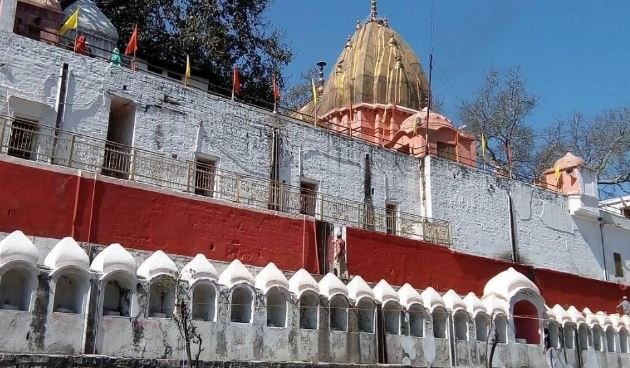
Heritage is not preserved by repairing stone alone. It survives when history, faith, craftsmanship and community memory are protected together. The Jammu and Kashmir Government’s decision to approve ₹13.75 crore for Purmandal in Samba and Imambara Zadibal in Srinagar is therefore both welcome and significant. It reflects an inclusive understanding that sacred places belonging to different traditions are equal parts of the region’s cultural inheritance.
Of the total allocation, ₹7.16 crore has been sanctioned for the restoration and revival of Purmandal, while ₹6.59 crore has been approved for the conservation and upgradation of Imambara Zadibal. These investments can strengthen pilgrimage facilities, support local livelihoods and revive historic spaces. Yet their success will depend less on the amount sanctioned and more on how intelligently and sensitively the work is executed. Purmandal is not merely a collection of ageing structures. It is a living shrine town shaped by faith, architecture and the cultural memory of generations. Improving sanitation, pathways, and lighting, signage, parking and visitor amenities is necessary, but modern interventions must remain subordinate to the historic landscape. Concrete-heavy construction, visual clutter or unsuitable materials could weaken the very character the project intends to protect. The same caution applies to Imambara Zadibal. Its significance extends beyond architecture. It is a centre of worship, community life and collective identity. Conservation must respect its original form, traditional materials, decorative details and religious atmosphere. Up gradation should make the site safer and more accessible without turning it into an ordinary modern complex stripped of historical depth. This is where the Government must be firm. Heritage projects cannot be handed over and supervised like routine civil works. They require conservation architects, structural experts, historians, archaeologists, traditional craftspeople and representatives of the religious communities connected with the sites. A contractor-led approach without specialist guidance can cause irreversible damage in the name of renovation. Every intervention should begin with detailed documentation of existing structures, materials, alterations and vulnerable features. Restoration plans, drawings and material specifications should be reviewed by an independent technical panel. The use of cement, tiles, paint or modern fixtures must be carefully controlled wherever they conflict with the original architecture. The Government’s wider heritage programme deserves appreciation. It has also sanctioned ₹6.38 crore for developing Khoo Sahib at Yarwan in Pulwama and ₹16.36 crore for the restoration of Jamia Masjid Sharief in Shopian and Sarvadhar Chaumanda Mata Mandir in Ramban. Taken together, these projects present a positive picture of inclusive heritage governance across religious and regional lines. However, announcements and allocations must be followed by transparent execution. Project timelines, approved designs, conservation methods and expenditure details should be publicly available. Regular technical inspections are essential, and any deviation from conservation standards should be corrected before it becomes permanent. Local communities must be actively involved. They hold knowledge about rituals, traditional use, earlier repairs and the cultural meaning of architectural features. Their participation can help prevent insensitive changes and ensure that upgraded facilities respond to real needs rather than assumptions made from offices. Heritage-linked tourism can create opportunities for guides, artisans, transporters, shopkeepers and small hospitality businesses. But commercial activity must be regulated. Unplanned stalls, intrusive signage, uncontrolled traffic and excessive construction can quickly destroy the spiritual and visual character of a sacred place.
The Government deserves credit for recognising Purmandal and Imambara Zadibal as heritage assets worthy of public investment. It must now insist on professional conservation, community consultation, financial transparency and long-term maintenance. Restoration should not merely make these sites look new. It should allow them to age with dignity, retain their authenticity and continue carrying the faith and memory of future generations.

