


Security Forces Recover Explosives, Weapons from Militant Hideouts in Mosques in Northwest Pakistan
Intelligence-led operation in North Waziristan uncovers IEDs, ammunition and alleged torture cells inside two mosques as authorities intensify efforts to curb rising militant violence in Khyber Pakhtunkhwa.
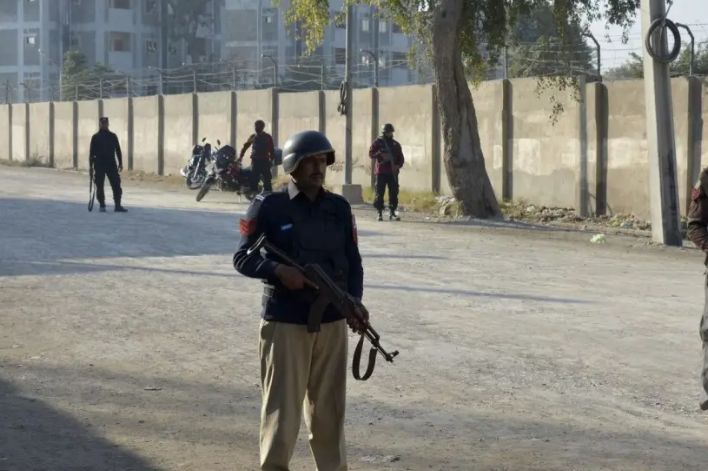
PESHAWAR, Nov 9: Security forces in Pakistan have recovered a substantial stockpile of explosives, weapons and ammunition from two militant hideouts operating inside mosques in the country’s northwestern Khyber Pakhtunkhwa province, the military said on Monday.
The recovery was made during an intelligence based operation carried out on Sunday in Muzak village, located on the southern outskirts of Mir Ali tehsil in North Waziristan.
According to a statement released by the Inter-Services Public Relations (ISPR), the operation targeted suspected hideouts of militants affiliated with the banned Tehreek-i-Taliban Pakistan (TTP), which Pakistani authorities refer to as Fitna al-Khawarij.
During the operation, security personnel searched and sanitised two locations established inside mosques. They subsequently seized a large quantity of improvised explosive devices (IEDs), materials used for manufacturing explosives, firearms and ammunition.
The military’s media wing alleged that the militants had deliberately turned the religious premises into storage facilities for explosives and had also established torture cells there. It described the use of mosques for such activities as a violation of the sanctity of places of worship and a distortion of Islamic teachings.
The ISPR further alleged that the militant groups were receiving support from the Afghan Taliban, asserting that their activities and interpretation of religion had been rejected by the people of Pakistan, particularly those living in Khyber Pakhtunkhwa.
Security forces have launched a sanitisation operation in the surrounding area to identify and eliminate any remaining militant infrastructure and ensure that no further threats remain.
The military said its counterterrorism campaign under the national security initiative ‘Azm-e-Istehkam’ would continue, with the objective of eliminating foreign sponsored and supported terrorism across the country.
Reacting to the development, Khyber Pakhtunkhwa Governor Faisal Karim Kundi termed the incident deeply distressing and commended security personnel for successfully carrying out the intelligence led operation.
He called for stronger and more sustained counterterrorism measures to restore normalcy across the province, while reiterating his support for security forces working to establish lasting peace.
Khyber Pakhtunkhwa and neighbouring Balochistan have remained among Pakistan’s most troubled regions, facing recurring militant attacks, armed violence and serious security challenges.
The security situation in Khyber Pakhtunkhwa has deteriorated significantly in recent months. Last month, Pakistan’s federal government declared an emergency in the province, citing escalating militant violence and concerns over the provincial administration’s ability to address the worsening situation.
The decision, announced on October 11, came amid growing concerns over repeated attacks and the deteriorating law and order situation in several districts.
A report by the Pakistan Institute for Conflict and Security Studies (PICSS) also highlighted the continuing rise in militant activity across the country.
According to the institute’s latest weekly assessment, Pakistan witnessed 49 militant attacks between October 30 and November 5, compared with 31 incidents during the preceding week.
The attacks resulted in 25 deaths and left 21 people injured, reflecting a significant increase in militant violence during the reporting period.
Several areas of Khyber Pakhtunkhwa, including the former tribal districts, continued to experience renewed militant activity alongside intensified security operations.
The latest recovery in North Waziristan underscores the continuing security challenges confronting Pakistani authorities as they attempt to dismantle militant networks and prevent further attacks.

