


Sheikh Hasina Blames Yunus-Led Interim Govt for Dhaka Violence, Warns of Strain in India Ties
Former Bangladesh PM alleges worsening law and order, rising radicalisation and insecurity for minorities
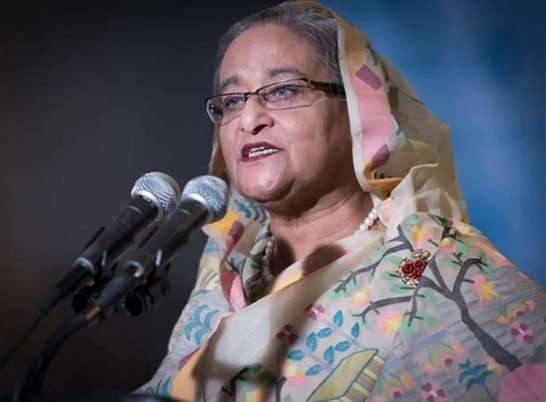
Bangladesh, Dec 22 : A fragile calm may have returned to Dhaka after days of violent protests, but former Bangladesh prime minister Sheikh Hasina has accused the Muhammad Yunus-led interim government of failing to restore law and order and warned that the unrest is beginning to strain Bangladesh’s relations with neighbouring countries, including India.
In an email interaction with news agency ANI, Hasina said the instability that led to the collapse of her government has continued under the new administration. She alleged that lawlessness has worsened under Chief Adviser Muhammad Yunus and claimed that insecurity, particularly for minority communities, has increased. She added that developments in Bangladesh are being closely watched in New Delhi.
Hasina’s remarks come amid heightened tensions following the killing of Sharif Osman Hadi, convenor of Inqilab Moncho and a young activist linked to last year’s July uprising. Hadi was shot at close range on December 12 while travelling in a rickshaw in Dhaka’s Bijoynagar area. He later died on December 18 after being flown to Singapore for treatment.
The killing sparked protests across the capital, with demonstrators gathering at Shahbagh intersection to demand justice. The demonstrations further escalated an already volatile situation in Dhaka.
Calling the incident a reflection of deteriorating law and order, Hasina said violence had become commonplace and alleged that the interim government either underestimated the severity of the situation or lacked the authority to control it. Such instability, she said, weakens Bangladesh internally and erodes confidence among neighbouring nations.
Hasina also flagged concerns over what she described as growing radicalisation. She accused Yunus of releasing convicted extremists, appointing radical elements to influential positions and signalling a possible easing of restrictions on Jamaat-e-Islami. She argued that Yunus, whom she described as lacking political experience, was being used as an internationally acceptable face while extremist forces gained influence domestically.
Warning that Bangladesh’s secular political character was under threat, Hasina said the developments could have consequences beyond the country’s borders. “This should alarm not only India, but every nation invested in South Asian stability,” she said, adding that democracy and responsible governance were essential to restoring order.
Sheikh Hasina also linked recent diplomatic strains between India and Bangladesh to the actions of the interim government, citing anti-India protests and the killing of 27 year old Hindu youth Dipu Chandra Das. Das was allegedly beaten to death by a mob over blasphemy allegations on December 18, after which his body was reportedly set on fire. Ten people have since been arrested in connection with the incident.
Amid the unrest, the Indian Visa Application Centre in Chittagong suspended visa services following a security incident. Hasina said India’s concerns were justified, alleging that extremist groups had targeted diplomatic missions, media organisations and minority communities.
“The strain you are witnessing is entirely of Yunus’s making,” she said, asserting that India has been Bangladesh’s closest partner for decades and expressing confidence that bilateral ties would stabilise once elected governance is restored.
Bangladesh continues to witness protests, vandalism and attacks on media establishments as the country prepares for national elections scheduled for next year.

