


Six Indian Tourists Stranded in Nepal’s National Park Rescued Safely
The tourists were trapped by heavy snowfall while returning from Shey Phoksundo Lake, all six were airlifted by helicopter and admitted to a government hospital in Dolpa.
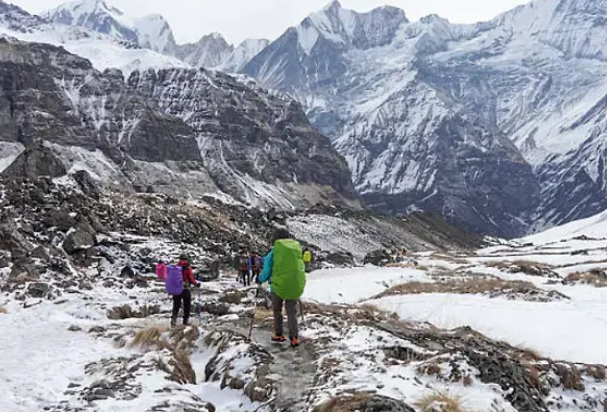
KATHMANDU, Nov 2: Six Indian tourists were rescued safely on Monday after becoming stranded in heavy snowfall in the Shey-Phoksundo National Park region of Nepal, police officials said.
The group, comprising two women and four men, had been out of contact since November 1 after severe weather conditions disrupted their return journey. A private helicopter rescued them on Monday morning, according to Binaya Singh, Police Inspector and spokesperson for the District Police Office in Dolpa.
Following the rescue, all six tourists were taken to a government hospital in Dune, Dolpa district, where they are receiving medical attention. Police officials confirmed that their condition was stable and none of them was in danger.
The tourists had travelled to the Dho area in Ward No. 8 of Shey Phoksundo Rural Municipality, approximately 300 kilometres northwest of Kathmandu. The region experienced intense snowfall, leaving mountain routes covered in snow and making transportation extremely difficult.
Dolpa Chief District Officer Junu Dhakal said the area had witnessed heavy snowfall, creating challenging conditions for both residents and visitors.
The tourists reportedly became trapped near the Numla and Wagla passes while returning after visiting Shey Phoksundo Lake. Snowfall on Saturday significantly affected movement through the mountainous terrain, leaving the group unable to continue their journey safely.
An army helicopter had attempted to reach the stranded tourists on Sunday. However, unfavourable weather conditions prevented it from landing, forcing authorities to suspend the rescue operation until conditions improved.
A private helicopter subsequently managed to reach the location on Monday morning and evacuate all six visitors.
According to local authorities, the tourists had travelled to Upper Dolpa without obtaining the mandatory administrative permits, the OnlineKhabar news portal reported.
Officials also pointed out that the group had entered the mountainous region despite warnings issued by local authorities regarding heavy snowfall and unsafe travel conditions.
The administration and local residents had advised visitors to avoid travelling through the area because of deteriorating weather and the possibility of further snowfall.
The incident has once again highlighted the risks faced by tourists visiting Nepal’s remote Himalayan destinations during periods of extreme weather. Heavy snow, difficult terrain, limited road connectivity and rapidly changing climatic conditions can make rescue operations particularly challenging.
Shey Phoksundo Lake, one of Nepal’s most prominent natural attractions, is situated within Shey-Phoksundo Rural Municipality at an elevation of approximately 3,600 metres above sea level. With an estimated depth of 145 metres, it is recognised as the deepest lake in Nepal.
The lake attracts visitors because of its striking natural surroundings, mountainous landscape and distinctive turquoise waters. However, reaching the remote destination requires careful preparation, appropriate permits and awareness of local weather conditions.
Upper Dolpa is particularly vulnerable to sudden snowfall during the colder months, when mountain passes can become difficult or impossible to cross. Travellers in the region are therefore advised to follow official weather updates and avoid unnecessary journeys when authorities issue safety warnings.
Tourists becoming stranded in heavy snowfall is not an uncommon occurrence in Nepal’s Himalayan regions.
In October 2025, 15 trekkers, including three British women, were rescued after becoming trapped by heavy snowfall in Mustang’s Hidden Valley.
In another incident in November 2025, two Nepali tourists were evacuated by helicopter after being stranded in snow near the Mustang-Dolpa border.
The latest rescue operation demonstrates the importance of timely coordination between security agencies, local administrations and private aviation operators when responding to emergencies in remote mountain areas.
Authorities have repeatedly urged visitors to follow local advisories, obtain the necessary travel permissions and assess weather conditions before undertaking journeys in high-altitude regions.
The safe evacuation of the six Indian tourists brought the rescue operation to a successful conclusion, although the incident serves as another reminder of the dangers of travelling through Nepal’s Himalayan terrain during periods of severe snowfall.

