


Solar Rooftops Transforming J&K
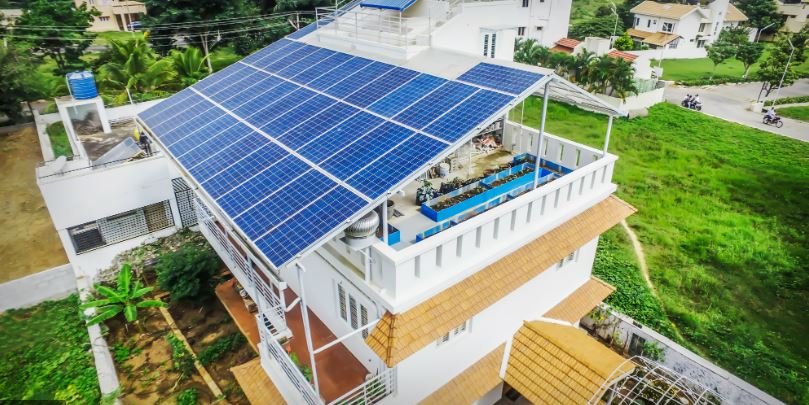
The Prime Minister’s flagship PM Surya Ghar Muft Bijli Yojana is steadily gaining ground in Jammu and Kashmir, positioning the Union Territory among the leading regions in household-level rooftop solar adoption. The program, designed to provide free electricity up to 300 units per month through grid-connected rooftop solar systems, is emerging as a meaningful step toward cleaner energy, reduced power bills, and greater energy self-reliance for families.
According to official data, as of December 31, 2025, a total of 17,998 rooftop solar systems have been installed across Jammu and Kashmir. Out of these, 16,284 systems have already been commissioned and are actively supplying solar power to the grid, indicating consistent progress on the ground. The steady pace of installations reflects growing public confidence in the scheme and increasing awareness of the long-term benefits of rooftop solar energy. Financial support under the scheme has played a crucial role in encouraging participation. Subsidies have so far been released to 14,889 beneficiaries by the Central Government and to 2,234 beneficiaries by the Union Territory Government. The total subsidy disbursed stands at ₹129.57 crore from the Centre and ₹2.99 crore from the UT, underscoring the scale and seriousness of implementation. These figures highlight the government’s commitment to making renewable energy affordable and accessible to ordinary households. The consumer-friendly subsidy structure has made rooftop solar systems financially viable, particularly for middle- and lower-income families. For a 1-kilowatt rooftop solar system, which typically costs around ₹55,000, households receive a total subsidy of ₹36,000, including ₹33,000 from the Ministry of New and Renewable Energy and ₹3,000 from the UT Government. For 2-kilowatt systems, the subsidy amounts to ₹72,000, while households opting for 3-kilowatt systems receive ₹94,800. This substantial financial assistance significantly lowers the upfront cost and shortens the payback period for consumers. The scheme is being implemented through a fully digital platform, which has enhanced transparency, simplified procedures, and reduced paperwork. So far, 86,905 consumer applications have been received through the national portal, reflecting strong interest across urban and rural areas. To meet the growing demand, 1,403 vendors have been registered across the Union Territory, ensuring adequate availability of services and technical support. Vendor-consumer agreements have already been signed in 11,779 cases, indicating smooth coordination between stakeholders. Access to affordable finance has further strengthened participation. A total of 26,225 loan applications have been submitted under the scheme, with 16,186 loans already disbursed. These loans, offered at an interest rate of around 7 percent per annum and covering up to 95 percent of the project cost, have made rooftop solar installations more accessible for households that may not have sufficient upfront capital. Additionally, materials have been delivered to 2,285 installation sites, reflecting ongoing execution at various stages. Implementation of the scheme is being closely monitored at the administrative level, with Jammu Power Distribution Corporation Limited and Kashmir Power Distribution Corporation Limited functioning as State Implementing Agencies. Their role has been central in ensuring timely commissioning, grid integration, and consumer support. Complementing these efforts, the UT Government has approved an allocation of ₹53.53 crore from its budget to support 85,000 residential beneficiaries during the period from 2024–25 to 2026–27, further reinforcing the long-term vision of the programme. Public outreach and capacity building have also received due attention. More than 37.90 lakh bulk SMS messages have been sent to raise awareness, while 923 information, education, and communication campaigns have been conducted across the Union Territory. On the technical front, 138 training programmes have been organized, resulting in the training of around 2,600 engineers, thereby strengthening local expertise and ensuring quality installations. A responsive grievance redressal mechanism has added to public confidence in the scheme. Out of 1,157 complaints received so far, 1,154 have already been resolved, reflecting prompt administrative response and effective monitoring.
Overall, the PM Surya Ghar Muft Bijli Yojana is contributing to reduced electricity bills, enhanced energy security, and a gradual shift toward sustainable living in Jammu and Kashmir. By combining financial incentives, digital governance, institutional coordination, and public awareness, the scheme is helping households participate actively in the clean energy transition while moving the Union Territory closer to its renewable energy goals.

