


Sonam Wangchuk Denies ‘Arab Spring’ Remark in Supreme Court, Says He Only Exercised Democratic Right to Protest
Kapil Sibal Tells SC Police Used Selective Video to Justify Wangchuk’s Detention
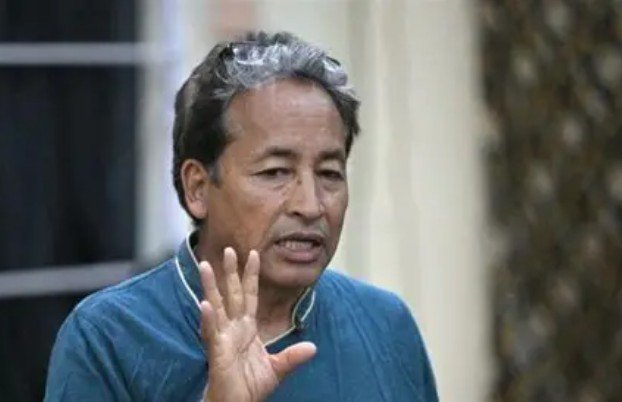
New Delhi, January 29: Climate activist Sonam Wangchuk, presently lodged in Jodhpur Central Jail under the National Security Act (NSA), on Thursday denied before the Supreme Court allegations that he had made remarks about overthrowing the government on the lines of the Arab Spring, asserting that he has merely exercised his democratic right to criticise government policies and participate in peaceful protest.
Appearing for Wangchuk’s wife, Gitanjali Angmo, senior advocate Kapil Sibal told a bench comprising Justices Aravind Kumar and P B Varale that the police had relied on a selective and misleading video clip to justify the activist’s detention.
“Look at the video. What he says, according to the police, is that if the Government of India does not give statehood, he will overthrow the government like the Arab Spring. He does not say so. I will give the transcription of the video,” Sibal submitted, adding that the unedited version clearly shows Wangchuk advocating peaceful protest and expressing respect for democratic institutions.
Sibal also refuted allegations that Wangchuk had stated that the people of Ladakh would refuse to support the Indian Army in the event of a war if their demands were not met. Calling such claims false, he told the court that in several videos Wangchuk had in fact praised the government and the Prime Minister, while emphasising non-violent means to highlight the concerns of Ladakh.
Addressing another allegation that Wangchuk had made derogatory remarks against Hindu deities, Sibal said the activist’s statement had been taken out of context and distorted on social media. He explained that Wangchuk had used an allegory comparing Ladakh’s situation to a story from the Ramayana to convey that after being separated from Kashmir, Ladakh was not given the promised constitutional safeguards under the Sixth Schedule.
“If such statements become grounds for detention, then we might as well stop speaking,” Sibal remarked, pointing out that Wangchuk’s wife is a practising Hindu and that the activist has never intended to hurt religious sentiments.
Sibal further told the court that Ladakh is a fragile ecological region and that Wangchuk has consistently raised concerns about unregulated development and large-scale investments that could damage the environment.
“There is nothing wrong with protesting to preserve nature. If Ladakh is to remain pristine, we do not want activities that destroy its ecology,” he said.
The hearing, however, remained inconclusive and has been listed for further consideration on February 2.
Angmo has challenged her husband’s detention under the NSA, contending that it is illegal, arbitrary and violative of his fundamental rights. She has also submitted that Wangchuk was not supplied complete grounds of detention nor given an effective opportunity to make a representation against the order.
The plea argues that the detention is based on stale FIRs, vague allegations and speculative assertions, lacking any live or proximate link to the stated grounds, thereby amounting to an abuse of preventive detention powers.
Wangchuk was detained on September 26 last year, two days after violent protests demanding statehood and Sixth Schedule status for Ladakh left four people dead and around 90 injured. The government has accused him of inciting the violence, a charge his family strongly denies. According to Angmo, Wangchuk had condemned the violence and termed it the saddest day of his life, warning that it would derail Ladakh’s peaceful struggle.
Meanwhile, taking note of concerns regarding Wangchuk’s health, the Supreme Court directed that he be examined by a specialist doctor, preferably a gastroenterologist, after complaints of stomach issues allegedly caused by contaminated water.
The bench also directed jail authorities to submit his medical report in a sealed cover by Monday. While the Rajasthan government informed the court that Wangchuk has been examined 21 times by jail doctors over the past four months, the court observed that a specialist evaluation was necessary in the circumstances.
The apex court recorded the assurance that Wangchuk would be examined by a specialist from a government hospital and that a detailed report would be placed before it.

