


Sonia Gandhi: History Will Remember Manmohan Singh with Kindness
Congress leader hails former prime minister’s record of integrity and governance, while accusing the Modi government of using investigative agencies for political pressure
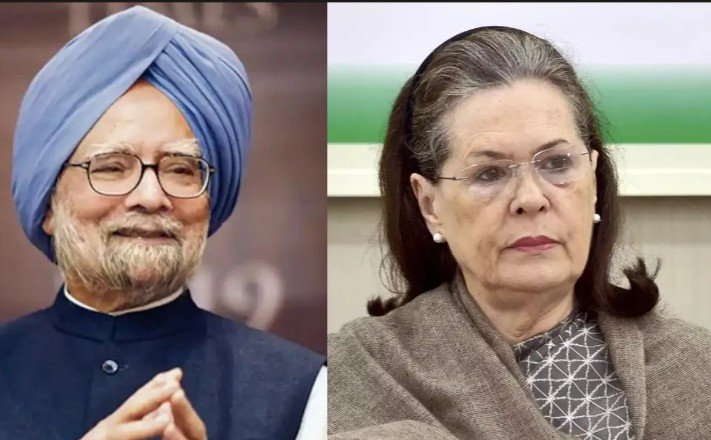
NEW DELHI, Aug 11: Congress Parliamentary Party chairperson Sonia Gandhi on Tuesday said former prime minister Manmohan Singh had been vindicated by the Supreme Court’s recent ruling in the coal block allocation case and asserted that history would remember him as a quiet, gentle and consequential leader.
In an article published in The Indian Express, Gandhi said the apex court’s July 29 judgment upholding the CBI’s closure report brought an end to what she described as a prolonged campaign against Singh’s integrity.
She said the Supreme Court not only upheld the clean chit given to Singh but also criticised the trial court for rejecting the CBI’s closure reports and making adverse observations against the former prime minister without compelling reasons.
Gandhi argued that the ruling had settled questions surrounding Singh’s conduct in the coal block allocation matter, saying allegations against him had ultimately failed to stand.
She also used the occasion to attack Prime Minister Narendra Modi, alleging that his government had misused investigative agencies such as the Enforcement Directorate and the CBI to exert pressure on political opponents.
According to Gandhi, opposition leaders facing corruption allegations were treated differently depending on whether they remained outside or joined the BJP. She accused the government of ignoring serious allegations against those who later aligned themselves with the ruling party.
Referring to Modi’s remarks in the Rajya Sabha in 2017 about Singh, Gandhi described them as an undignified attack on the former prime minister. She said Modi’s recent comments about “forgiving” students should provide an opportunity for him to reflect on his earlier criticism of Singh.
Gandhi said the campaign against Singh was aimed at diverting public attention from the achievements of his government. She highlighted the economic expansion witnessed during the UPA years and claimed that India recorded stronger growth over the decade of UPA rule than during the subsequent period.
She also pointed to several major initiatives introduced during Singh’s tenure, including the Right to Education, reservations for Other Backward Classes in centrally funded higher educational institutions, the Forest Rights Act, the Mahatma Gandhi National Rural Employment Guarantee Act and the National Food Security Act.
According to Gandhi, these measures strengthened social welfare and expanded access to education, employment and food security for large sections of the population.
She further credited Singh’s government with strengthening democratic institutions and creating greater space for civil society and public dissent. Gandhi contrasted this with what she described as restrictions faced by protesters under the present government.
The former Congress president also recalled Singh’s role in negotiating the Indo-US civil nuclear agreement, calling it one of his most significant achievements and a decision that strengthened India’s position globally.
Gandhi said the allegations questioning Singh’s integrity had now been exposed as baseless and that his tenure was increasingly being viewed as a period of significant economic, political and social progress.
She expressed regret that Singh, who died on December 27, 2024, was not alive to witness the Supreme Court ruling. Gandhi said his absence was deeply felt but added that his prediction about how history would assess his tenure was becoming increasingly evident.
The Supreme Court’s decision formally brought the criminal proceedings against Singh in the coal block allocation case to an end by setting aside the summoning order issued against him, providing a significant legal vindication of the former prime minister.

