


Statehood Demand Returns to Centre Stage as National Conference Plans Parliament Day Protest in Delhi
The National Conference has announced a Jantar Mantar protest on the opening day of the Monsoon Session, seeking to intensify pressure on the Centre for the restoration of full statehood to Jammu and Kashmir and turn a regional constitutional demand into a national political flashpoint.
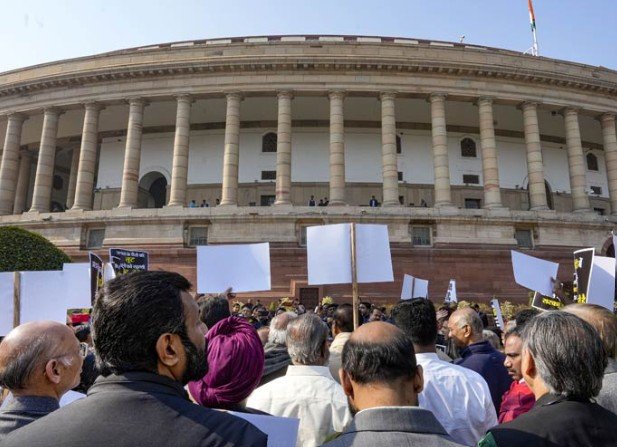
New Delhi 7: The debate over Jammu and Kashmir’s political future is set to return forcefully to the national stage after the National Conference announced that its legislators and parliamentarians will hold a protest at Jantar Mantar in New Delhi on July 20, the opening day of the Monsoon Session of Parliament, to demand the restoration of full statehood to the Union Territory.
The decision to stage the protest in the capital on the very day Parliament reconvenes is both symbolic and strategic. It signals an attempt by the National Conference to move the statehood issue out of a purely regional frame and place it squarely within the centre of national political debate. By aligning the demonstration with the start of the Monsoon Session, the party is seeking to ensure that Jammu and Kashmir’s constitutional status is not treated as a peripheral matter, but as a live question of federalism, democratic representation and political accountability that Parliament cannot easily ignore.
Deputy Chief Minister Surinder Choudhary’s announcement of the protest has already sharpened attention on what could become a major political theme in the weeks ahead. The message from the party is clear: the restoration of statehood should no longer remain an open-ended promise without a visible roadmap. The National Conference wants the Centre to spell out its position and timeline, and it wants to build public and parliamentary pressure strong enough to make continued ambiguity politically costly.
The demand for statehood has remained one of the most emotionally and politically charged issues in Jammu and Kashmir since the region was reorganised in August 2019. The abrogation of Article 370 and the bifurcation of the erstwhile state into the Union Territories of Jammu and Kashmir and Ladakh altered not only the constitutional architecture of the region but also the nature of political representation and administrative control. Since then, the Centre has repeatedly defended the reorganisation as necessary for integration, security, governance and development. But regional parties, especially the National Conference and the People’s Democratic Party, have consistently argued that the downgrading of a full-fledged state into a Union Territory was a historic political and democratic setback.
What makes the current protest plan significant is the timing. In recent months, the statehood issue has begun to gather renewed momentum after a period in which security, elections, delimitation and development narratives often overshadowed it. With the restoration of an elected government in Jammu and Kashmir and the re-emergence of formal political institutions, regional parties now have both the legitimacy and the platform to push harder on constitutional questions. For the National Conference, which leads the elected government in the Union Territory, the demand for statehood is not only a matter of principle but also a test of whether the political process can deliver substantive restoration of powers.
The party’s strategy appears to rest on two linked calculations. First, that statehood remains a deeply resonant public issue cutting across party lines in Jammu and Kashmir, even where there are differences over Article 370 or the larger constitutional settlement. Second, that the Centre may find it more difficult to indefinitely postpone the question once it is repeatedly raised inside and outside Parliament by elected representatives. A protest at Jantar Mantar, backed by MPs and MLAs, is therefore designed not merely as a demonstration but as a pressure instrument aimed at national visibility.
The constitutional and administrative stakes are substantial. Full statehood would mean a significant restoration of legislative and executive authority to elected representatives in Jammu and Kashmir, even if the exact contours of that restoration remain to be defined by Parliament and the Union government. In practical terms, it would change the balance between local political institutions and central control over governance. It would also carry symbolic weight by acknowledging that the current Union Territory arrangement is transitional rather than permanent.
For the Centre, however, the issue is not only constitutional but deeply political and security-linked. The government has maintained that the post-2019 framework has delivered stability, improved governance and created conditions for development and democratic participation. It has also signalled at various points that statehood could be restored at an appropriate time, but without committing to a firm deadline. That calibrated ambiguity has allowed the Centre to retain flexibility, but it has also invited criticism from regional parties that see the absence of a timeline as a way of indefinitely prolonging central control.
The National Conference’s move seeks to narrow that space for ambiguity. By taking the demand to Delhi rather than confining it to speeches in Srinagar or Jammu, the party is trying to force a political response from the Centre in a setting where the issue can be amplified by opposition parties, media scrutiny and parliamentary debate. If other opposition formations choose to back the protest rhetorically or substantively, the statehood question could quickly acquire a broader federal and democratic framing beyond the region itself.
That possibility matters because Jammu and Kashmir’s status has always carried implications beyond local governance. It touches on the nature of Indian federalism, the relationship between security policy and democratic representation, and the extent to which Parliament can be asked to revisit or complete constitutional changes after a prolonged interim phase. Supporters of the statehood demand argue that without restoration of full state powers, democratic institutions in Jammu and Kashmir remain structurally incomplete. They contend that elections alone do not answer the question of whether elected representatives have meaningful authority. From this perspective, the demand is not only about symbolism but about the substantive content of self-government within the Union.
The protest may also sharpen political competition within Jammu and Kashmir itself. Regional parties have long sought to demonstrate that they are the most credible defenders of the region’s political rights. By mounting a visible protest in the national capital, the National Conference can project itself as actively pursuing statehood rather than merely invoking it rhetorically. This matters in a political landscape where every party must show that it can translate public sentiment into action, especially on issues tied to identity, constitutional status and regional dignity.
For the BJP and the Centre, the response will require careful calibration. An outright dismissal of the protest could risk energising the issue further and handing the Opposition a ready-made campaign line. At the same time, any concrete concession or timeline announcement would have broader strategic implications and would likely be weighed against security assessments, administrative considerations and national political messaging. The government may therefore seek to acknowledge the demand in principle while resisting any immediate commitment under protest pressure.
The opening day of Parliament is likely to heighten the visibility of the event. Monsoon sessions often begin amid protests and competing political messages, but this one already appears set to carry multiple layers of confrontation: opposition concerns over electoral rolls, inflation and institutional issues on the one hand, and the statehood demand on the other. A coordinated protest by National Conference MPs and MLAs at Jantar Mantar will ensure that Jammu and Kashmir is part of that opening-day political theatre.
It is also worth noting that the statehood issue has a different emotional and legal texture from many other parliamentary controversies. It is rooted not in a recent administrative decision alone, but in a constitutional transformation that altered the status of an entire region. As a result, the demand resonates at once as a question of dignity, democratic representation and unfinished constitutional business. That combination gives it staying power in public discourse, especially when revived by elected leaders with institutional legitimacy.
The protest could also influence the tone of parliamentary interventions by MPs from Jammu and Kashmir and by opposition parties seeking to highlight federal concerns. Even if the government does not agree to a formal debate exclusively on statehood, the issue can surface through Zero Hour mentions, adjournment motions, press briefings and all party discussions. In Parliament, visibility often matters almost as much as procedural success. A demand repeated consistently inside and outside the House can shape the political conversation even without an immediate policy concession.
For residents of Jammu and Kashmir, the significance of the protest lies in whether it marks a serious escalation of political pressure or remains a symbolic gesture. Much will depend on what follows after July 20. If the protest is accompanied by sustained parliamentary intervention, outreach to other parties and continued public mobilisation, it could help keep the issue alive through the session. If it remains a one-day event without a follow-up strategy, its impact may be more limited. The National Conference therefore faces the challenge of converting symbolism into sustained political leverage.
Still, the very decision to stage the protest at the national capital on Parliament’s opening day is an acknowledgment that the battle for statehood will now be fought not only in regional politics but in the national political arena. It reflects an understanding that constitutional restoration, if it comes, will require a combination of public pressure, parliamentary engagement and strategic political timing.
As July 20 approaches, the statehood demand is poised to become one of the first major political flashpoints of the Monsoon Session. Whether it results in a clear response from the Centre remains uncertain. But the National Conference’s move has already ensured one thing: Jammu and Kashmir’s unresolved constitutional question will not stay confined to the margins of national politics. It is heading back to the centre of the debate, and the coming session of Parliament may determine how loudly it is heard.

