


Supreme Court Backs EC’s Authority for SIR, Calls It Vital for Fair Elections
Top court says Special Intensive Revision strengthens democratic transparency and supports the constitutional mandate of free and fair elections
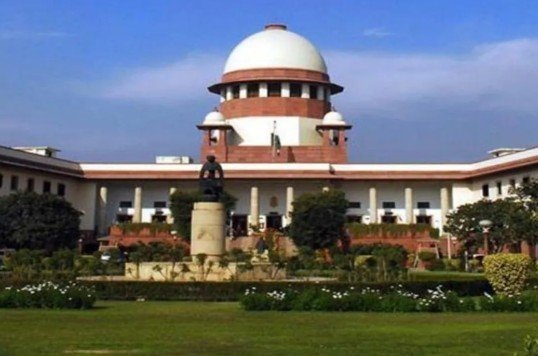
NEW DELHI, May 27: The Supreme Court on Wednesday upheld the authority of the Election Commission of India to carry out the Special Intensive Revision (SIR) of electoral rolls, ruling that the exercise is aimed at strengthening the democratic process and ensuring free and fair elections.
A bench headed by Chief Justice Surya Kant observed that the poll panel had acted within its constitutional and statutory framework while conducting the revision process.
Delivering the verdict, the court said the exercise could not be viewed merely as an administrative measure and instead played a significant role in maintaining the integrity of the electoral system.
“We are unable to conclude that the impugned exercise is a process resorted to solely for administrative convenience. On the contrary, we hold that the electoral SIR advances the constitutional imperative of free and fair elections,” the bench stated.
The judgment came on a batch of petitions challenging the Election Commission’s power to conduct the Special Intensive Revision on a large scale. The petitioners argued that the Constitution, the Representation of the People Act, 1950 and related rules did not explicitly authorise such an extensive verification exercise.
Among those challenging the process was the NGO Association for Democratic Reforms, which questioned the legality and scope of the revision exercise.
The Supreme Court had reserved its verdict on January 29 after hearing extensive arguments from all parties involved.
The first phase of the SIR exercise had been conducted in Bihar, where the Election Commission undertook a detailed revision of electoral rolls. As part of the process, the poll authority later identified nearly 65 lakh names that were removed from the draft voter list.
According to the guidelines issued for the revision, individuals whose names did not appear in the 2002 or 2003 electoral rolls were required to establish ancestral linkage with persons whose names existed in those earlier records.
Defending its actions, the Election Commission argued before the court that documents such as Aadhaar cards and voter identity cards alone could not be treated as conclusive proof of citizenship.
The petitioners, however, criticised the process as being similar to a citizenship verification exercise, claiming it resembled a “National Register of Citizens-like” mechanism. They contended that determining citizenship falls exclusively under the powers of the central government and not the Election Commission.
During earlier hearings, the top court had observed that preparation, revision and maintenance of electoral rolls fall squarely within the constitutional mandate of the Election Commission.
The ruling is expected to have significant implications for future voter roll verification exercises across the country, especially ahead of major elections scheduled in the coming years.
Legal experts believe the judgment reinforces the constitutional autonomy of the Election Commission in maintaining accurate electoral records while balancing concerns related to voter inclusion and transparency.
Political observers said the verdict may also trigger wider debate over documentation requirements, voter verification procedures and electoral reforms in India’s democratic framework.

