


Supreme Court Declines PIL Challenging Caste Recording Methodology For 2027 Census
Supreme Court asks Centre and Census officials to review recommendations on transparent caste enumeration process.
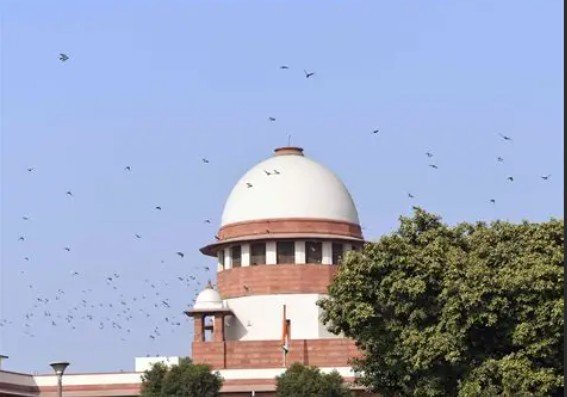
New Delhi, Feb 2: The Supreme Court on Monday refused to entertain a Public Interest Litigation (PIL) challenging the procedure for recording, classifying, and verifying caste data in the upcoming 2027 Census. However, the bench advised the Union government and the office of the Registrar General and Census Commissioner to examine suggestions submitted by petitioner Aakash Goel, an academician.
Goel, represented by senior advocate Mukta Gupta, had urged that a transparent questionnaire detailing caste classification and verification methods be made public. He contended that the Directorate of Census Operations has not disclosed the criteria for documenting caste identities, despite the 2027 Census extending enumeration beyond Scheduled Castes and Scheduled Tribes for the first time.
The Supreme Court bench clarified that there is “no pre-determined data” for caste identification. “The census exercise is regulated under the Census Act, 1958, and the 1990 Rules, empowering the authorities to determine the particulars and manner of operations,” the court noted.
The bench further stated that the authorities, with guidance from domain experts, must have developed a robust methodology to minimise errors, and acknowledged that the petitioner had already raised relevant concerns through formal representation to the Registrar General.
The 2027 Census, India’s 16th national census, will be the first to include a full scale caste enumeration since 1931 and the country’s first entirely digital census. Authorities may consider the suggestions highlighted in the PIL and associated legal notice as they finalise the census operations.

