


Supreme Court Gives Centre Four Weeks to Respond on Challenge to NIA Act Validity
Petition argues the National Investigation Agency Act exceeds the Centre's legislative powers and infringes constitutional provisions, with the next hearing expected after six weeks.
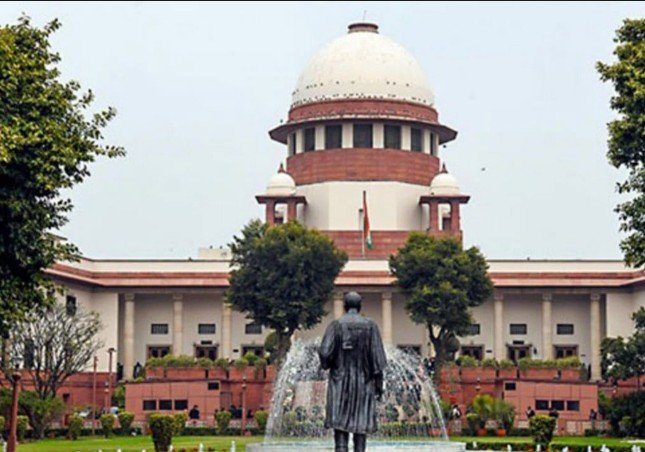
New Delhi, 14 July 2026 : The Supreme Court on Tuesday granted the Union Government four weeks to submit its response to a petition questioning the constitutional validity of the National Investigation Agency (NIA) Act, 2008. The case raises significant constitutional questions regarding the Centre’s authority to establish and empower a federal investigative agency to investigate offences that traditionally fall within the jurisdiction of state police forces.
A Bench comprising Justice Vikram Nath and Justice Sandeep Mehta considered the matter after the Centre sought additional time to place its detailed response on record. Representing the Union Government, Additional Solicitor General Aishwarya Bhati informed the Bench that more time was required to prepare and file a comprehensive counter affidavit addressing the issues raised in the petition.
Appearing on behalf of the petitioner, senior advocate Siddharth Dave reminded the court that notices had already been issued in the matter on April 21 and urged that the proceedings move forward. Taking note of the submissions from both sides, the Bench allowed the Centre four weeks to file its counter affidavit. The petitioner has also been granted two additional weeks to submit a rejoinder, if necessary, after receiving the government’s response.
The Supreme Court directed that the matter be listed for further hearing after six weeks, allowing sufficient time for all pleadings to be completed.
Earlier, while issuing notice in the case, the apex court had sought responses from the Union Government, the National Investigation Agency and other concerned authorities. At that stage, the Bench observed that the legal issues involved in the petition were of considerable constitutional importance and required detailed examination.
The petition challenges the validity of the National Investigation Agency Act, 2008, contending that several of its provisions violate Article 14 of the Constitution, which guarantees equality before the law. It also argues that Parliament lacked the legislative competence to enact a law enabling a central agency to investigate offences that fall within the domain of state policing.
According to the petitioner, the Constitution places “police” under the State List, making law and order primarily the responsibility of state governments. The plea contends that the Centre’s authority under the Act effectively allows it to bypass states by directing investigations without adequate constitutional backing.
One of the principal provisions under challenge is Section 6(5) of the NIA Act. This section authorises the Central Government to direct the National Investigation Agency to investigate a scheduled offence if it is satisfied that such an investigation is warranted under the Act. The petitioner argues that this provision grants excessive powers to the Union Government and undermines the federal structure envisioned by the Constitution.
The National Investigation Agency was established through the 2008 legislation following the devastating 26/11 Mumbai terror attacks. The agency was created to investigate and prosecute offences related to terrorism, national security, organised crime with international links, and other scheduled offences considered to have national implications.
Over the years, the NIA has emerged as India’s premier counter-terrorism investigative agency, handling numerous high-profile cases across multiple states. However, its expanding jurisdiction and investigative powers have periodically triggered debates over the balance between national security requirements and the constitutional distribution of powers between the Centre and the states.
The outcome of the present case could have significant implications for India’s federal framework and the scope of authority exercised by central investigative agencies. Once the Centre files its response and the petitioner submits a rejoinder, the Supreme Court is expected to undertake a detailed examination of the constitutional questions surrounding the legislation.
The next hearing is likely to take place after the completion of pleadings, with the court expected to consider the broader constitutional and federal issues raised in the petition before delivering its verdict.

