


Supreme Court of India Directs All States and Union Territories to Register Cases Against Hate Speeches
Immediate Suo Motu Action Against Hate Speeches Directed by India's Supreme Court
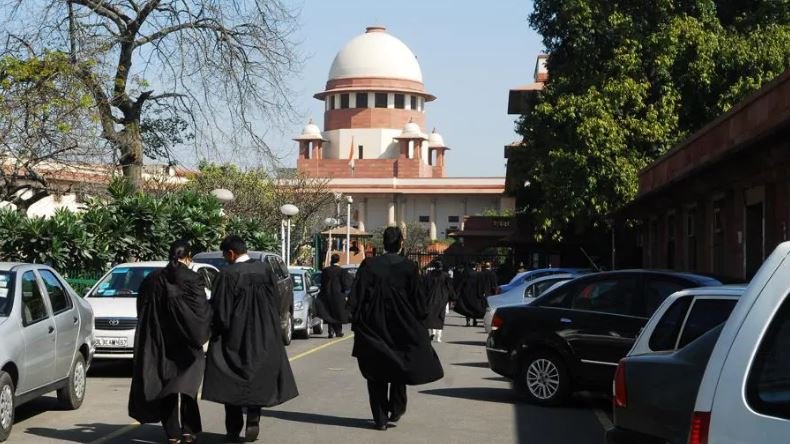
28-04-2023 : The Supreme Court of India directed all states and union territories (UTs) to register cases against those making hate speeches, even without any complaint. The Court termed hate speeches as a “serious offence” that can impact the secular fabric of India. The directive extends the scope of the Court’s October 2022 order beyond three states – Uttar Pradesh, Delhi, and Uttarakhand.
The bench of Justices K.M. Joseph and B.V. Nagarathna ordered that authorities must take immediate suo motu action against any speech or action that attracts offences such as Sections 153A, 153B, and 295A, and 505 of the IPC, even if no complaint is filed. The Director General of Police of all states and UTs must issue directions to their subordinates to ensure appropriate legal action is taken at the earliest.
The Court further warned that any hesitation to act in accordance with this directive would be viewed as contempt of the Court, and appropriate action would be taken against the erring officers. Such action would be taken irrespective of the religion of the offender to preserve and protect the secular character of India, as envisaged by the Preamble.
The Supreme Court’s directive came on a plea filed by journalist Shaheen Abdullah, who had initially sought direction against the Delhi, Uttar Pradesh, and Uttarakhand governments to register cases against those delivering hate speeches. Abdullah filed a fresh application seeking implementation of the Court’s October 2022 order across states and union territories and appointment of nodal officers in every state who would recommend action against those making hate speeches.
During the hearing, senior advocate Sanjay Parikh, appearing for the Maharashtra chapter of NGO PUCL, said that despite the Supreme Court’s order, hate speeches continue to happen across Maharashtra, and the police are not taking appropriate action against those delivering such speeches at public functions attended by Members of Parliament and MLAs. The bench clarified that while it has laid down a broad framework, it cannot monitor every incident and now it is up to the authorities to act upon it.
The Solicitor General Tushar Mehta, appearing for the Centre, said no government can justify hate speeches, and the Supreme Court has passed certain orders and judgments that such speeches can affect the social fabric of the country. However, he also noted that the Court cannot substitute the powers of the magistrate to entertain complaints or the procedure laid down under the Code of Criminal Procedure.
The bench emphasized that hate speeches are not like any other offence and can affect the social fabric of the nation and the dignity of the individual. The Court said that it has been entertaining petitions against hate speeches in different parts of the country for the “larger public good” and to ensure the establishment of “rule of law.”
The bench urged counsels not to bring any political aspects into the proceedings and emphasized that the Court has never asked to take action against any particular community. It said that the Court’s allegiance is to the Constitution of India, and it upholds the Court in the highest regard.
The Court directed Additional Solicitor General S.V. Raju, appearing for the Maharashtra government, to take the Court’s order seriously and take action against those delivering hate speeches. Raju informed the Court that the state had registered cases in 16 out of 24 incidents pointed out by the petitioners, and the rest were closed. The bench remarked that it is good that the state is taking action now after the Court’s order.
Overall, the Supreme Court’s directive aims to ensure that hate speeches do not impact India’s secular fabric and that appropriate legal action is taken against those making such speeches, even if no complaint is filed. The Court emphasized that the larger public good and the establishment of the rule of law are its guiding principles

