


Supreme Court of India Questions Denial of Devotee’s Right to Touch Deity
Top court examines limits of religious practices and constitutional rights as Sabarimala linked petitions come under fresh scrutiny
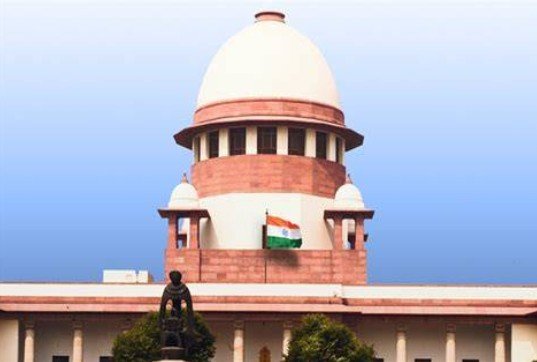
NEW DELHI, Apr 21: The Supreme Court of India on Tuesday reignited the debate on the intersection of faith and fundamental rights, questioning whether constitutional protections extend to devotees denied physical access to a deity during worship.
The observation came during an ongoing hearing before a nine-judge Constitution bench examining issues of discrimination at places of worship, including matters connected to the Sabarimala Ayyappa Temple. The court is also reviewing the broader scope of religious freedom across different faiths and denominations.
At the heart of the discussion was a fundamental question posed by Justice Ahsanuddin Amanullah, who highlighted the dilemma faced by a devout believer barred from touching a deity due to factors such as birth or tradition. He questioned whether such exclusion could stand in light of constitutional guarantees.
The bench, led by Chief Justice Surya Kant and comprising Justices B V Nagarathna, M M Sundresh, Ahsanuddin Amanullah, Aravind Kumar, Augustine George Masih, Prasanna B Varale, R Mahadevan, and Joymalya Bagchi, is tasked with addressing complex constitutional questions that have far-reaching implications for religious practices in India.
Appearing for the temple’s chief priest (thantri), senior advocate V Giri defended the established customs, arguing that rituals and ceremonies practiced in temples are intrinsic to the religion itself. He maintained that devotees must align with the defined characteristics of a deity when engaging in worship.
According to Giri, the act of worship involves surrendering to the divine essence, which includes respecting the unique attributes associated with the deity. He asserted that these attributes are not arbitrary but are deeply embedded in religious doctrine and tradition.
Responding to the court’s concerns, Giri emphasized that essential religious practices are protected under Article 25 of the Constitution, which guarantees freedom of religion. However, he acknowledged that if restrictions were based solely on birth and led to complete exclusion from priesthood or religious service, such matters could be addressed through legislative or state intervention.
A key point of contention during the proceedings was the concept of “Naishtika Brahmachari” — a belief that the deity at Sabarimala is a perpetual celibate. Giri argued that the temple’s rituals and customs are closely aligned with this belief and form an essential aspect of its religious identity.
He further contended that there is insufficient evidence presented by petitioners to challenge the validity or centrality of this belief within the tradition. According to him, any interference without strong grounds could disrupt the religious autonomy of the denomination.
The case traces its origins to the landmark 2018 judgment, where a five-judge bench of the Supreme Court of India, by a 4:1 majority, struck down the long-standing restriction on the entry of women aged 10 to 50 into the Sabarimala Ayyappa Temple, declaring it unconstitutional.
Subsequently, in 2019, another Constitution bench revisited the issue and referred broader questions regarding gender-based discrimination in religious spaces to a larger bench, paving the way for the current proceedings.
Earlier this month, the apex court underscored the need for judicial objectivity, stating that judges must rise above personal beliefs while adjudicating matters involving faith. It emphasized that decisions should be guided by constitutional morality and the principle of freedom of conscience.
As arguments continue, the case remains a significant test of how India balances deeply rooted religious traditions with the evolving interpretation of fundamental rights. The outcome is expected to shape the legal and social discourse surrounding equality, faith, and constitutional values in the years to come.

