


Supreme Court Says 14 States Agree to Raise Judicial Officers’ Retirement Age to 62
The apex court welcomes progress on extending judicial officers’ service by two years but declines urgent hearings on individual pleas from judges nearing retirement.
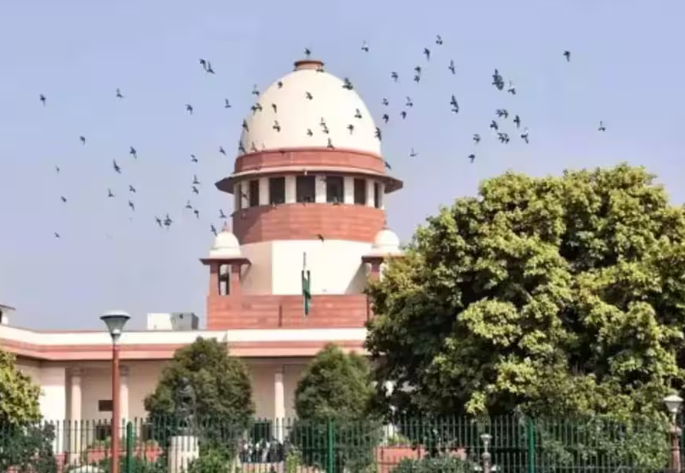
NEW DELHI, October 26: The Supreme Court on Monday said 14 states had agreed to increase the retirement age of district judicial officers from 60 to 62 years, expressing hope that the remaining states would also support the proposal.
A bench comprising Chief Justice of India Surya Kant and Justices Joymalya Bagchi and V Mahadevan declined to urgently list separate petitions filed by judicial officers who are approaching retirement or have already retired at the age of 60.
“This pertains to the persuasive jurisdiction of this court. The issue is between the Supreme Court and the states,” the bench observed while responding to a request for an early hearing.
Senior advocate Ranjit Kumar sought an urgent listing, pointing out that judicial officers were retiring regularly while the matter remained unresolved.
The Chief Justice said the court had already taken up the broader issue and expressed confidence that more states would agree to the proposed increase. Although the main petition has been listed for hearing, the bench made it clear that it would not entertain individual pleas for urgent consideration at this stage.
Supreme Court Seeks Uniform Retirement Policy
The proceedings concern a petition seeking a uniform increase in the retirement age of district judiciary judges from 60 to 62 years across the country.
On September 4, the Supreme Court directed states that had agreed to the proposal to amend their respective service rules to extend the retirement age, subject to an assessment of each officer’s suitability and performance by the concerned High Court.
The court said the amendments should preferably be completed within two months.
Until the rules are formally amended, judicial officers in the states that have consented to the change should not retire upon reaching 60 years, provided they meet the prescribed suitability and performance requirements.
The bench also addressed the position of judicial officers in seven states — Chhattisgarh, Karnataka, Madhya Pradesh, Maharashtra, Sikkim, Tamil Nadu and West Bengal — who retired on or after March 31 this year.
It said eligible officers should be given the option to rejoin judicial service, provided they had not taken up subsequent employment.
States Asked to Reconsider Their Position
The Supreme Court had also asked several other states and Union Territories to reconsider their decisions on extending the retirement age.
These include Andhra Pradesh, Arunachal Pradesh, Assam, Bihar, Goa, Gujarat, Haryana, Himachal Pradesh, Jharkhand, Kerala, Manipur, Meghalaya, Mizoram, Nagaland, Odisha, Punjab, Rajasthan, Telangana, Tripura, Uttarakhand and Uttar Pradesh, along with the National Capital Territory of Delhi, Jammu and Kashmir, and Puducherry.
The court had previously emphasised that state governments should not reject the proposal solely on the grounds of financial burden. It directed them to reassess the issue in view of the requirements of the judicial system.
The proposed extension is intended to establish greater uniformity in the service conditions of district judicial officers. However, implementation will depend on the necessary amendments to service rules and the suitability assessments prescribed by the court.
Retirement Age Debate in the Judiciary
The retirement age of judges varies across levels of the Indian judicial system. Supreme Court judges retire at 65, while High Court judges retire at 62. District judicial officers generally retire at 60 under the existing service framework.
The question of raising the retirement age of district judges has been debated for years. In 2002, the Supreme Court declined to accept a recommendation from the Justice K Jagannatha Shetty Commission, which had proposed extending the retirement age of district judges to 62.
Some states, including Telangana and Madhya Pradesh, have subsequently moved towards increasing the retirement age.
The latest proceedings seek to address differences among states and establish a broader framework for the district judiciary.
The Supreme Court’s latest observations indicate progress towards securing agreement among state governments. However, the court has yet to conclude the wider proceedings, and the final implementation of the proposed change will require compliance with its directions and the relevant service rules.

