


Supreme Court Seeks Petitioners’ Response to Centre’s Affidavit on NTA Reforms
Petitioners to submit replies by August 19 as government considers computer-based testing and broader changes to strengthen exam integrity.
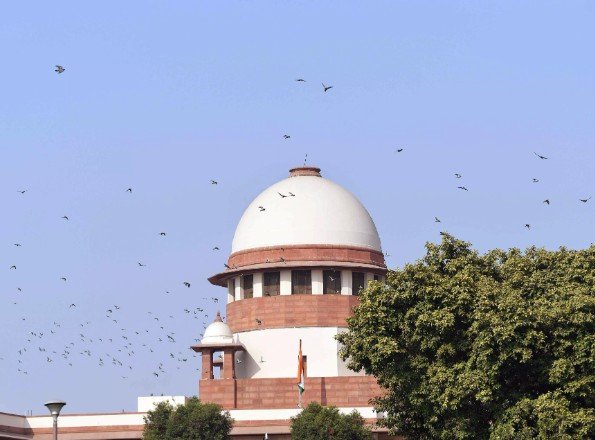
New Delhi, Aug. 6: The Supreme Court on Thursday directed petitioners seeking reforms in the National Testing Agency (NTA) to file their responses to the Centre’s affidavit outlining proposed changes to the conduct of the National Eligibility-cum-Entrance Test (NEET-UG). The matter will next be heard on August 19.
A Bench comprising Justices P.S. Narasimha and Alok Aradhe asked all parties to submit their replies and suggestions after the Union government informed the court that a transition from the existing pen and paper examination to a computer-based format is under active consideration.
During the hearing, counsel appearing for the Federation of All India Medical Association (FAIMA) said that if authorities intend to introduce a digital examination model, the decision should be implemented at the earliest. The submission highlighted that students currently prepare according to the existing offline pattern and require clarity regarding any future changes.
The Bench observed that every aspect of the proposed reforms would be examined before a final decision is taken and encouraged stakeholders to place their suggestions on record.
In its affidavit, the Centre stated that multiple options are being evaluated, including conducting the examination in a single-stage or adopting a two-stage structure similar to the Joint Entrance Examination (JEE). It added that the final decision would be taken after examining recommendations from the High-Powered Task Force headed by Nandan Nilekani.
According to the government, the expert panel includes specialists from technology, academia, intelligence, public administration and other fields to comprehensively assess issues relating to security, infrastructure, accessibility, fairness and academic standards before recommending any transition.
The affidavit further informed the court that the government has initiated wide-ranging reforms to strengthen the examination process and prevent irregularities. It also referred to the Public Examinations (Prevention of Unfair Means) Amendment Act, 2026, which enhances legal provisions against paper leaks, impersonation, cyber manipulation and other forms of examination fraud.
The Centre filed its response following the Supreme Court’s earlier direction seeking details on the conduct of future NEET examinations and measures to build long-term institutional safeguards against recurring lapses.
Among the petitions before the court is a plea seeking restructuring of the National Testing Agency into a more autonomous and accountable institution responsible for conducting the country’s premier medical entrance examination.
The proceedings stem from the controversy surrounding NEET-UG 2026, which was cancelled after allegations of a question paper leak. The examination was subsequently reconducted, while the alleged leak remains under investigation by the Central Bureau of Investigation (CBI).
The Supreme Court has consistently emphasised the need for stronger safeguards to preserve the credibility of public examinations while ensuring fairness and transparency for lakhs of aspirants appearing in competitive entrance tests every year.

