


Supreme Court Stays POCSO Case Against Former Karnataka CM Yediyurappa
Apex Court halts proceedings in high-profile sexual harassment case pending Fast Track Court trial
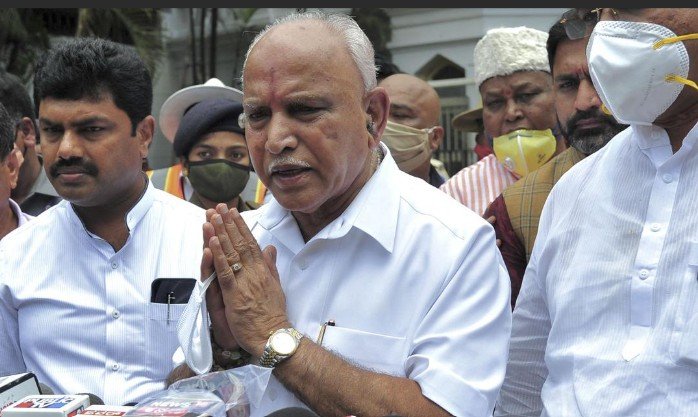
New Delhi, Dec 02 : In a significant development, the Supreme Court on Tuesday stayed the trial proceedings against former Karnataka Chief Minister and BJP leader B.S. Yediyurappa in a POCSO case. The case was being heard in a Fast Track Court, and the stay comes in response to Yediyurappa’s special leave petition challenging the Karnataka High Court’s November 13 order.
The Karnataka High Court had earlier upheld the trial court’s cognisance of the charge sheet under the Protection of Children from Sexual Offences (POCSO) Act, directing Yediyurappa to appear for trial. The Supreme Court, in a bench led by Chief Justice of India Surya Kant and Justice Joymalya Bagchi, issued notice to the state government and the complainant, limiting it to the question of whether the matter should be remanded back to the Karnataka High Court.
Senior advocates Siddharth Luthra and Siddharth Dave, representing Yediyurappa, argued that “crucial statements were suppressed by the prosecution,” and highlighted inconsistencies in the trial court proceedings. They urged the apex court to intervene, citing the risk of a miscarriage of justice.
Yediyurappa is accused of allegedly sexually harassing a 17-year-old girl at his Bengaluru residence on February 2, 2024, while she and her mother had approached him seeking help regarding a prior assault. The charge sheet claims he allegedly held the girl by her wrist and molested her before she resisted and escaped.
The former Chief Minister has consistently denied the allegations, maintaining that he only attempted to assist the mother-daughter duo and had contacted the Bengaluru Police Commissioner for their safety.
Alongside Yediyurappa, three others have been named in the charge sheet for offences under the POCSO Act and several sections of the IPC, including Section 354A (sexual harassment), Section 204 (destruction of evidence), and Section 214 (offering a bribe to conceal an offence).

