


Supreme Court Strikes Down 2021 Order Allowing Retrospective Environmental Clearances
Top Court Quashes 2021 Office Memorandum Allowing Post-Facto Green Approvals, Says Environmental Permissions Must Come Before Project Work
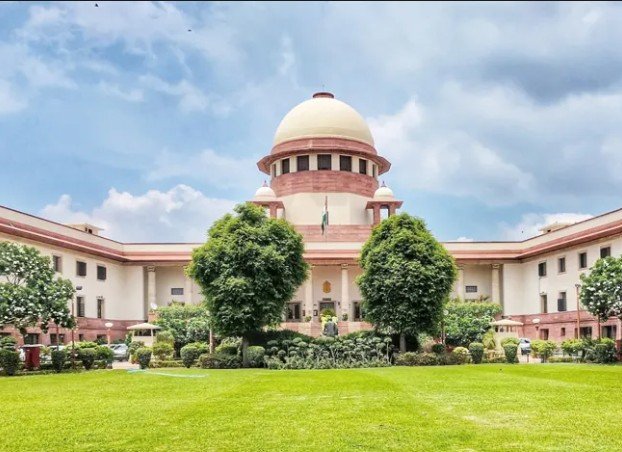
New Delhi, July 29: The Supreme Court on Wednesday set aside the Centre’s 2021 Office Memorandum that enabled authorities to grant retrospective environmental clearances to projects that had started construction or operations without obtaining mandatory approvals beforehand.
The landmark verdict reinforced the principle that environmental clearance must be secured before beginning any project activity, stating that developers cannot bypass established regulations by starting work first and seeking approval later.
A three-judge bench headed by Chief Justice Surya Kant, along with Justices Joymalya Bagchi and Vipul M Pancholi, delivered a unanimous judgement while hearing multiple petitions challenging the mechanism for granting post-facto environmental approvals.
Existing Green Clearances Remain Protected
While striking down the government’s 2021 order, the Supreme Court clarified that its ruling would operate prospectively.
The bench said environmental clearances already granted under the earlier mechanism would not be disturbed, providing relief to projects that had received approval before the judgement.
The court balanced environmental concerns with practical considerations by ensuring that previously approved projects would not face immediate uncertainty due to the new ruling.
Prior Environmental Approval Remains Mandatory
The Supreme Court reaffirmed that obtaining prior environmental clearance is a fundamental requirement under the country’s environmental regulatory framework.
The bench observed that allowing projects to begin without approval and later seek regularisation would weaken environmental safeguards and encourage violations of established norms.
The judgement highlighted that environmental protection laws are designed to assess possible ecological impacts before development activities begin.
Limited Exception Allowed in Public Interest
However, the court clarified that the government is not completely barred from creating exceptional relief mechanisms.
The bench said that in extraordinary situations involving larger public interest, the Centre may introduce a limited and time-bound amnesty scheme through a proper statutory notification.
Such an arrangement, the court said, cannot be introduced through an executive office memorandum and cannot become a routine method for correcting environmental violations.
Court Retains Power Under Article 142
The Supreme Court also noted that it has constitutional authority under Article 142 to grant relief, including post-facto environmental clearance in specific cases where it considers such intervention necessary.
The provision allows the court to pass orders required to ensure complete justice in individual matters.
The bench clarified that such powers are exceptional and cannot replace the established environmental approval process.
Challenge to Retrospective Clearances
The judgement came after the apex court reserved its decision on April 1 while hearing a group of petitions, including review pleas, related to the validity of retrospective environmental clearances granted to projects that had violated green regulations.
The petitions questioned whether executive directions could create a pathway for projects to obtain approval after starting activities without mandatory environmental assessment.
Impact on Environmental Governance
Environmental experts have viewed the ruling as an important step towards strengthening preventive environmental regulation.
The decision reinforces the principle that environmental assessments must happen before major development projects begin, allowing authorities to evaluate ecological risks at the planning stage.
The verdict is expected to influence how future environmental approvals are handled and may push the government towards creating clearer statutory frameworks instead of relying on administrative instructions.
With the Supreme Court cancelling the retrospective clearance mechanism, project developers will now have to ensure compliance with environmental approval requirements before commencing activities.

