


Supreme Court to Hear Plea Challenging Sonam Wangchuk’s Detention Today
Ladakh activist’s wife moves top court questioning legality and procedure of his detention, Advisory Board reviews case at Jodhpur Jail
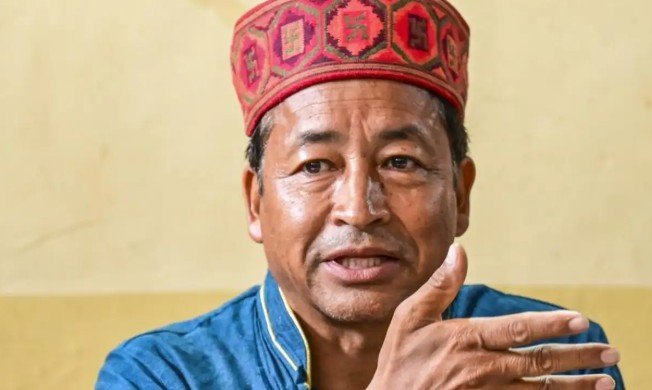
New Delhi, Oct 29: The Supreme Court will on Wednesday hear the petition challenging the detention of Ladakh based climate activist and innovator Sonam Wangchuk under the National Security Act (NSA). The plea, filed by his wife Gitanjali J. Angmo, questions the legality of the detention and the procedure adopted by the authorities.
Earlier this month, a Bench of Justices Aravind Kumar and N.V. Anjaria allowed Angmo to amend her writ petition after her counsel, senior advocate Kapil Sibal, sought permission to include new details provided by the government. Sibal informed the court that the Centre had since furnished the grounds of detention to Wangchuk, requiring updates to the original plea. The court then scheduled the matter for further hearing on Wednesday.
The petition originally argued that the authorities had failed to provide the grounds of detention as mandated under Section 8 of the NSA, which requires that a detainee be informed of the reasons for their detention within a specified timeframe. However, the Leh administration, in an affidavit filed through District Magistrate Romil Singh Donk, asserted that the grounds were duly communicated within the prescribed period.
Meanwhile, the Advisory Board constituted under the NSA has recently reviewed Wangchuk’s detention. The three-member panel, comprising former judge M.K. Hujura (Chairman), District Judge Manoj Parihar, and social activist Spal Jayesh Angmo, conducted a three-hour closed-door hearing at Jodhpur Central Jail in Rajasthan, where Wangchuk is currently lodged. Both Wangchuk and his wife were present during the proceedings.
Sources said the review focussed on the administration’s justification for invoking the NSA and Wangchuk’s representation challenging the grounds of his detention.
Sonam Wangchuk, renowned for his sustainable innovations and environmental advocacy in Ladakh, was detained under the National Security Act, a move that has sparked widespread protests and criticism from civil rights groups, who have described his arrest as arbitrary and unjustified.
The Supreme Court’s decision on the plea is expected to be a significant moment in the ongoing debate over civil liberties and preventive detention laws in India.

