


Supreme Court Upholds Freedom of Speech: Quashes Case Against Professor Criticizing Abrogation of Article 370
SC Asserts Right to Dissent, Strikes Down Criminal Case Over Remarks on Article 370
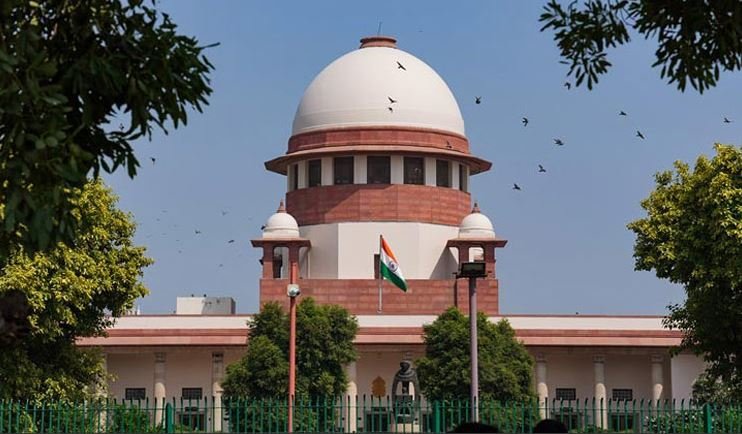
New Delhi, 07-03-2024: In a landmark judgment, the Supreme Court of India delivered a significant blow to the suppression of free speech by quashing a criminal case against a professor for his remarks on the abrogation of Article 370. The case centered around Professor Javed Ahmed Hajam, who faced charges under Section 153-A of the Indian Penal Code for expressing dissent regarding the abrogation of Article 370, which granted special status to the region of Jammu and Kashmir.
The Supreme Court’s ruling emphasized that every citizen of India has the fundamental right to criticize government actions, including the abrogation of Article 370, without fear of reprisal. The court underscored that describing the day of the abrogation as a ‘Black Day’ is a legitimate expression of protest and anguish, protected by the constitutional guarantee of freedom of speech and expression.
Justices Abhay S. Oka and Ujjal Bhuyan, who presided over the case, emphasized the importance of safeguarding democratic values and protecting dissenting voices. They noted that democracy cannot thrive if every criticism or protest against the government is treated as an offense under Section 153-A of the IPC.
The case stemmed from a WhatsApp status shared by Professor Hajam, where he referred to August 5th as a ‘Black Day’ for Jammu and Kashmir and juxtaposed it with Pakistan’s Independence Day on August 14th. While the Bombay High Court had initially declined to quash the FIR against Hajam, citing concerns about potential disharmony, the Supreme Court took a different stance.
The apex court highlighted that Professor Hajam’s messages, while expressing dissent, did not target any specific religious or ethnic group. Instead, they were interpreted as an individual’s reaction to a significant constitutional change. The court categorically stated that such expressions of dissent fall within the ambit of freedom of speech and expression guaranteed by Article 19(1)(a) of the Constitution.
Furthermore, the Supreme Court clarified that Article 19(1)(a) provides every citizen with the right to criticize government actions, including the abrogation of Article 370. It reiterated that dissent and criticism are integral to a vibrant democracy, ensuring accountability and transparency in governance.

