


Taylor Swift-Travis Kelce wedding buzz grips New York as global pop icon enters a new chapter
Reports of Taylor Swift and Travis Kelce’s marriage trigger a wave of excitement across New York and the entertainment world, turning the couple’s celebration into one of the biggest celebrity moments of 2026.
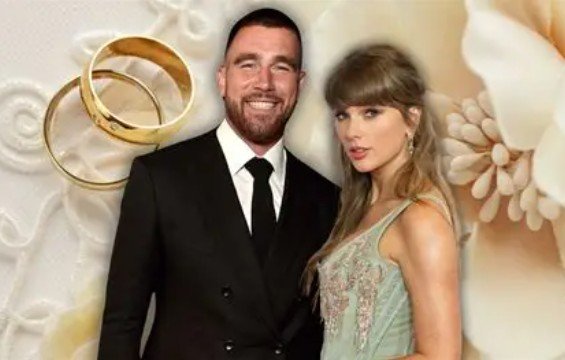
New York, July 03 : The global entertainment industry found itself fixated on one story at the start of July 2026 as reports of Taylor Swift and Travis Kelce’s marriage sent social media, fan communities and celebrity newsrooms into overdrive. What began as growing speculation around a high-profile celebration in New York quickly evolved into one of the biggest entertainment stories of the year, with the pop superstar and the NFL icon at the centre of a cultural moment that stretched well beyond music and sports.
According to multiple reports emerging on July 2, the wedding celebrations around Taylor Swift and Travis Kelce turned New York into a hub of celebrity frenzy, fan excitement and intense media attention. The buzz surrounding the event was not simply about a wedding; it was about the coming together of two of the most visible public figures in modern pop culture. Swift, one of the most influential singer-songwriters of her generation, and Kelce, one of the most recognizable names in American football, have spent the past few years dominating headlines across entertainment, sport and lifestyle media. Their reported marriage therefore carried the feel of a crossover event that few celebrity relationships have managed to generate in recent years.
The scale of attention around the wedding reflected the sheer magnitude of Swift’s public profile. Even after years at the top of the music industry, Taylor Swift remains a singular force in entertainment a chart phenomenon, touring juggernaut, cultural conversation starter and fashion influence all at once. Every appearance, every album announcement and every public move from the singer is scrutinised globally. Add to that the crossover appeal of Kelce, who has built a formidable image not only as a sports star but also as a television personality and pop-culture figure, and the result was always going to be a media storm.
By the time reports of the wedding and celebrations began circulating, anticipation had already been building for days. Rumours of a major private event, celebrity guest arrivals and unusual preparations in New York had fuelled fan speculation online. Swift’s devoted fan base, already known for tracking clues and decoding the singer’s public gestures, turned every photograph, travel movement and social post into a possible sign of wedding preparations. The internet, predictably, went into detective mode. Entertainment channels, fan pages and celebrity commentators amplified every detail, creating a snowball effect that transformed the wedding into a full-scale pop-culture event.
What made the story especially compelling was the way it sat at the intersection of multiple entertainment ecosystems. Taylor Swift is not merely a musician; she is an industry in herself. Her relationship milestones become global content because her audience spans generations and geographies. Kelce, meanwhile, represents a different but equally powerful cultural lane — American sports celebrity with a growing entertainment footprint. Together, they have built a partnership that appeals to music fans, sports followers, fashion watchers and mainstream celebrity audiences alike.
As reports of the marriage emerged, New York appeared to become the symbolic stage for this new chapter. The city, long associated with celebrity glamour and media spectacle, was a fitting backdrop for an event of such scale. From speculation about venues and guest lists to viral posts about possible road restrictions and event arrangements, the city itself became part of the narrative. The wedding was not being framed as a quiet private affair in the public imagination; it was being treated as a landmark celebrity moment, one that could dominate headlines across continents.
A major reason for the story’s reach was the emotional investment audiences have in Swift’s personal life. Over the course of her career, Swift has often turned personal experiences into music, making fans feel deeply connected to the highs and lows of her romantic journey. That connection has helped shape the mythology around her public relationships. For fans who have followed her evolution from country prodigy to global pop icon, the wedding story felt less like a celebrity update and more like the next chapter in a long-running cultural narrative.
Kelce’s presence in that story has only amplified the fascination. Unlike many celebrity pairings that remain siloed within one industry, Swift and Kelce symbolize a merger of entertainment worlds. Their relationship has blurred the lines between sports and pop culture in ways that marketers, broadcasters and media companies find irresistible. Every public appearance by the pair generates attention across multiple audience segments, making them one of the most commercially and culturally valuable celebrity couples in the world right now.
The wedding reports also arrived at a time when celebrity culture is increasingly shaped by virality. In an era of short-form videos, fan theories and instant reaction cycles, a story like this can dominate the digital ecosystem for days. Images, rumours, guest speculation and commentary do not simply circulate they multiply. One entertainment headline becomes a thousand posts, reaction videos, fan edits and analysis threads. Swift’s fan culture in particular is uniquely positioned to turn any major life event into a digital phenomenon.
That is precisely what happened here. As the reports spread, social media timelines filled with wedding discussions, throwback videos of the couple, imagined playlists, possible guest lists and fan tributes. For some, the moment was about romance and celebrity glamour; for others, it was about witnessing a real-time pop culture milestone involving one of the most followed artists on the planet. Even outside Swift’s fan circles, the story became unavoidable because it tapped into the broader public appetite for big celebrity narratives.
From an entertainment-industry perspective, the Swift-Kelce wedding story also underlined how modern celebrity now functions as a multimedia ecosystem. Weddings, engagements and relationship milestones are no longer confined to magazine covers or tabloid spreads. They become live digital events, with every rumour and confirmation feeding into a broader commercial machine of clicks, commentary and brand visibility. Swift, whose career has repeatedly reshaped the relationship between artists and audiences, sits at the centre of that ecosystem with unusual ease.
There is also the matter of symbolism. Taylor Swift’s career has been built on reinvention, emotional candour and a rare ability to turn personal transformation into public art. A wedding or even the reporting around one — naturally invites audiences to see it as another turning point. What might this mean for her next era? Will her music reflect this moment? Will the marriage influence the public persona she has spent years refining? These are the kinds of questions fans and industry watchers inevitably ask when a star of Swift’s scale makes a major personal move.
For Travis Kelce, the story reinforces his transition from elite athlete to mainstream entertainment personality. His public profile has expanded dramatically in recent years, and his relationship with Swift has accelerated that transformation. No longer seen only through the lens of American football, Kelce has become part of a wider celebrity circuit one that includes red carpets, entertainment headlines and crossover branding opportunities. The wedding buzz cements that shift further.
The broader celebrity world, too, seemed to respond as expected: with curiosity, congratulatory noise and fascination. High-profile weddings always invite speculation about which stars are attending, what the couple will wear, how exclusive the event will be and whether the celebration will produce iconic pop-culture images. With Swift involved, those expectations are magnified. Her fashion choices alone can shape trends, while her guest list — real or rumoured becomes a story in itself.
One of the striking aspects of the coverage was how quickly the wedding became more than a celebrity romance story. It turned into a reflection of how fandom, media and celebrity power now interact. Swift’s audience does not consume news passively; it actively interprets, archives and amplifies it. Kelce’s sports-world recognition broadens the reach even further. The result is an event that feels less like a private ceremony and more like a global cultural broadcast, even when many details remain closely held.
There is, of course, an important tension at the heart of such stories: the balance between public interest and private life. Swift has long had a complicated relationship with media intrusion, having spent much of her career navigating the fine line between public fascination and personal boundaries. Any wedding story involving her inevitably raises that question again. Fans may celebrate the romance, but the frenzy also illustrates how difficult it is for stars of this magnitude to experience life milestones without them becoming public property.
Yet that tension is part of what makes the story so compelling in entertainment terms. Celebrity culture thrives on access, speculation and emotional investment, but it also depends on mystery. The less that is officially known, the more intense the curiosity becomes. In the case of Swift and Kelce, that dynamic appears to have worked at full power, with reports and glimpses creating enough information to fuel a frenzy while still leaving much of the event wrapped in intrigue.
For entertainment editors, the story checked every box: romance, glamour, superstardom, crossover appeal, social media obsession and a New York backdrop. For fans, it offered a fairytale-like chapter involving one of the most beloved artists of the century. For the broader culture, it served as another reminder of Taylor Swift’s extraordinary gravitational pull. Few public figures can turn a private life event into a multi-day global entertainment phenomenon; Swift remains one of them.
The timing also mattered. Early July is a period when audiences are especially tuned into celebrity culture, summer events and blockbuster headlines. A story of this scale naturally rises to the top in such a news cycle. With the entertainment industry constantly competing for attention against politics, sports and global affairs, a major Swift story provides the kind of universal pop-cultural magnetism that cuts through everything else.
Whether the coming days bring official photographs, public confirmation, more details from insiders or continued mystery, the impact of the story is already clear. Taylor Swift and Travis Kelce have once again demonstrated their ability to dominate the global entertainment conversation with a single life event. The wedding buzz has reinforced their standing as perhaps the defining celebrity couple of the moment — one capable of uniting fan cultures, media ecosystems and public fascination on an enormous scale.
In many ways, that is what makes this story more than just a celebrity wedding report. It is a snapshot of how fame operates in 2026: intensely networked, emotionally participatory and impossible to contain within one industry. Taylor Swift is not just a singer with a private life; she is a cultural force whose milestones ripple across music, media, fashion and fandom. Travis Kelce is not just an athlete with a famous partner; he is part of a new kind of celebrity pairing that merges entertainment categories and expands audience reach.
For now, the wedding celebrations have given the entertainment world one of its biggest talking points of the summer. The exact details may continue to emerge in fragments, but the headline reality is already set: Taylor Swift and Travis Kelce have delivered a celebrity moment powerful enough to command the attention of fans, the media and the wider pop culture world all at once. And in an industry driven by spectacle, narrative and emotional connection, that is exactly the kind of story that defines a season.

